
Technician Training for Motorcycle Distributors: Building a Programme
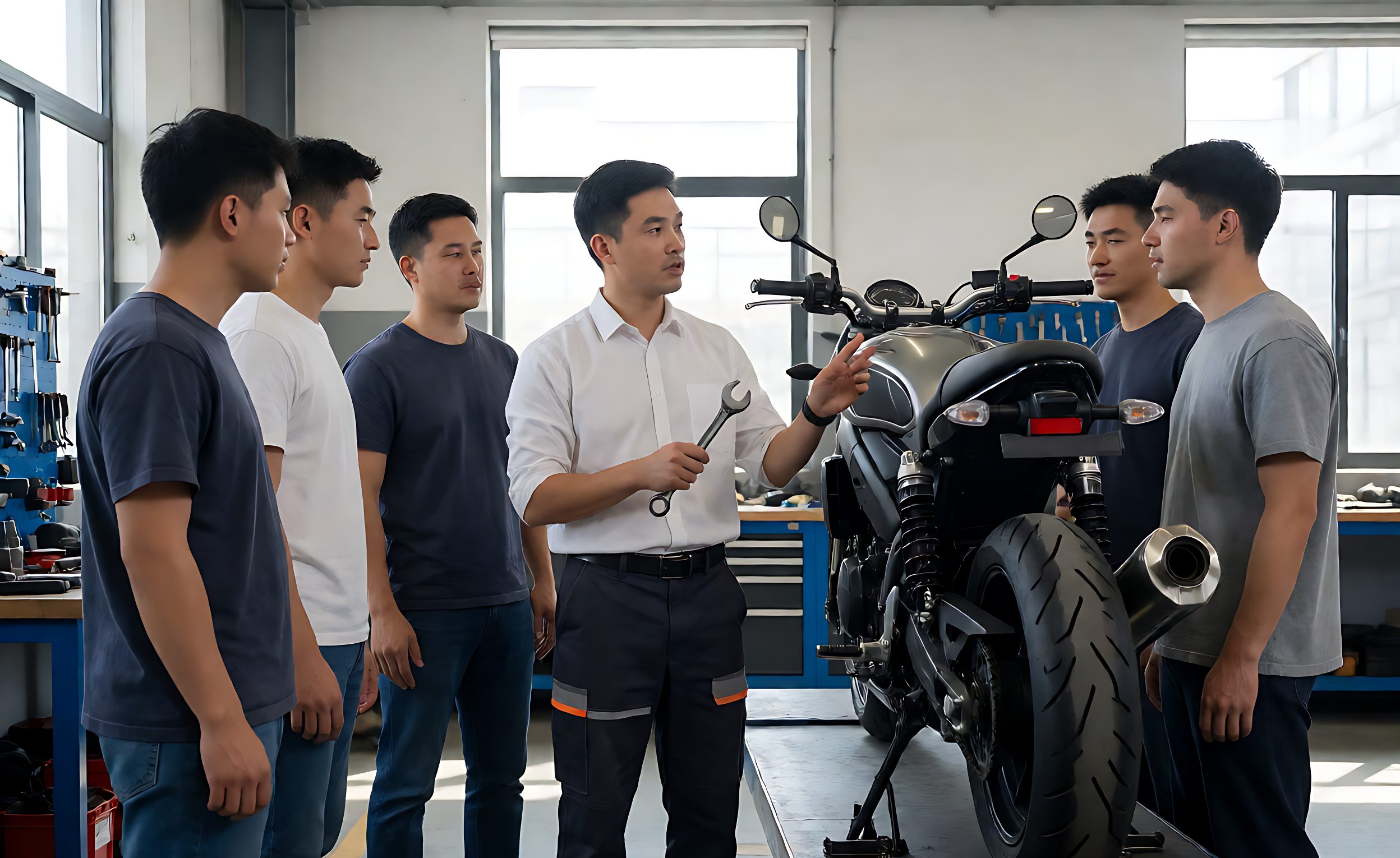
A motorcycle that cannot be serviced locally will not be bought twice. That is the commercial case for technician training, and it is stronger than the usual argument about quality – because a customer’s second purchase decision is made largely on whether the first bike was easy to keep running.
For a distributor, training is also a capacity constraint. It determines how many models can be sold, how quickly a new model can be introduced, and how much warranty cost is incurred through avoidable errors.
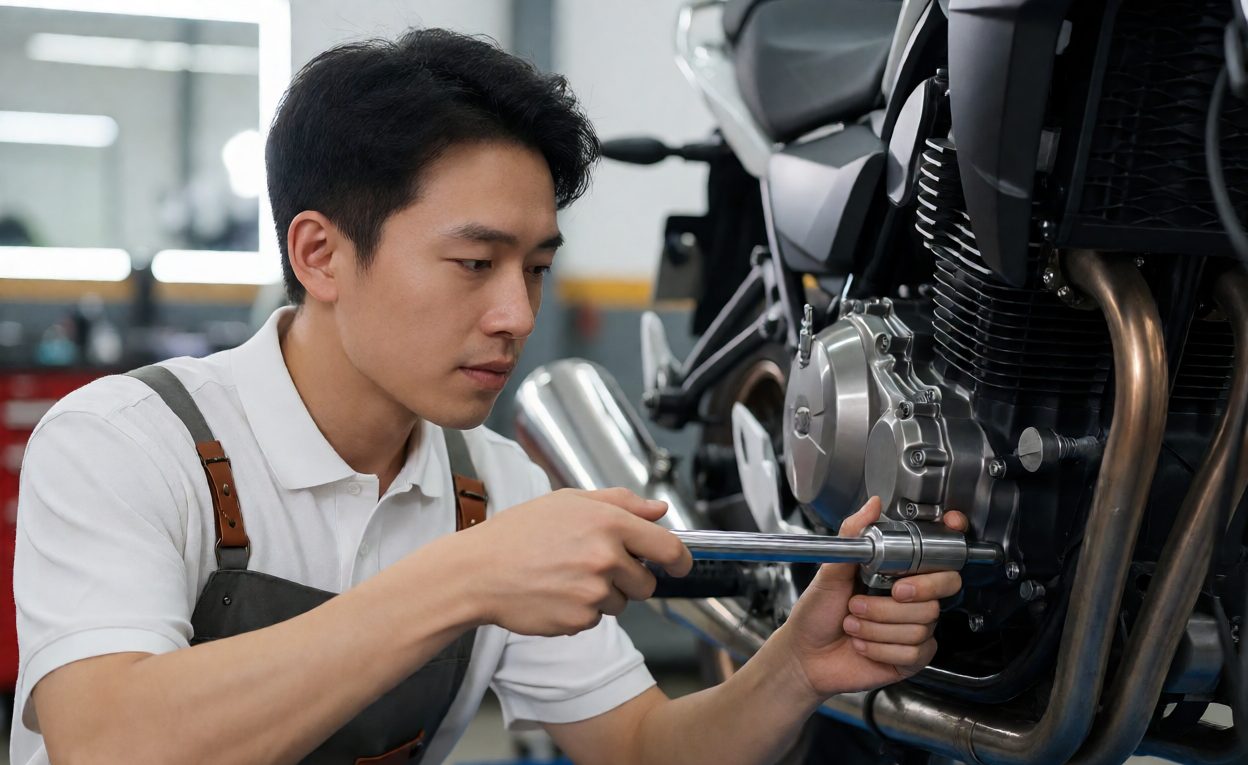
What the Programme Must Cover
A usable programme has three layers, and they are not equally urgent.
- Model-specific service: scheduled maintenance, valve clearance, torque values, and the specific procedures for each model in the lineup. This is what makes a model serviceable.
- Diagnostics: fault-finding rather than part-swapping. This is what keeps warranty cost down, because replacing a component that was not faulty is the most expensive kind of repair.
- Parts identification: using the parts catalogue and diagrams to order the correct item first time. This is what keeps customers waiting less.
The third layer is routinely omitted and has the largest effect on customer experience. A wrong part ordered means a second wait, and the customer remembers the wait rather than the explanation.
Structuring by Model and Skill
Training should be sequenced to match how the lineup is introduced, and tiered by skill level.
- Tier one: routine service and safety checks, for every technician who touches a bike.
- Tier two: model-specific procedures and diagnostics, for senior technicians.
- Tier three: complex repair and warranty decision-making, for a small number of lead technicians per region.
Tier one should exist before the first units are sold, not after. A new model released into a market where only tier-two capability exists will generate complaints that are attributed to the product rather than to the service network.
Formats That Actually Work
Three formats cover most needs, and each has a different cost and durability.

- Supplier-led sessions at the factory or regionally: highest quality, highest cost, and best for new model introduction.
- Train-the-trainer: a lead technician trained by the supplier then trains others. Scales well and is the usual answer for wide networks.
- Documented procedures and video: cheap, durable, and essential as a reference – but not sufficient on its own for hands-on skills.
The most effective programmes combine all three: supplier-led introduction for each new model, train-the-trainer for scale, and documented procedures as the standing reference that prevents knowledge leaving with a departing technician.
Keeping Capability Current
Training decays. Technicians leave, models change, and procedures are forgotten. Three practices keep capability current:
- Refresh tied to model changes: a new model or a running change triggers training, not a calendar date.
- Records per technician: which models and tiers each person is trained on, so that coverage gaps are visible.
- Warranty feedback loop: recurring warranty claims on a specific procedure indicate a training gap rather than a product fault.
The third is diagnostic in both directions. A cluster of identical claims across one region usually indicates training; the same cluster across all regions usually indicates a product issue. Distinguishing them early saves both warranty cost and reputation.
Where assembly is local, training extends to the assembly line itself – the CKD assembly requirements are a distinct skill set from service work. And because parts availability and training are linked, the Ersatzteilkits should be aligned with what trained technicians are actually able to fit, rather than with the full catalogue. Technical education in this context is closer to apprenticeship than to classroom instruction, which is why hands-on time matters more than presentation quality – and why knowledge management is the real objective: capability that survives staff turnover.
Costing and Justifying the Programme
Training has a cost, and it is worth stating plainly because it is usually smaller than the alternative. The comparison is not training against nothing; it is training against warranty claims, repeat visits, wrong parts orders and lost repeat sales.
A simple way to justify the spend is to take the previous year’s warranty cost and identify the proportion attributable to incorrect diagnosis or incorrect fitting. That proportion is usually larger than expected, and it is addressable through training in a way that a price negotiation never is. Training also reduces the cost of introducing new models, because a network with tier-one and tier-two capability in place can take a new model without a separate programme for each launch.
Where the distributor operates a dealer network rather than its own workshops, the question becomes who pays. The usual answer is the distributor, on the grounds that the capability protects the brand – but the requirement can reasonably be made a condition of dealer status, with records maintained centrally. Either way, the programme needs a named owner and a budget, because training that is nobody’s responsibility does not survive the first busy season. The warranty terms define which costs fall to which party, and that allocation should be read alongside the training plan rather than separately from it.
Häufig gestellte Fragen
Why does training affect sales?
Because a bike that cannot be serviced locally will not generate a repeat purchase, and customers remember waiting for parts.
What should be trained first?
Routine service and safety checks for everyone, before the first units of a new model are sold.
Is documentation alone enough?
No. It is an essential reference but does not develop hands-on skill.
How should training scale across a network?
Train-the-trainer, supported by supplier-led sessions for new models and documented procedures as reference.
How do you detect a training gap?
A cluster of identical warranty claims in one region usually indicates training; across all regions it suggests a product issue.
Should records be kept per technician?
Yes, showing model and tier coverage, so gaps are visible before they become complaints.
Does local assembly change training needs?
Yes. Assembly line work is a distinct skill set from service work.