
Motorcycle Crating and Container Securing: Preventing Transit Damage
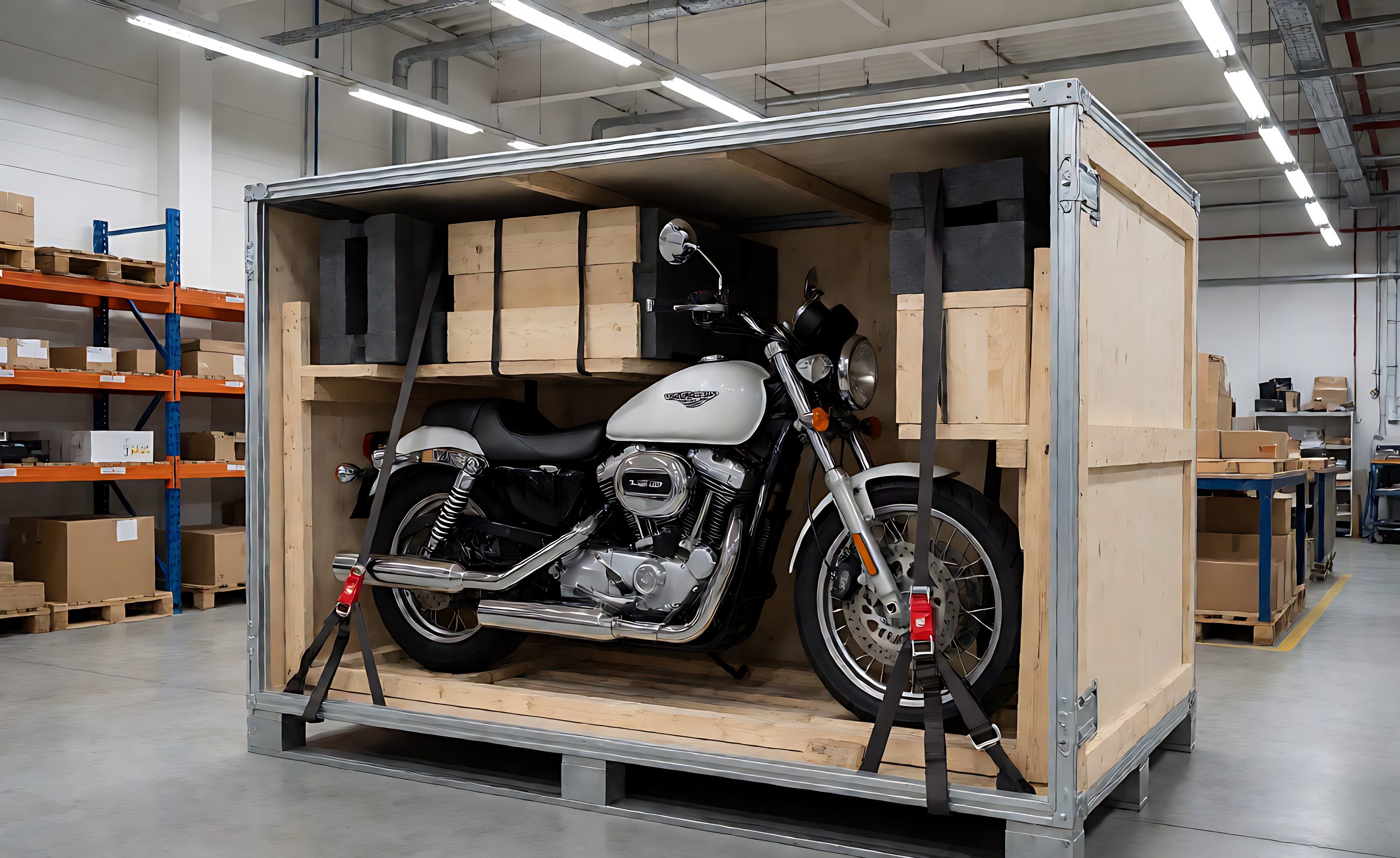
Transit damage on motorcycle shipments is rarely dramatic. It is a scratched tank, a bent lever, a rubbed fairing, a scuffed exhaust – small enough to be argued about and large enough to turn a new unit into a discounted one. Almost all of it traces back to a restraint detail rather than to rough seas.
Two specifications govern the outcome: how the unit is crated, and how the crates are secured inside the container. Both are cheap to get right and tedious to argue about afterwards.
What a Crate Must Do
The crate protects the unit from contact and holds it upright. That is all, but both parts matter.
- Base and restraint: the unit is bolted or strapped to the crate base, not merely placed in it. Movement inside the crate is the most common cause of cosmetic damage.
- Separation: no metal-to-painted-surface contact. Handlebar ends, levers, mirrors, exhausts and footpegs need separation from adjacent surfaces and from the crate itself.
- Upright stability: the crate must stand without support, because it will be stacked or stood side by side.
- Moisture protection: a barrier and desiccant for sea transit. Condensation inside a crate is a real cause of corrosion on exposed metal.
- Handling access: defined forklift and, where relevant, crane points, so that the crate is not lifted by the wrong part of it.
Where units are shipped partially disassembled, the CKD and SKD packing differs materially from a crate for a complete unit – loose components are the items most often damaged or lost.
Securing Inside the Container
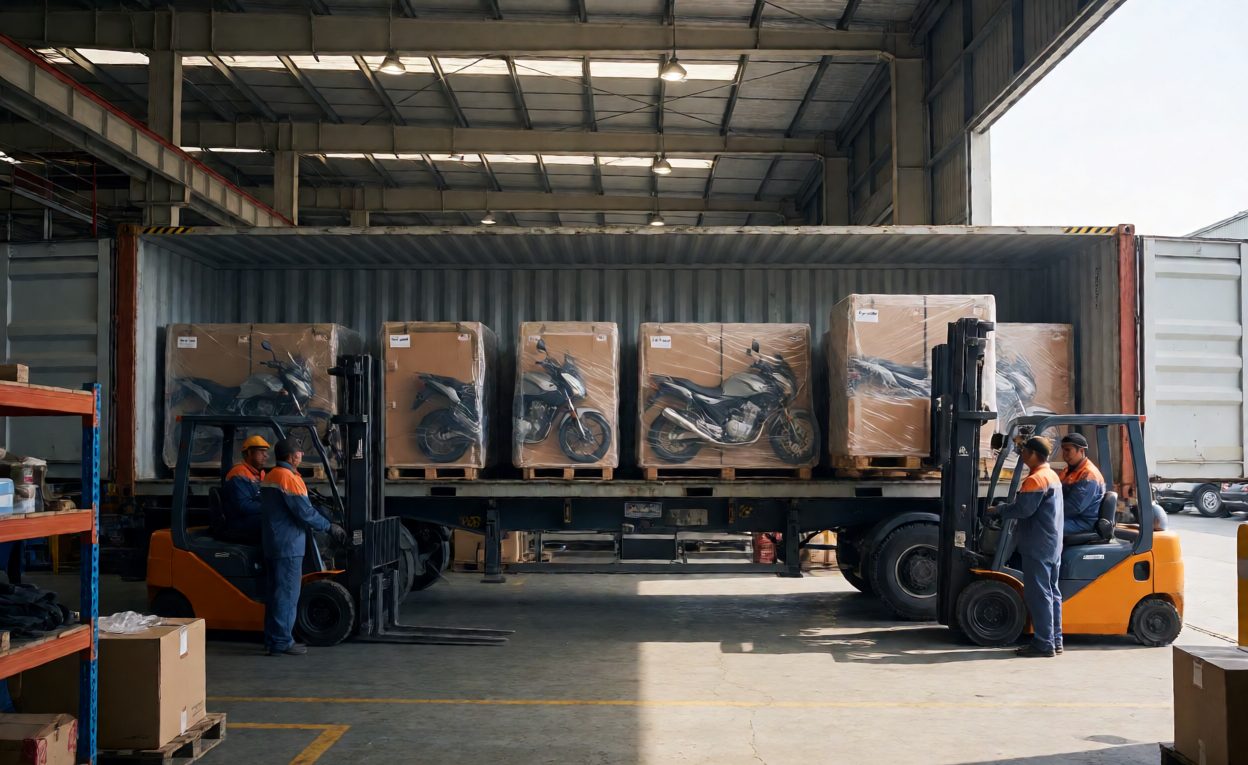
Crates must not move relative to each other or to the container. Restraint is a system, not a strap.
- Chocks and blocking: prevent rolling and sliding at the base.
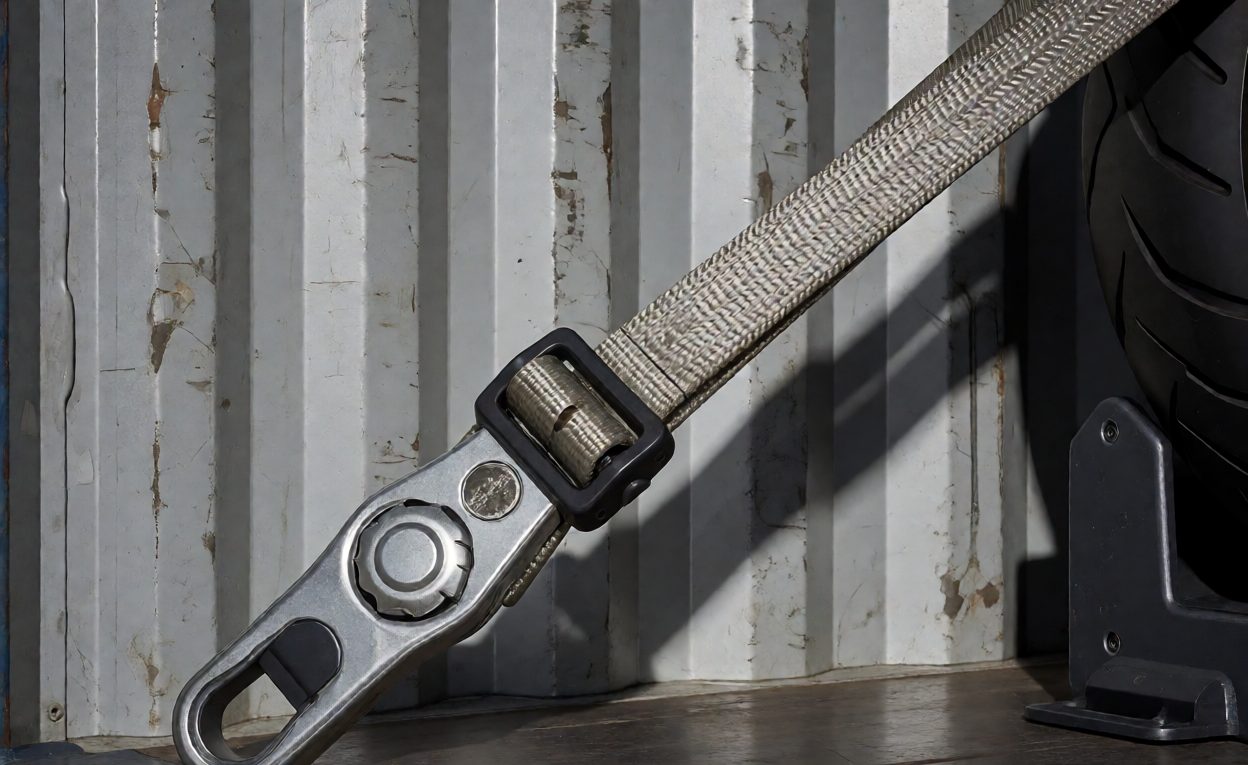
- Strapping: rated, tensioned, and arranged so that loads are transferred to the container structure rather than to another crate.
- Spacing: crates separated so that they cannot rub, with separation material where they must be close.
- Weight distribution: heavier crates low and distributed, not concentrated at one end.
- Door-end restraint: the final row is the one that shifts, so it needs explicit restraint rather than reliance on the doors.
Cargo securement standards exist for road and sea transport for precisely this reason: the loads experienced in transit are considerably larger than most people assume, and an unsecured crate will move.

The Specification Points Worth Insisting On
Five items are worth stating in the order rather than leaving to standard practice:
- Restraint method: described, not implied.
- Separation materials: used at defined contact points.
- Load photographs: taken before the container is sealed, showing restraint, sent with the shipping documents.
- Desiccant quantity: stated, appropriate to the transit duration and climate.
- Crate identification: numbers matching the packing list, so that a damaged crate is traceable to a unit.
The third item is the most valuable and the least often requested. Photographs taken before sealing resolve the question of whether damage happened in transit or at destination, which is otherwise almost impossible to settle.
Receiving Procedure
What happens at destination determines whether a claim succeeds.
- Inspect before unloading: container seals, crate condition and strap condition, photographed.
- Photograph before unpacking: any external damage, with the crate number visible.
- Unpack with evidence: photographs as units are removed, before anything is moved or cleaned.
- Record against crate numbers: so that a damage pattern can be traced to a position in the container, which usually identifies the cause.
Damage discovered and documented at unloading is a claim. Damage discovered a week later, after the crates have been discarded, is a discussion.
Because insurance responds to evidence rather than to assertion, the receiving procedure belongs with the shipping terms rather than with warehouse practice. Where the importer is also planning the load, the container loading arithmetic and the restraint plan should be produced together – a load plan that maximises unit count without providing restraint space is a damage plan. And because инспекция перед поставкой is the last chance to record condition before transit, the inspection records are the baseline that a damage claim is measured against.
Crate Reuse and Disposal
Crates are a cost line and, in some markets, a disposal problem. Two questions are worth asking at the specification stage: whether crates are designed for reuse, and what the destination requires for timber treatment and disposal.
Timber packaging entering many countries must meet phytosanitary treatment requirements, and non-compliant crating can be refused at import regardless of the condition of the vehicle inside. That is a documentation and marking requirement rather than a strength requirement, and it is cheap to comply with at origin and expensive to remedy at destination. Where an importer receives regular shipments, reusable crating that returns to the supplier reduces per-unit cost and removes the disposal burden – an arrangement worth discussing where volumes justify it. Wood packaging material rules are the relevant standard, and ISPM 15 marking is what inspectors look for. Neither affects how the crate performs, but either can stop a shipment.
Часто задаваемые вопросы
What causes most motorcycle transit damage?
Movement within the crate or between crates. Restraint detail rather than rough seas.
Should units be bolted or strapped to the crate base?
Yes. Being merely placed in a crate allows movement, which is the most common cause of cosmetic damage.
Are load photographs worth requesting?
Yes. They resolve whether damage occurred in transit or at destination, which is otherwise unresolvable.
Does moisture protection matter?
Yes. Condensation inside a crate causes corrosion on exposed metal during sea transit.
Why is the door-end row important?
It is the row that shifts. It needs explicit restraint rather than reliance on the doors.
What should be inspected before unloading?
Seals, crate condition and strap condition, all photographed.
Should crates be numbered?
Yes, matching the packing list, so damage is traceable to a unit and a position.