
CBU vs SKD vs CKD Motorcycle Export: Tariffs, Freight and Local Assembly Compared
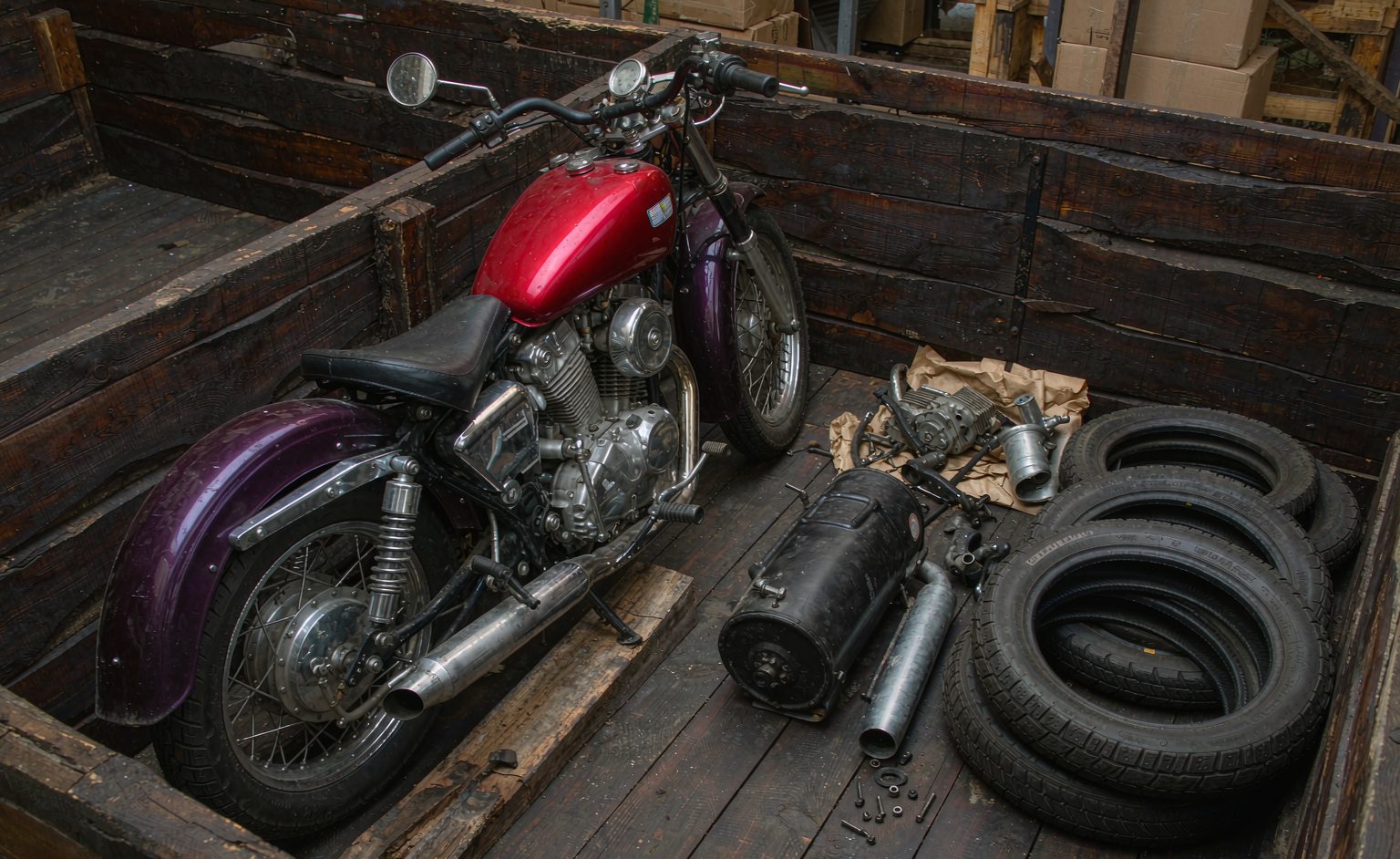
The export form is the single biggest structural decision in a motorcycle import program, and it is made before the first order rather than after. CBU, SKD and CKD are not three ways of shipping the same thing; they are three different businesses with different duty treatment, different freight economics and different obligations on your side. Choosing the wrong one is expensive to reverse. This guide compares them.
Kernaussagen
- The export form is a policy decision before it is a commercial one — duty treatment is set by the destination country.
- CBU is simplest to launch; CKD is cheapest to import and hardest to operate.
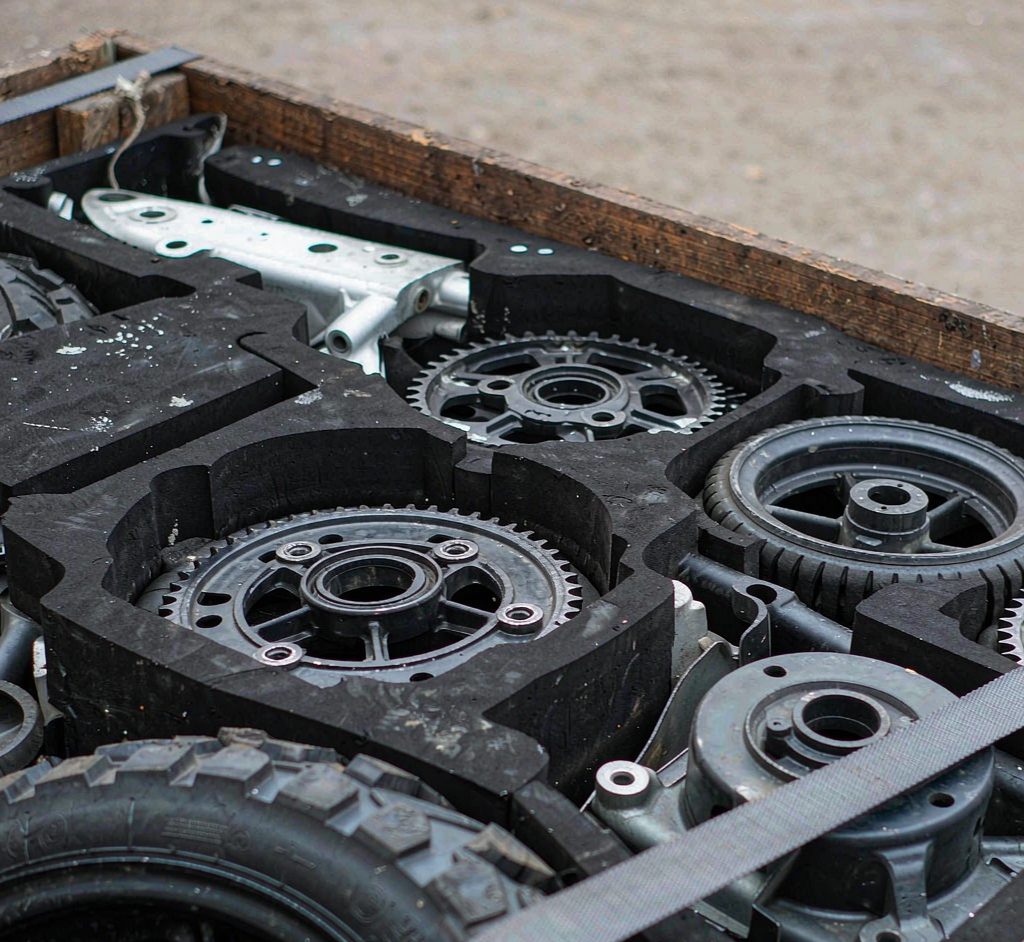
- Freight cost per unit falls sharply as the assembly state decreases.
- Local assembly brings investment, quality control and workforce obligations.
- Check local-content rules before choosing, because they may mandate a form.
The Three Forms Compared
Each form represents a different amount of work done before the goods leave the factory.
| Formular | Condition on arrival | What you must do |
|---|---|---|
| CBU | Complete, rideable unit | Uncrate, inspect, sell |
| SKD | Partially assembled | Complete the remaining assembly steps |
| Niereninsuffizienz | Fully disassembled kits | Assemble the complete unit locally |
The assembly-state comparison and its effect on landed cost is set out in unserem CBU- vs. SKD- vs. CKD-Exportleitfaden.
Duty and Freight Economics
Two cost effects work in opposite directions, and the net depends on your market.
| Faktor | Effect as assembly state decreases | |
|---|---|---|
| Duty treatment | Usually improves — many markets tax kits below complete units | |
| Fracht pro Einheit | Falls sharply — kits pack far more densely | |
| Local assembly cost | Rises — labour, facility and quality control | |
| Arbeitskapital | Rises — more value is added after import | |
| Quality risk | Rises — assembly quality becomes yours |
The duty row is the one that decides most programs, and it is a policy variable rather than a commercial one. Duty treatment for complete units versus kits, and the local-content rules that may mandate a form, are set by the destination country rather than by the supplier.
What Local Assembly Requires
The obligation side grows quickly as the assembly state decreases.
| Requirement | CBU | SKD | Niereninsuffizienz |
|---|---|---|---|
| Assembly facility | None | Begrenzt | Full line |
| Trained workforce | None | Some | Substantial |
| Qualitätskontrolle | Inspection only | Assembly QC | Full production QC |
| Parts and tooling | None | Some | Full set |
| Warranty responsibility | Factory-backed | Geteilt | Largely yours |
The warranty row is the one importers underestimate. Under CKD, assembly quality becomes your responsibility, which means your warranty cost depends on your own process rather than the factory’s. This is the main reason CKD suits importers with genuine manufacturing capability rather than pure distributors.
Choosing for Your Market
The decision follows from four questions, in order.
| Question | If the answer is | Points toward |
|---|---|---|
| Does local-content rules mandate a form? | Ja | The mandated form, regardless of preference |
| Do you have assembly capability? | Nein | CBU, or SKD with a partner |
| Is the duty differential large enough? | Nein | CBU — the freight saving does not justify the investment |
| Is volume sufficient to amortise a line? | Ja | CKD becomes viable |
Start with the policy question, because it is the only one that can eliminate options outright. The market-by-market regulatory picture is covered in unserem China-Motorrad-Export-Überblick, and the commercial terms that accompany any form in unserem Händlerprogramm-Leitfaden.
Häufig gestellte Fragen
Was ist der Unterschied zwischen CBU, SKD und CKD?
How much assembly remains when the goods arrive. CBU arrives complete and rideable, SKD requires partial assembly, CKD requires full local assembly from kits.
Which is cheaper to import?
Usually CKD, because kits pack more densely and attract lower duty in most markets. But CKD adds local assembly cost and quality responsibility, so the net depends on your capability.
Does duty treatment differ between the forms?
Yes, and it is often the deciding factor. Many markets tax kits below complete units, and local-content rules may mandate a particular form.
What does CKD require on my side?
An assembly facility, trained workforce, full quality control, tooling and parts, and most of the warranty responsibility. It is a manufacturing operation, not a distribution one.
Who carries warranty responsibility under CKD?
Largely you, because assembly quality becomes yours. Under CBU the factory’s quality is what the customer receives; under CKD yours is.
How do I choose the right export form?
Check local-content rules first, then your assembly capability, then whether the duty differential is large enough, then whether volume can amortise a line.
Can I switch forms later?
It is possible but expensive, because it changes duty treatment, logistics, facility and warranty arrangements. Treat it as a structural decision made once.
Technischer Hintergrund: completely knocked down, Einfuhrzoll und local content requirements explain the export forms and the regulatory framework referenced above.