
Export Crating and ISPM 15: Getting Wood Compliance Right Before Loading
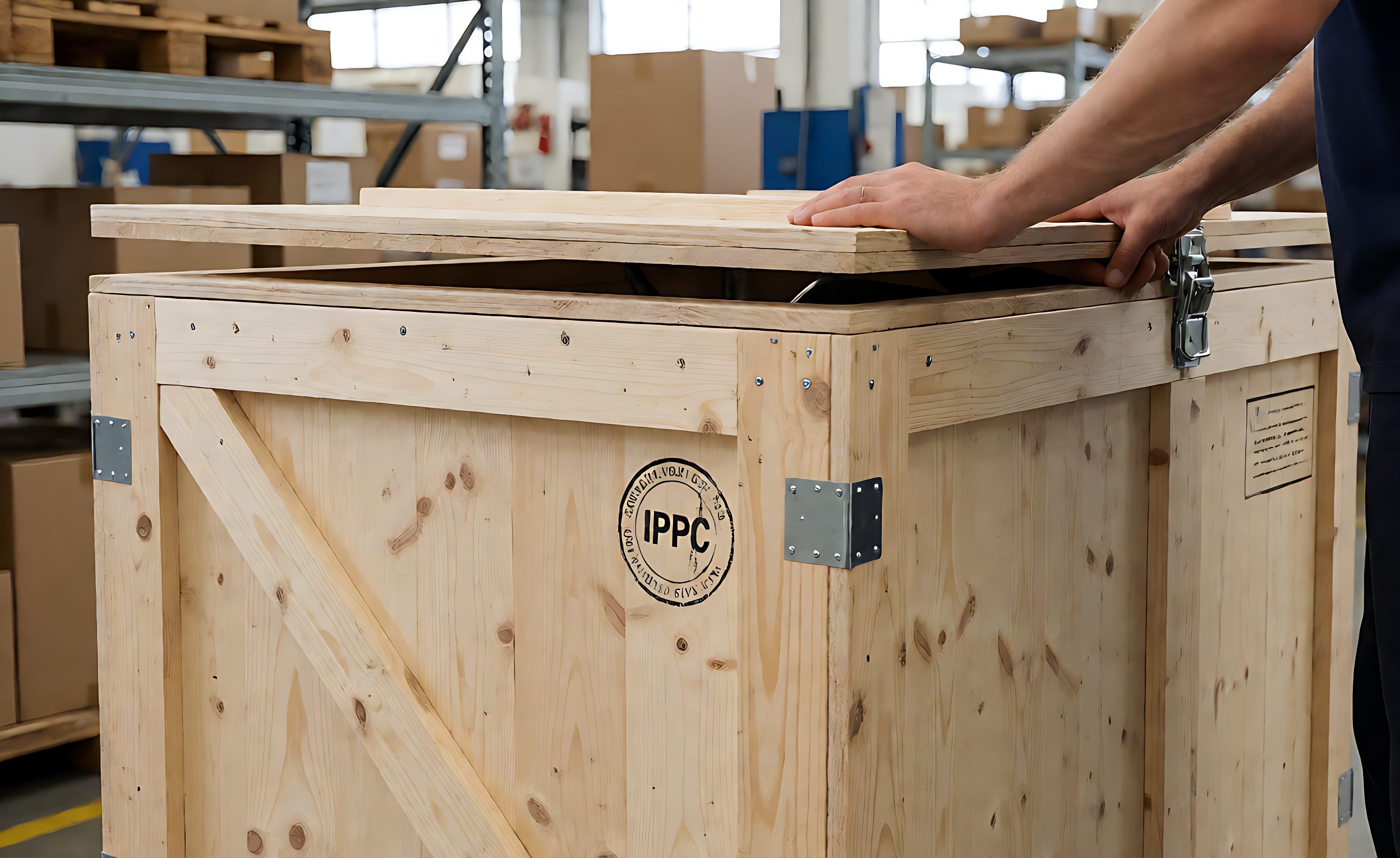
An export crate stops being packaging the moment it crosses a border. From that point it is documentation, and it is read by people who were not present when it was built. Wood packing material is a well-known pathway for insects and larvae moving between ecosystems, which is why most importing countries regulate it and why a single missing stamp can immobilize a whole container.
The expensive part of a wood compliance failure is its timing. Everything else in the shipment can be right and the units can be perfect, but if an inspector at destination finds a crate without the recognized mark, clearance stops, demurrage starts, and the remedy may be re-export rather than local treatment. The practical answer is to settle four questions with the supplier before loading: which wood, which treatment, whose stamp, and what happens if a check fails.
What ISPM 15 Actually Requires
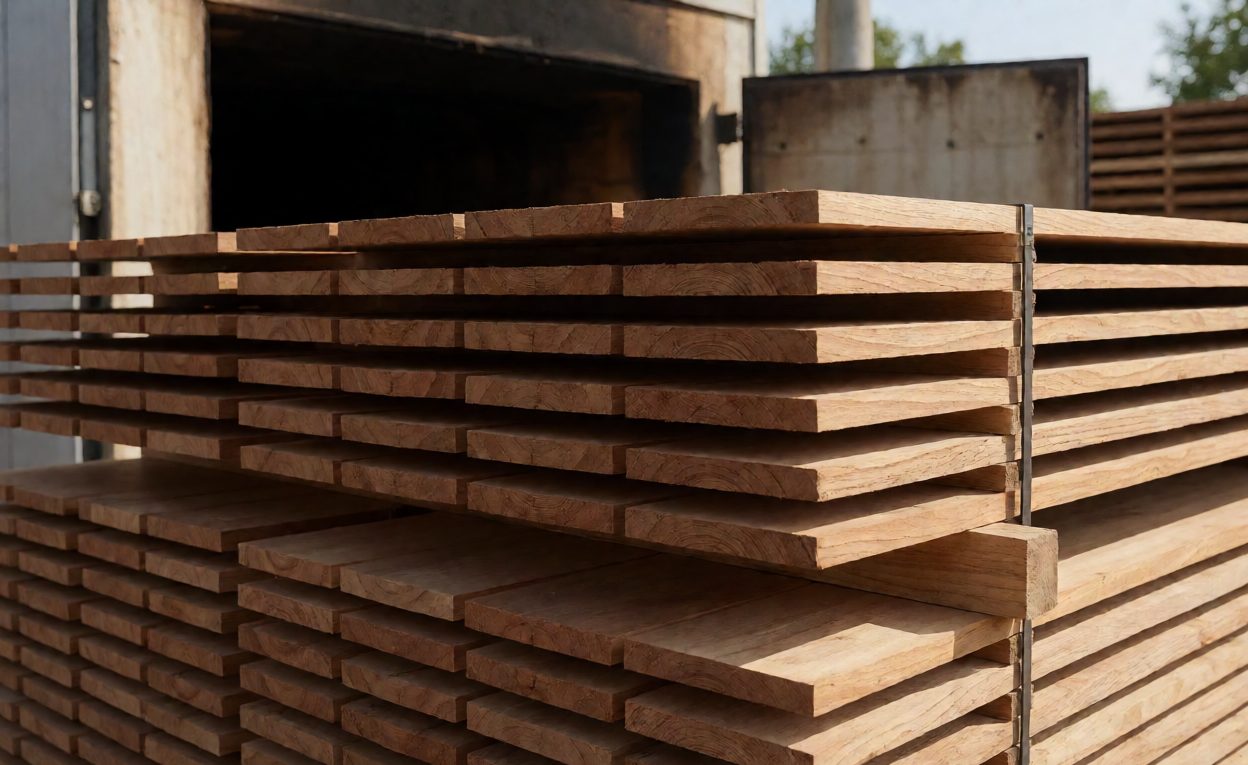
ISPM 15 is an international phytosanitary measure covering wood packaging material in trade: pallets, crates, skids and dunnage made of raw wood thicker than a very small tolerance. The logic is blunt – the wood has either been treated so nothing survives inside it, or it does not enter. Because the rule attaches to the wood rather than the cargo, a crate containing a certified motorcycle is no different from a crate containing steel bar.
- Heat treatment: the core of the timber reaches 56 degrees Celsius for at least 30 continuous minutes. This is the default in serious export operations because it is cheap, verifiable from the stamp and leaves no residue.
- Fumigation with methyl bromide: permitted by the standard, but restricted in several markets and increasingly refused by buyers and insurers on handling grounds.
- Debarking: bark must be removed to a defined tolerance, whether or not the wood was treated afterwards.
- Processed wood is exempt: plywood, particle board and oriented strand board bonded with heat or adhesive are treated as low risk and need no stamp.
Specify heat treatment in the order, in writing, rather than accepting “standard export packing”. Standard is whatever the local yard had.
Reading the Stamp Before You Accept a Crate
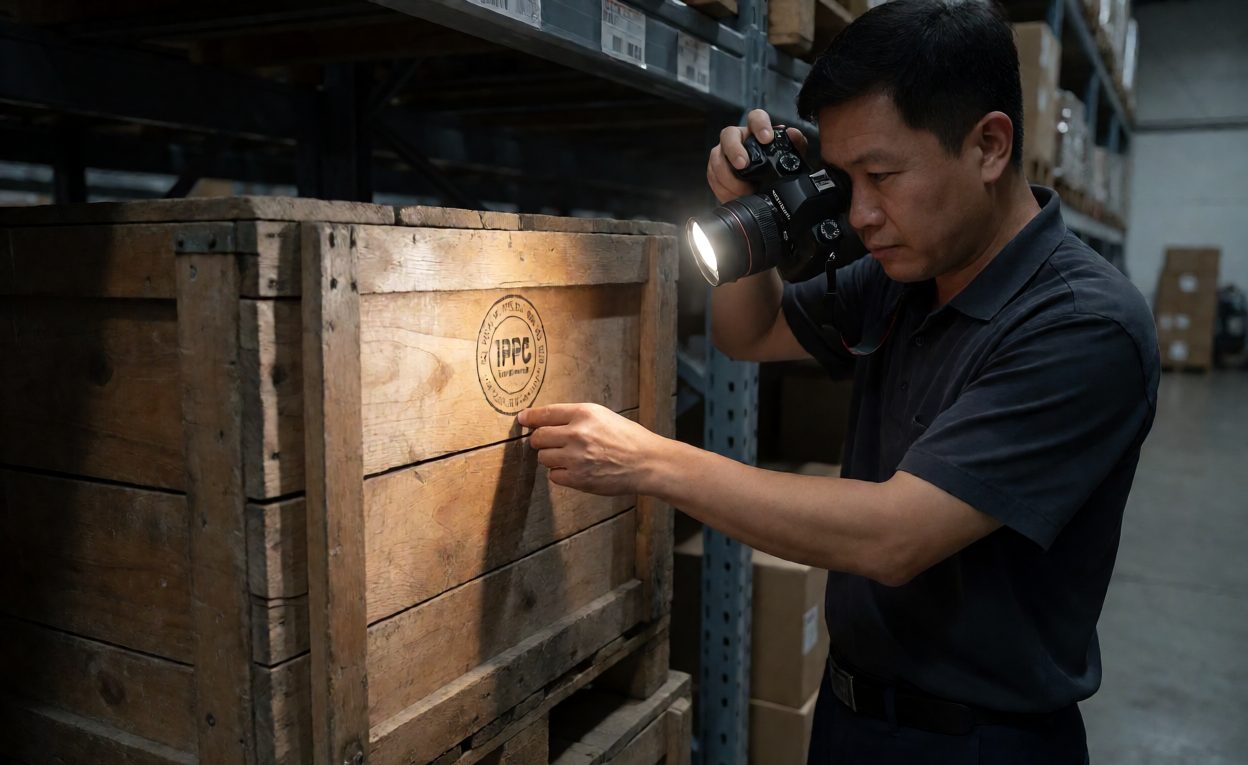
The mark is the entire compliance record travelling with the crate, and it takes about thirty seconds to read once the parts are understood. Photographing the marks at loading, filed against the packing list, turns a later argument into a lookup.
- IPPC symbol: the wheat-sheaf emblem indicating the wood was treated to the standard rather than merely looking clean.
- Two-letter country code: where treatment took place, which is not always where the crate was built.
- Provider number: the registration of the treatment facility, traceable through the national plant protection organization.
- Treatment code: HT for heat treatment, MB for fumigation. Anything else deserves a question before the truck leaves.
Heat treatment schedules fail quietly at scale: kilns run short, thick sections never reach core temperature. Verify by sampling rather than collecting certificates – check the mark, ask for the provider number, and repeat after any new subcontractor appears.
Crate Strength Is a Separate Specification
Compliance and strength are unrelated requirements that happen to share a supplier. A stamped crate can still be too weak to carry its own unit, and the failure appears as impact damage after the worst few hours of the voyage rather than at customs. The strength section deserves its own lines in the order.
- Base construction: skids sized to carry the unit’s weight through forklift handling, not just static stacking.
- Full-perimeter framing: corner posts and top rails so stacked loads do not crush the lower unit.
- Internal restraint: blocking and bracing that holds the motorcycle to the base, with wheels chocked and straps over protected contact points.
- Moisture control: kiln-dried timber and a liner, since a sealed container is a humid environment for several weeks.
The restraint detail has a second audience. This is where crating and securing standards meet the loading plan: crates that were built to be lifted by their skids are handled correctly, and crates that were not are the ones that get dragged.
Packing Density and Loading Reality
Wood specification has a direct effect on freight economics. Thicker timber and wider safety margins reduce the number of units per container, so the crate drawing belongs in the same conversation as the container loading math rather than being decided separately by the packing line. Once both are fixed, the container loading sequence determines whether the bracing survives transit or simply shifts weight around.
Mixed consignments complicate matters further. When parts cartons travel with crated bikes, the cartons usually sit on exempt processed board while the bike crates carry stamps – and the mixed container plan has to allow customs to inspect one without stripping the other.
Documents That Travel With the Wood
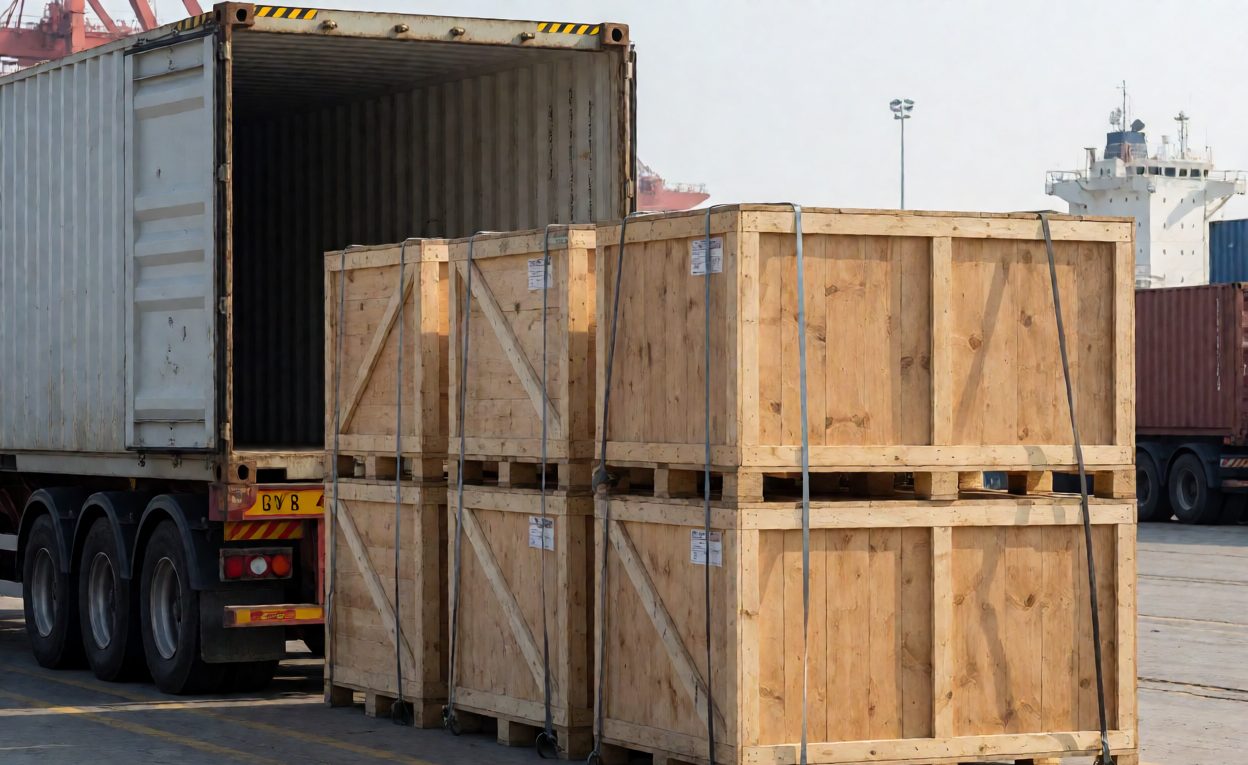
Wood compliance is documented on the crate itself, but three supporting documents make clearance routine instead of conditional, and they cost almost nothing to assemble at origin.
- Treatment statement: from the supplier or their treatment provider, naming method, provider number and the crate count covered.
- Packing list with crate numbers: so an inspected crate traces to units, model and lot.
- Photographic evidence at loading: stamps, strap placement and container condition, because an arrival claim is only as good as its baseline.
Keep those photographs available for the destination check described in arrival inspection and claim windows. Since a shipping container is sealed for most of the voyage, loading photographs are often the only credible evidence of what left.
When a Crate Fails Inspection
Some markets permit local fumigation at the importer’s cost; others require re-export of the whole shipment, and every outcome is slow. One clause decides who pays: the supplier warrants compliant wood and bears the cost of any clearance failure caused by it, including storage.
Häufig gestellte Fragen
Which wood needs an ISPM 15 mark?
Raw wood packaging thicker than the exemption threshold: crates, pallets, skids and dunnage. Processed board is exempt.
What does HT on the stamp mean?
Heat treatment, meaning the timber core held 56 degrees Celsius for at least 30 continuous minutes.
Is fumigation still acceptable?
It is permitted under the standard, but restricted in some markets and increasingly avoided by buyers for handling reasons.
Does a compliant crate guarantee undamaged cargo?
No. Compliance concerns pests; strength depends on base construction, framing and internal restraint.
Where should the stamp be placed?
On at least two opposite sides, visible after packing, so inspectors can check without opening the crate.
Who pays when customs rejects the wood?
Whoever the order says. Put the warranty of compliance and storage costs on the supplier in writing.
Do parts cartons need treatment too?
Corrugated and processed board generally do not, but any wooden pallet under them does.