
Warranty Parts Return and Claim Audit: Keeping Credits Honest and Failures Visible
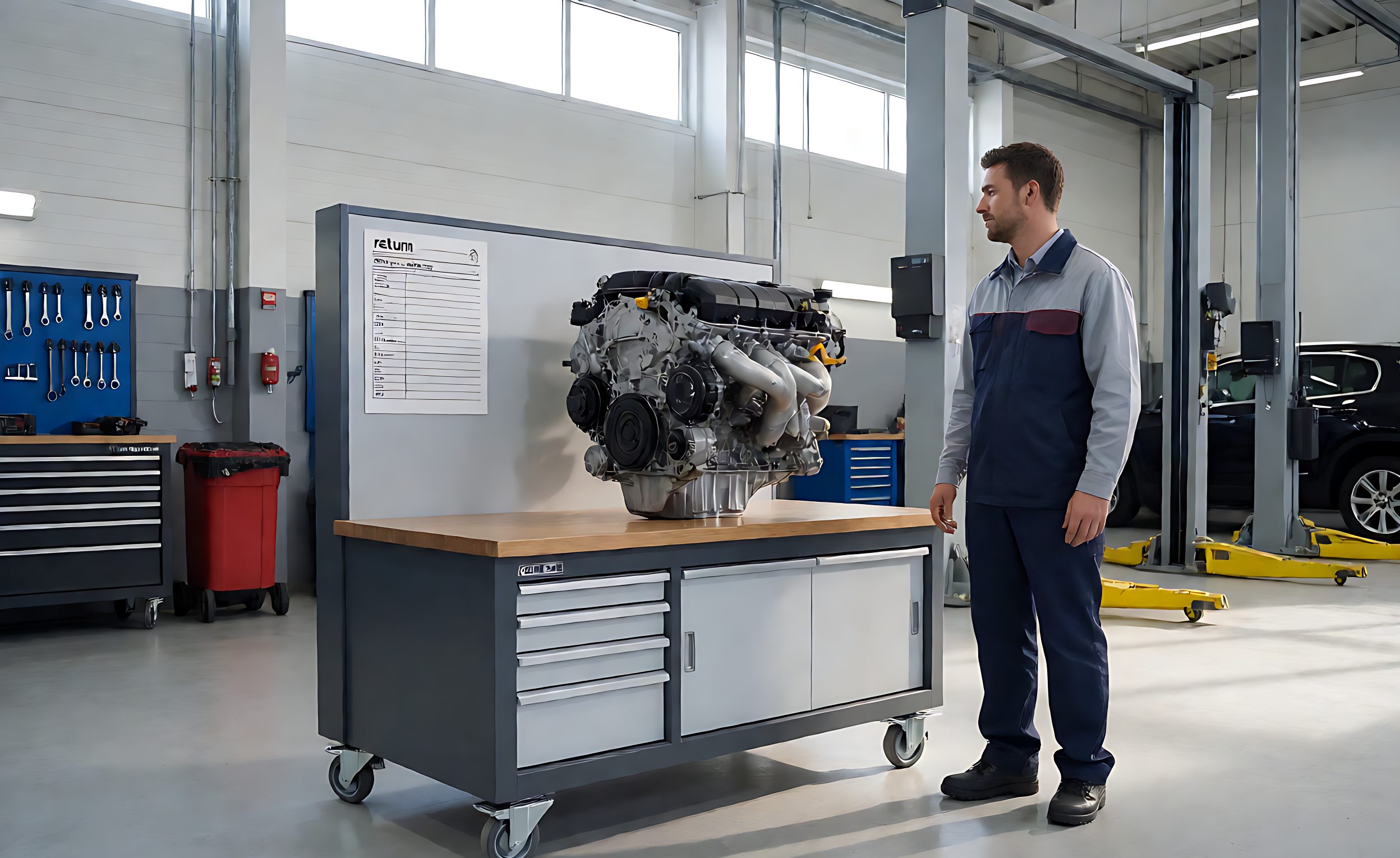
Warranty is a promise until somebody claims under it, and then it becomes logistics. A distributor has already paid for the part, installed it and credited the customer; what happens next determines whether they are reimbursed, how long it takes, and whether anybody ever learns that a component is failing at a rate nobody expected.
Two things have to work. The return flow gets the physical part back to someone competent to look at it, with enough information attached to identify the vehicle and the failure. The audit decides whether the claim was valid, and pays or declines accordingly. Skip either one and warranty spending becomes unmanaged while the underlying quality signal disappears.
Why Claims Need a Return Flow At All
The obvious reason is fraud control – credits approved against a description alone are easy to inflate. The better reason is that descriptions are unreliable. Technicians see symptoms, and symptoms are usually downstream of the actual failure. A regulator that is reported as “not charging” may have been destroyed by a failed rectifier, an over-discharged battery or a corroded earth; only the physical part tells the difference.
Reverse logistics gets little attention because it carries no revenue, but in this context it is what converts a warranty expense into quality intelligence. Every part returned and examined is cheaper than the same defect repeated across a season.
Deciding What Must Come Back
Returning everything is uneconomic: a 3-dollar hose rarely justifies its own freight. Returning nothing makes every claim unverifiable. The standard approach classifies by value and diagnostic usefulness.
- Always return: high-value assemblies – engines, gearboxes, ECUs, fuel pumps, instrument clusters – since the credit depends on the diagnosis and the part is worth rebuilding.
- Return on request: mid-value items flagged by the claim system as unusual, often whatever crosses an agreed value threshold or a repeat-pattern trigger.
- Do not return: consumables with unambiguous failure modes and low value, documented by photograph instead.
- Hold for inspection: anything safety-related, where a batch problem would require a field action.
Whatever the class, identification is mandatory. A part arrives useful only if it carries the vehicle identification number, mileage at failure, date of repair and the technician’s notes. An unlabelled component is evidence of nothing.
The Authorization Cycle, Step by Step
Return merchandise authorization is simply the discipline of agreeing to a return before the carton arrives, and most competent warranty operations run essentially the same sequence.
- Claim opened with data: VIN, mileage, failure date, part number, photographs, and the diagnostic steps taken.
- Decision returned: approved, declined, or approved pending inspection, always with the reason stated.
- Authorization number issued: written on the package and referenced in the claim record, so nothing arrives orphaned.
- Consignment window enforced: parts must be shipped within an agreed number of days or the claim lapses.
- Inspection and closure: credit issued, partially credited, or declined with a written finding.
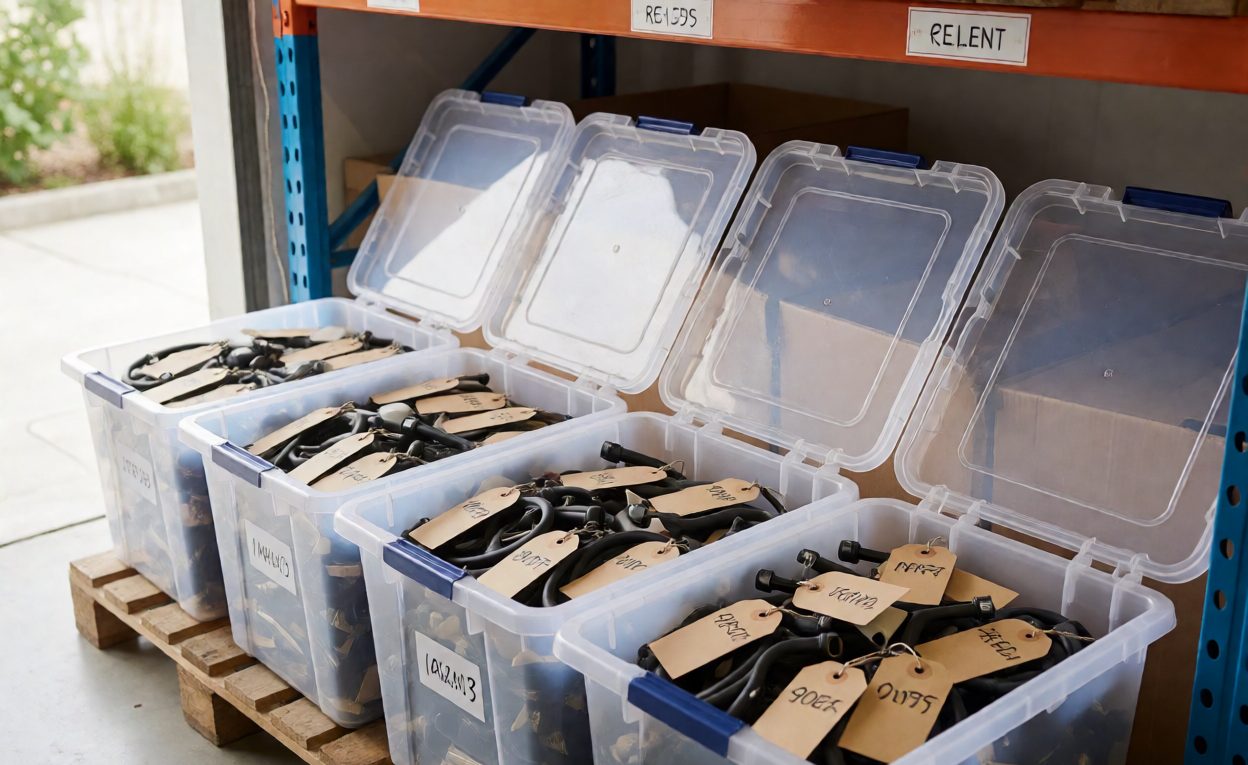
Timing discipline matters more than speed. A returns area where unopened cartons from last season stack up has already failed its purpose, whatever the software says; the bins in the photograph represent the alternative.

Auditing the Claim File
An audit answers three questions in order, and most disputed claims fail on the first.
- Was it covered? Within the warranty period and terms, on a vehicle sold through authorized channels, with exclusions respected.
- Was the vehicle used as intended? Duty cycle evidence tells the story: competition use on a commuter model, engine tuning, or fluids that were never changed.
- Was the repair necessary and correctly priced? Parts used, labour claimed against published times, and whether the service history supports the diagnosis.
Declines should always be written down with a reason and appeal route. Networks accept firm decisions; what destroys trust is silence, because a workshop that cannot tell a customer why the credit did not arrive stops submitting claims and starts absorbing the cost off the books, which hides failures from everybody.
Turning Returned Parts Into Engineering Data
The individual claim is money; the pattern is the real asset. Root cause work – the failure mode and effects analysis approach many quality departments use – only works when claims are coded consistently, so the eighth failed stator in a quarter is recognizable as a batch rather than eight anecdotes.
Practical minimum: one failure code per claim from a fixed list, one free-text field for the finding, and a monthly review comparing claim rate against production lots. When the review identifies a lot, parts availability becomes the operational response – the correct part has to reach the network faster than the failures do. Inspected returns are also where a partner de suministro de repuestos pueden ser responsabilizados por sus propias afirmaciones de calidad, ya que la evidencia del defecto es física.

Dónde aumentan las reclamaciones y cómo prepararse
El volumen de garantías no es constante. Los meses cálidos traen reclamaciones de refrigeración y batería, las estaciones lluviosas traen entrada de agua y fallos eléctricos, y la primera campaña de servicio trae de golpe todos los defectos de instalación del trimestre anterior. Los concesionarios que planifican personal y repuestos para esa forma a través de planificación de campañas de servicio estacionales manejan el pico; los que no lo hacen generan su propia parte del mismo, porque el diagnóstico apresurado produce repuestos incorrectos y visitas repetidas.
La misma lógica se aplica a lo largo de la cadena. Una reclamación aprobada contra una pieza que nunca fue necesaria es un costo creado por el proceso, no por el producto, y la capacitación a través de programa de técnicos de distribuidor la reduce de manera más fiable que el endurecimiento de cualquier norma.
Preguntas Frecuentes
¿Por qué deben los concesionarios devolver las piezas defectuosas?
Las descripciones solo capturan síntomas. La pieza física distingue la causa del efecto y verifica que la reclamación sea real.
¿Qué piezas se devuelven siempre?
Ensamblajes de alto valor como motores, cajas de cambios, ECUs y paneles instrumentales, además de cualquier cosa retenida para inspección de seguridad.
¿Qué información debe acompañar a una pieza devuelta?
VIN, kilometraje en el momento de la falla, fecha de reparación, número de pieza, fotografías y las notas de diagnóstico del técnico.
¿Cuánto tiempo permanece vigente la autorización?
Lo que establezca la política – comúnmente treinta días – tras lo cual una pieza no enviada significa una reclamación caducada.
¿Cuándo puede denegarse una reclamación?
Fuera de los términos de garantía, uso fuera de los ciclos de servicio previstos, falta de registros de servicio, o reparación con procedimiento incorrecto.
¿Por qué se agrupan las reclamaciones por temporada?
El calor provoca fallos en baterías y refrigeración, las estaciones húmedas traen fallos eléctricos, y las campañas hacen aflorar defectos de ensamble juntos.
¿Qué convierte las reclamaciones en mejora del producto?
Codificación consistente de fallas, análisis en contra de lotes de producción y una revisión mensual que identifica patrones entre mercados.