
Warranty Parts Return and Claim Audit: Keeping Credits Honest and Failures Visible
Warranty is a promise until somebody claims under it, and then it becomes logistics. A distributor has already paid for the part, installed it and credited the customer; what happens next determines whether they are reimbursed, how long it takes, and whether anybody ever learns that a component is failing at a rate nobody expected.
Two things have to work. The return flow gets the physical part back to someone competent to look at it, with enough information attached to identify the vehicle and the failure. The audit decides whether the claim was valid, and pays or declines accordingly. Skip either one and warranty spending becomes unmanaged while the underlying quality signal disappears.
Why Claims Need a Return Flow At All
The obvious reason is fraud control – credits approved against a description alone are easy to inflate. The better reason is that descriptions are unreliable. Technicians see symptoms, and symptoms are usually downstream of the actual failure. A regulator that is reported as “not charging” may have been destroyed by a failed rectifier, an over-discharged battery or a corroded earth; only the physical part tells the difference.
Reverse logistics gets little attention because it carries no revenue, but in this context it is what converts a warranty expense into quality intelligence. Every part returned and examined is cheaper than the same defect repeated across a season.
Deciding What Must Come Back
Returning everything is uneconomic: a 3-dollar hose rarely justifies its own freight. Returning nothing makes every claim unverifiable. The standard approach classifies by value and diagnostic usefulness.
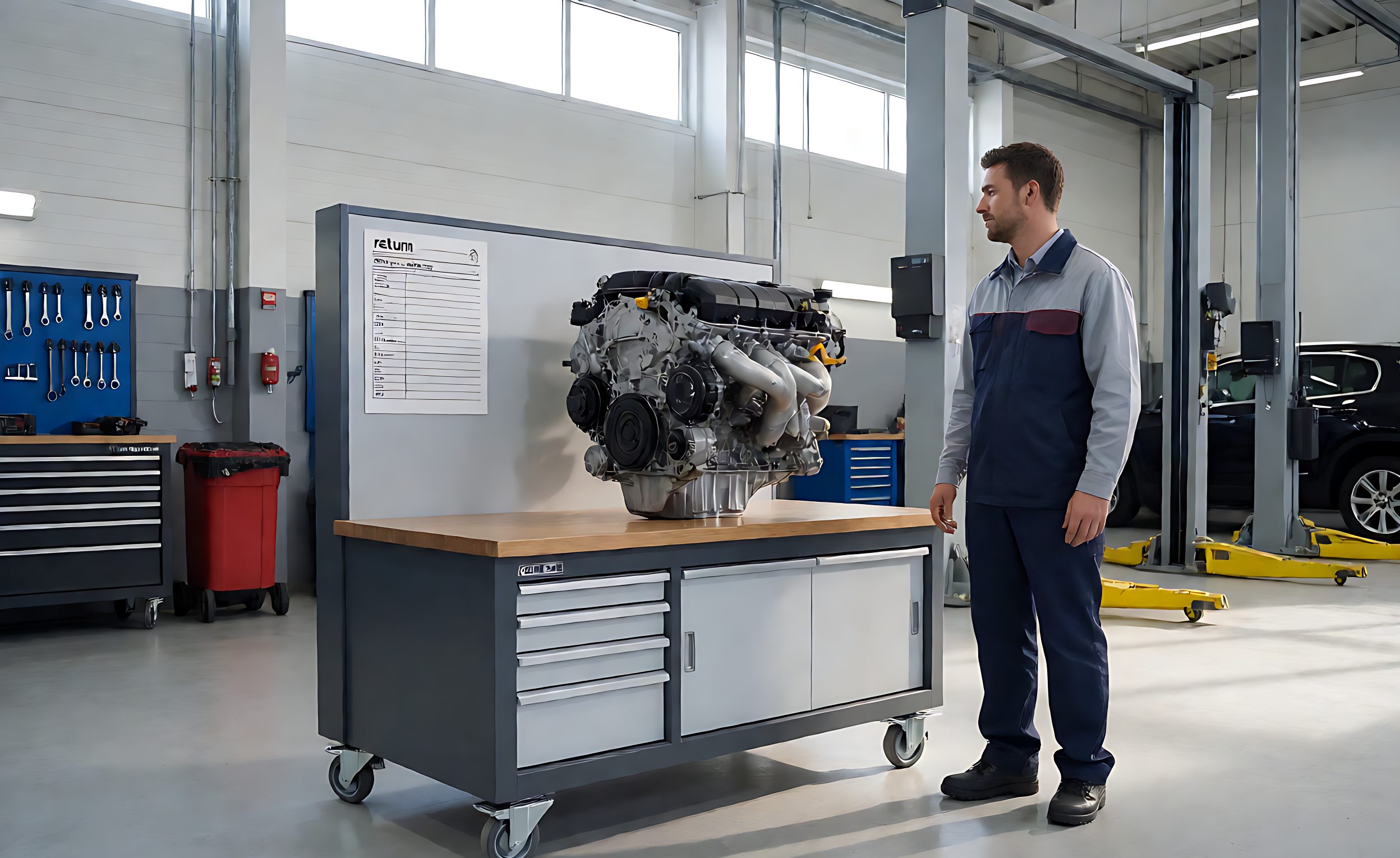
- Always return: high-value assemblies – engines, gearboxes, ECUs, fuel pumps, instrument clusters – since the credit depends on the diagnosis and the part is worth rebuilding.
- Return on request: mid-value items flagged by the claim system as unusual, often whatever crosses an agreed value threshold or a repeat-pattern trigger.
- Do not return: consumables with unambiguous failure modes and low value, documented by photograph instead.
- Hold for inspection: anything safety-related, where a batch problem would require a field action.
Whatever the class, identification is mandatory. A part arrives useful only if it carries the vehicle identification number, mileage at failure, date of repair and the technician’s notes. An unlabelled component is evidence of nothing.
The Authorization Cycle, Step by Step
Return merchandise authorization is simply the discipline of agreeing to a return before the carton arrives, and most competent warranty operations run essentially the same sequence.
- Claim opened with data: VIN, mileage, failure date, part number, photographs, and the diagnostic steps taken.
- Decision returned: approved, declined, or approved pending inspection, always with the reason stated.
- Authorization number issued: written on the package and referenced in the claim record, so nothing arrives orphaned.
- Consignment window enforced: parts must be shipped within an agreed number of days or the claim lapses.
- Inspection and closure: credit issued, partially credited, or declined with a written finding.
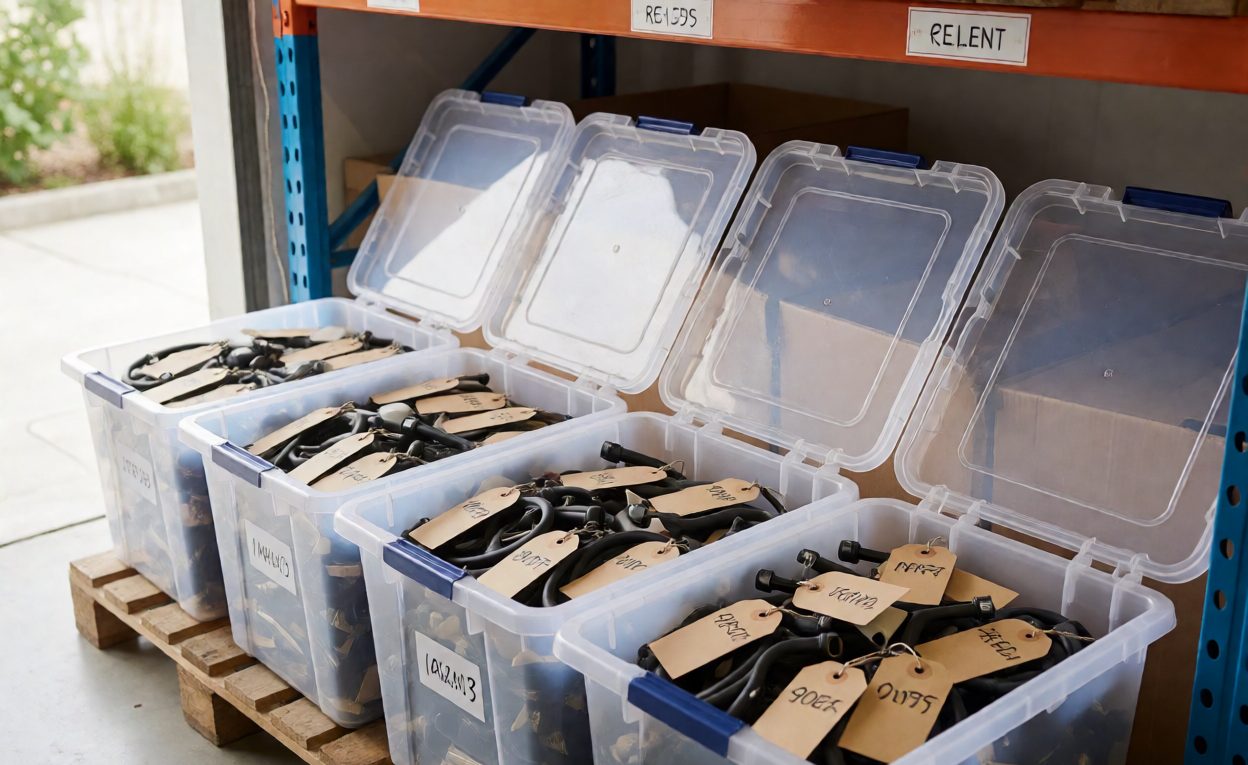
Timing discipline matters more than speed. A returns area where unopened cartons from last season stack up has already failed its purpose, whatever the software says; the bins in the photograph represent the alternative.

Auditing the Claim File
An audit answers three questions in order, and most disputed claims fail on the first.
- Was it covered? Within the warranty period and terms, on a vehicle sold through authorized channels, with exclusions respected.
- Was the vehicle used as intended? Duty cycle evidence tells the story: competition use on a commuter model, engine tuning, or fluids that were never changed.
- Was the repair necessary and correctly priced? Parts used, labour claimed against published times, and whether the service history supports the diagnosis.
Declines should always be written down with a reason and appeal route. Networks accept firm decisions; what destroys trust is silence, because a workshop that cannot tell a customer why the credit did not arrive stops submitting claims and starts absorbing the cost off the books, which hides failures from everybody.
Turning Returned Parts Into Engineering Data
The individual claim is money; the pattern is the real asset. Root cause work – the failure mode and effects analysis approach many quality departments use – only works when claims are coded consistently, so the eighth failed stator in a quarter is recognizable as a batch rather than eight anecdotes.
Practical minimum: one failure code per claim from a fixed list, one free-text field for the finding, and a monthly review comparing claim rate against production lots. When the review identifies a lot, parts availability becomes the operational response – the correct part has to reach the network faster than the failures do. Inspected returns are also where a parts supply partner can be held to their own quality claims, since the defect evidence is physical.

Where Claims Spike, and How to Prepare
Warranty volume is not flat. Hot months bring cooling and battery claims, rainy seasons bring water ingress and electrical faults, and the first service campaign brings every installation defect from the previous quarter at once. Dealers who plan staff and parts for that shape through seasonal service campaign planning handle the spike; those who do not generate their own share of it, because rushed diagnosis produces wrong parts and repeat visits.
The same logic applies down the chain. A claim approved against a part that was never needed is a cost created by the process, not by the product, and training through the distributor technician programme reduces it more reliably than tightening any rule.
Frequently Asked Questions
Why must dealers return faulty parts?
Descriptions only capture symptoms. The physical part distinguishes cause from effect and verifies the claim is real.
Which parts are always returned?
High-value assemblies such as engines, gearboxes, ECUs and instrument clusters, plus anything held for safety inspection.
What information must accompany a returned part?
VIN, mileage at failure, repair date, part number, photographs and the technician’s diagnostic notes.
How long does authorization stay valid?
Whatever the policy states – commonly thirty days – after which an unshipped part means a lapsed claim.
When can a claim be declined?
Outside the warranty terms, used outside intended duty cycles, lacking service records, or repaired with incorrect procedure.
Why do claims cluster by season?
Heat drives battery and cooling failures, wet seasons bring electrical faults, and campaigns surface assembly defects together.
What turns claims into product improvement?
Consistent failure coding, analysis against production lots, and a monthly review that identifies patterns across markets.