
Motorcycle Lighting Compliance: ECE and DOT Headlight Rules for Importers
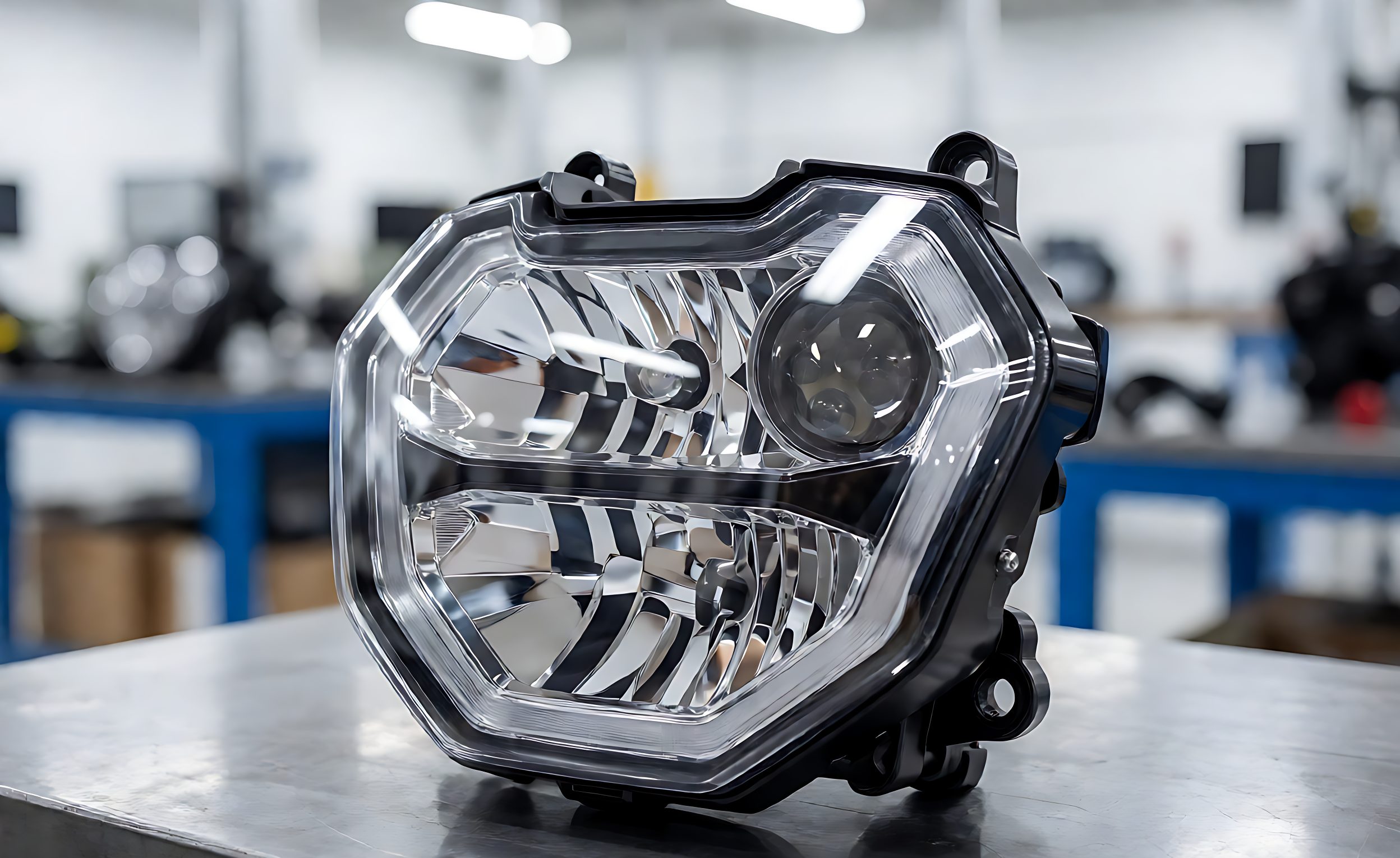
Lighting is the most common compliance surprise in motorcycle importing. Frames, brakes and emissions get planned; then customs or a type-approval body stops a shipment over a headlight that is legal in the factory’s home market and illegal in the destination. The reason is simple: lighting rules differ by market, and they are enforced at the component level, not just the vehicle level. This guide explains the two major regimes — ECE and DOT — what each demands from importers, and how to structure documentation so lighting never stalls a shipment again.
Lighting sits inside the broader сертификации импорта picture, but it deserves its own checklist because the failure mode is different: a bike with a non-compliant headlight often passed every other gate, and the headlight alone determines whether it can be registered.
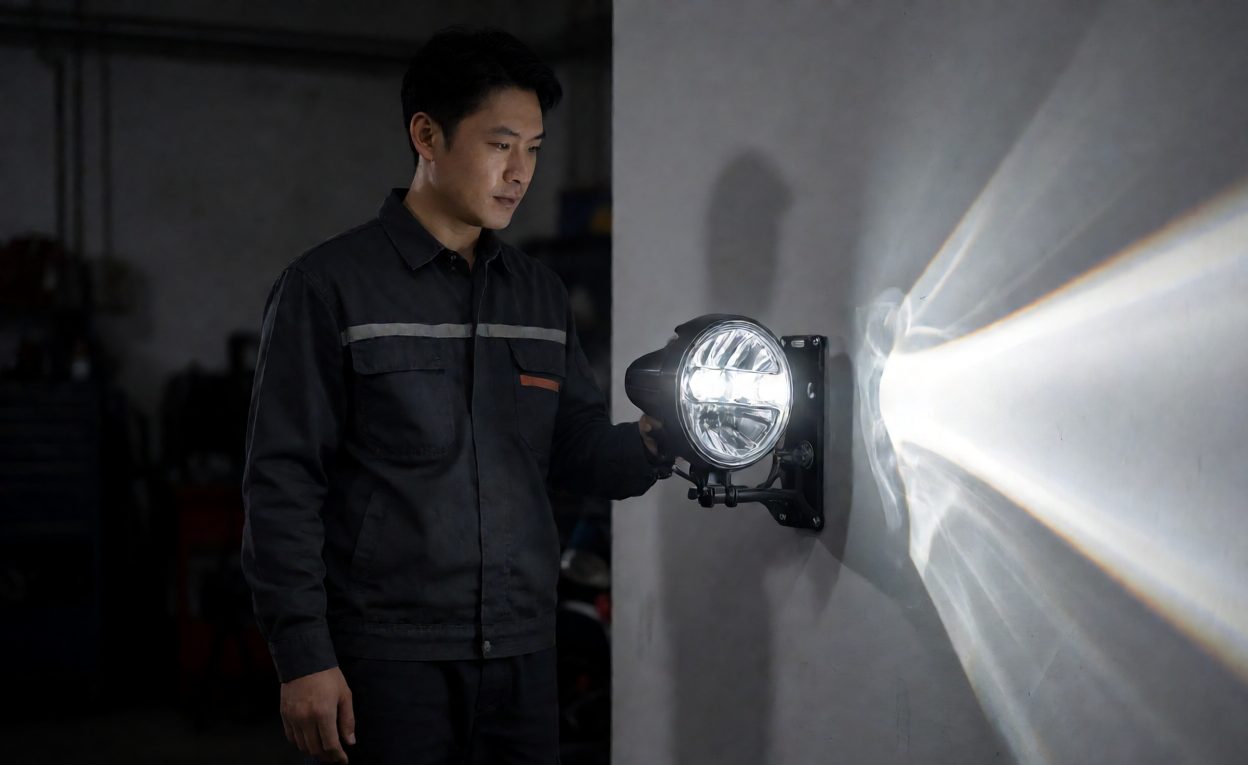
ECE: Approval Marks for Europe and Beyond
The UNECE system covers Europe and a long list of adopting countries. Headlights, tail lights, turn signals and reflectors each carry their own approval, demonstrated by an E-mark stamped on the lens or housing. Two details matter for importers:
- Approval per component: the headlamp has an approval number, the light sources inside it may have their own, and the beam pattern must match the approved type. Swapping an approved headlamp’s bulb or lens for an unapproved variant voids the approval in practice.
- Aim and pattern: ECE headlamps for left-hand-traffic and right-hand-traffic markets differ in beam pattern. A bike built for one traffic side cannot be legally flipped to the other just by adjusting the beam.
Technical background: the UNECE framework is maintained by the UNECE, and vehicle lamp approvals reference the international headlamp regulations that define beam performance and marking. The practical takeaway for an importer is procedural: the mark must exist, match the market’s traffic side, and be traceable to a valid approval document.

DOT: Self-Certification for the United States
The United States works differently. Instead of third-party type approval, the manufacturer self-certifies compliance with the FMVSS 108 lighting standard and marks the device accordingly. There is no stamp from a testing authority; there is a manufacturer’s declaration backed by their test records. Importers must ensure the supplier genuinely holds the test documentation, because “DOT-approved” applied as a sticker is one of the classic fraud patterns in the parts market.
The enforcement asymmetry is worth understanding: ECE stops problems before the market (approval bodies audit factories), while DOT enforcement happens after market entry (NHTSA investigations, recalls, border holds). That makes supplier documentation discipline the importer’s main defense in the US channel.
Which Markets Use Which System
- ECE approval: EU, UK, Australia, Japan, and much of the Middle East, plus many countries that adopt UNECE regulations into national law.
- DOT/FMVSS 108: United States and Canada (with Canadian additions), plus a few markets with their own self-certification logic.
- National schemes: markets like Brazil, India and China run their own systems, sometimes accepting ECE test reports as evidence — verify per market rather than assuming.
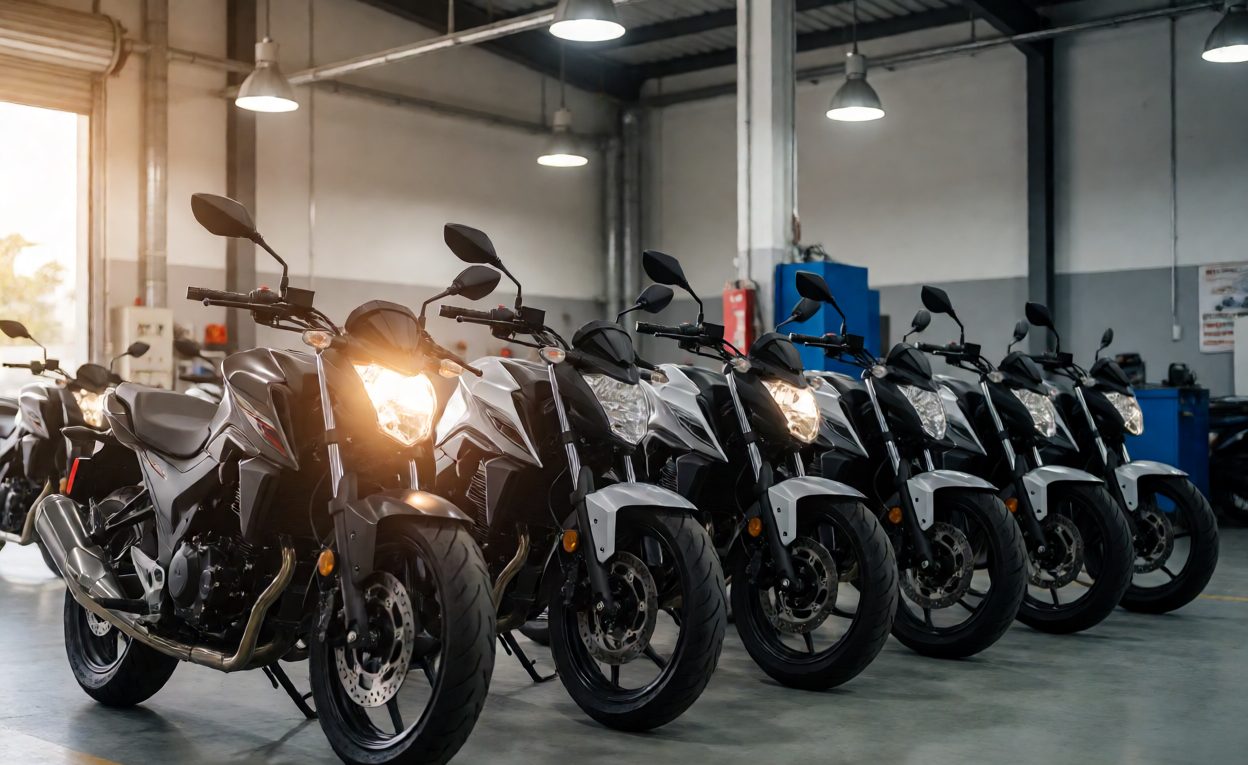
Documentation That Prevents Repeat Problems
Customs and registration bodies rarely argue with paper. For every lighting component on the bike, keep:
- The approval certificate or self-certification test record, with the component’s part number matching what is fitted.
- A photo record of the marks on the actual fitted components, tied to the vehicle’s VIN range or batch.
- The traffic-side statement (LHT/RHT) for the destination market.
This file belongs in the same pack as the инспекция перед поставкой records, so a container issue can be answered with documents in hours rather than a factory re-audit in weeks. For SKD programs, where kits are assembled locally, the lighting components keep their own approvals and the local assembly must not break the pairing between lens, light source and housing — a detail that the CBU versus SKD comparison touches from the tariff side.
Practical Sourcing Notes
Three habits keep lighting clean across a product line. First, standardize on one lighting supplier per model family so approvals and spares align — this matters for the наборы запасных частей too, since a replacement headlamp without the destination market’s approval is a registration problem waiting for a customer. Second, when choosing displacement mixes like the 125cc versus 250cc question, remember lighting requirements do not scale down: a small-displacement bike bound for Europe needs full ECE lighting just like a large one. Third, photograph and archive the marks during final inspection — it is the cheapest insurance in the process.
What is the difference between ECE and DOT motorcycle lighting?
ECE is a third-party approval system: a notified body approves the component and an E-mark is stamped on it, required across the EU and many adopting countries. DOT/FMVSS 108 is US self-certification: the manufacturer tests, declares and marks, with enforcement after market entry.
Can one headlight be legal in both Europe and the US?
Rarely. The beam patterns and approval regimes differ, and ECE pattern approval does not transfer to FMVSS 108 self-certification. Dual-market programs effectively need two homologated lighting variants or a market-specific assembly step.
What does an E-mark on a headlight actually certify?
That the specific headlamp type passed the referenced UNECE regulation’s photometric and construction requirements, tested by a notified body. The mark includes a country code and approval number that should match a certificate you can request from the supplier.
Why can’t I just adjust the beam for the other traffic side?
Конструкции лучей ECE намеренно асимметричны — форма отсечения направляет свет на обочину со стороны движения на соответствующем рынке. Для зеркального отражения этого паттерна требуются другая оптика, а не настройка. Фара с неверной ориентацией ослепляет встречный транспорт и не проходит проверку.
Является ли пометка “одобрен DOT” гарантией легальности детали в США?
No. DOT compliance is self-certified by the manufacturer. The word to trust is documentation: ask for the FMVSS 108 test records linking the part number to the test. Sticker-only “DOT” claims are a known counterfeit pattern.
Do spare headlamps need their own approval?
Yes — a replacement headlamp sold into an approval market must carry the same E-mark as the original, or the customer’s bike fails its next inspection. Stock spare lighting per market, exactly as you would match vehicle homologation.
What lighting documents should an importer archive per shipment?
Approval certificates or test records for every fitted lamp, photos of the actual marks tied to VIN range or batch, and the traffic-side statement. Archived per shipment, this answers customs or registration queries in hours.