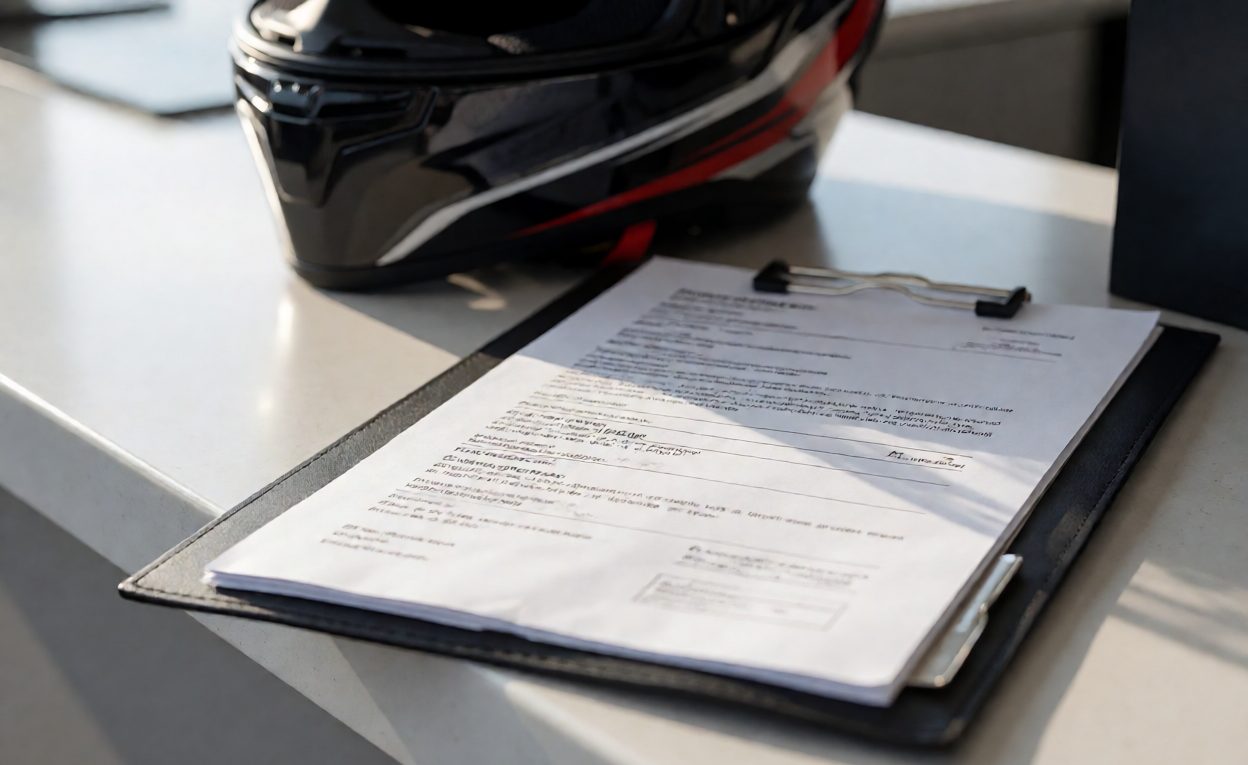
Motorcycle Road-Worthiness Inspection Preparation
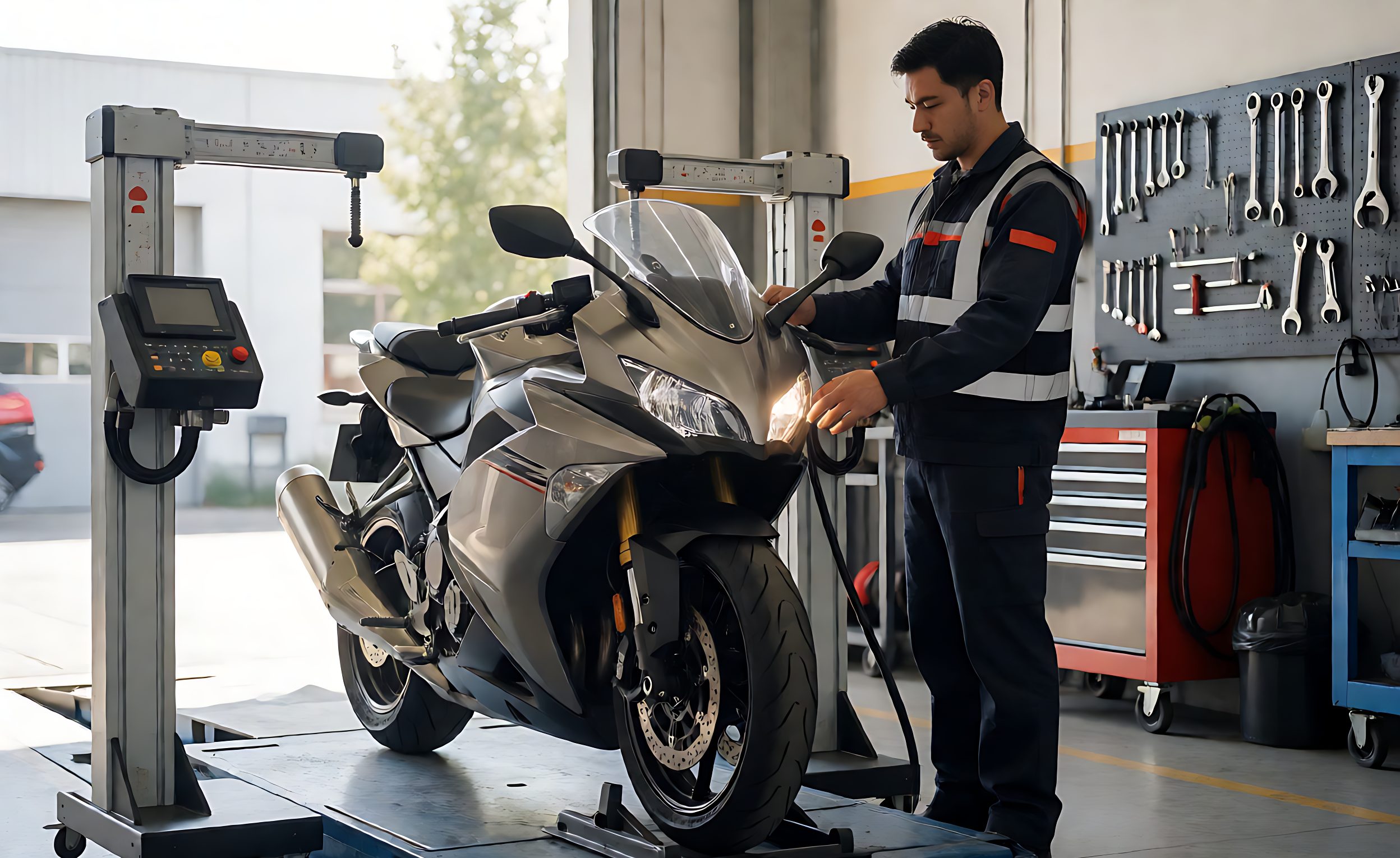
Road-worthiness inspection is the last gate between imported stock and revenue, and it is the gate that most often delays cash. A bike that is mechanically sound can still fail on lamp aim, tyre date codes, emissions at idle, or a VIN plate that does not match the invoice. Each rejection costs a slot, a re-inspection fee, and a customer who has already paid.
Preparation is mostly administrative, and most of it can be done before the unit leaves the port. Importers who build a pre-delivery inspection aligned to the local requirements rarely see first-time failures; those who rely on the customer to discover problems build a reputation for it instead.
What Inspections Actually Check
Requirements vary by jurisdiction, but the common failure categories are consistent: lighting and electrical, brakes and tyres, steering and suspension condition, frame and VIN integrity, emissions where applicable, and noise. Most are cheap to correct in a workshop and expensive to correct under time pressure at an inspection station.
- Lighting – aim, operation and often lens condition; misaim is the single most common first-time failure.
- Tyres – tread depth, damage and date code; older stock fails on date codes alone.
- VIN and frame – the stamped number must match the paperwork exactly, including any re-stamping done at assembly.
- Noise and emissions – a modified exhaust or a carburettor outside spec can fail an otherwise sound bike.
None of these are engineering problems. They are preparation problems, which is good news, because preparation is a process that can be standardised across a fleet.
Preparing Stock Before Delivery
The efficient approach is a pre-delivery checklist run at the warehouse that mirrors the inspection sequence. Lamp aim with a proper rig, brake and tyre inspection against the local minimum, VIN verification against the invoice and shipping documents, and a short function check of every electrical item. Cost per unit is small compared with a rejected slot and the delay it creates.
Documentation deserves equal attention. Registration needs the invoice, the certificate of origin or conformity where required, and proof that the unit matches what was declared. Where CKD units were assembled locally, the assembly records and the re-stamped VIN need to be consistent across all three documents – invoice, registration and physical frame.

Managing Failures
When a unit fails, the useful question is whether it failed on condition or on conformity. A misaimed lamp is a condition issue corrected in minutes; a VIN mismatch is a conformity issue that can take days and documents. Keeping these separate in your process prevents a paperwork problem from being escalated as a mechanical one.
It is also worth tracking failure reasons by model and by shipment. A pattern of lamp misalignment across one container usually means something about how the bikes were packed or assembled, not a run of bad luck, and that is fixable upstream rather than at the inspection lane.
Setting the Standard With Dealers
The last piece is the dealer handover. Agree in writing that stock is delivered registration-ready, that the dealer performs a pre-delivery check against a supplied checklist, and that any inspection failure caused by dealer handling is the dealer’s cost. That single agreement removes most of the blame cycle that otherwise develops between importer and dealer.

The last piece is the dealer handover. Agree in writing that stock is delivered registration-ready, that the dealer performs a pre-delivery check against a supplied checklist, and that any инспекция транспортных средств failure caused by dealer handling is the dealer cost. That single agreement removes most of the blame cycle that otherwise develops between importer and dealer, and it gives both sides a checklist to point at rather than a memory to argue over. Where a fleet is involved, run the same checklist at the importer stage and again at the dealer stage, because a fault caught twice is a fault that never reaches the lane, and the cost of the second check is measured in minutes rather than slots.
Two documents matter more than the rest. The идентификационный номер транспортного средства must match the physical frame, the invoice and the registration pack exactly, because a mismatch stops registration outright and correction requires reissuing paperwork. The tyre date code must be current, since long-stored stock fails on age alone even when tread depth is untouched.
Родственные материалы для покупателей, разбирающих тот же вопрос: оптовый мотоцикл 125cc для улицы техническое руководство по выбору надежного поставщика для глобального распределения, мотоциклы 125cc против 150cc против 250cc как импортеры выбирают правильную комбинацию и 2024 руководство по уходу за цепью мотоцикла профессиональные техники для пиковой производительности покрывают окружающие решения, от которых зависит эта спецификация.
Часто задаваемые вопросы
How long does a road-worthiness inspection take?
The vehicle check is usually minutes; the queue and the documentation check usually dominate. Units that arrive complete and clean rarely spend more than an hour in total.
Can a bike fail on age alone?
Yes. Tyre date codes, battery condition and in some markets emissions limits are all age-sensitive, which is why long-stored stock needs a pre-delivery refresh.
Who fixes a failed inspection – dealer or importer?
Set this in the agreement. Most dealers expect the importer to deliver registration-ready stock and will not absorb re-inspection costs on units that were never prepared.
Does a modified exhaust affect road-worthiness?
It can, on noise and emissions. Keep a record of the original exhaust and treat any change as a deliberate specification change, not an accessory.
What documents are usually required?
Commercial invoice, packing list, certificate of origin or conformity where applicable, and for locally assembled units the assembly and VIN records. Requirements vary, so confirm the local list once.
How do I prepare a CKD-assembled bike?
Verify the VIN re-stamp against assembly records, confirm torque on all assembled fasteners, and run the full function check before it leaves the assembly shop.
Is it worth pre-registering stock?
For fleet or high-volume programmes yes; it front-loads the paperwork cost and removes the inspection delay from the customer’s delivery date.