
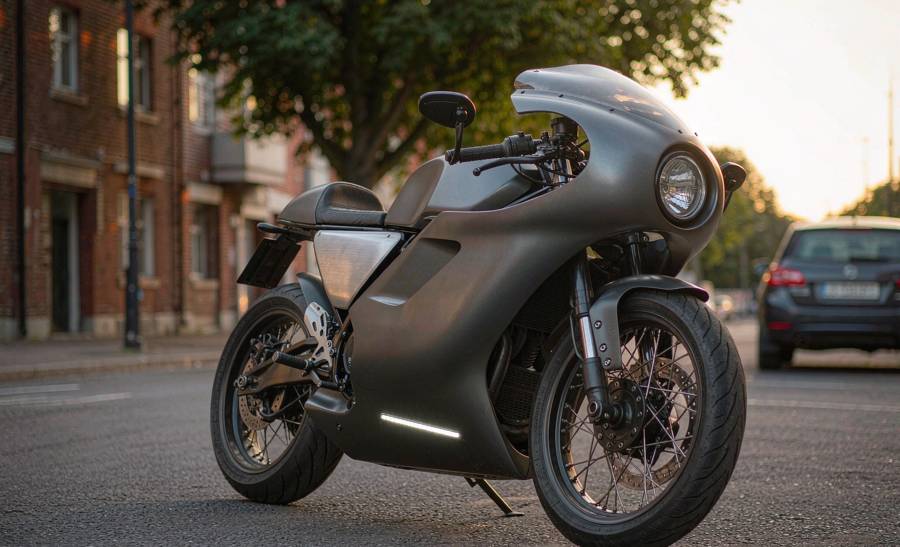
Ein Café Racer ist der bekannteste Stil im Motorradbau: ein abgespecktes Motorrad mit niedriger Lenkstange, einem Einzelsattel und ohne Anbauteile, die es nicht leichter oder schneller machen. Der Look entstand in den 1950er- und 1960er-Jahren in London, wo Fahrer Serienmotorräder für kurze, schnelle Etappen zwischen Transportcafés umbauten – der Ursprung der “ton-up”-Kultur und der 100-mph-Grenze. Ob sich das Fahren eines solchen Motorrads lohnt, hängt nicht vom Silhouettenbild ab, sondern von drei praktischen Dingen: der Führerscheinklasse, in die der Hubraum fällt, der Ergonomie, mit der man leben kann, und der Ausrüstung, die das Motorrad gesetzlich tragen muss.
Was ein Motorrad zu einem Café Racer macht
Vier Merkmale definieren den Stil, und jedes von ihnen ist eine Designentscheidung mit Auswirkungen auf das Fahrverhalten:
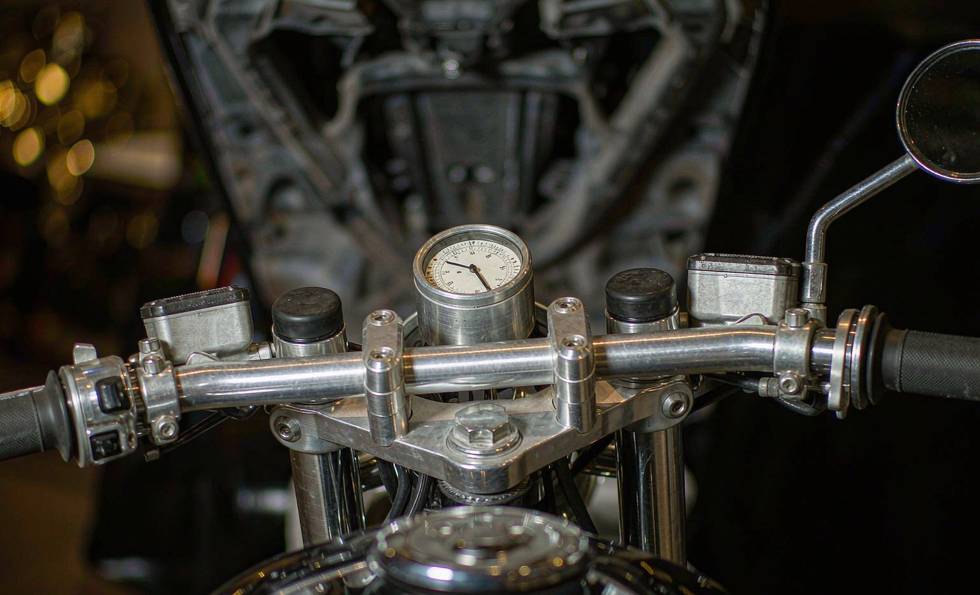
- Niedrige oder Clip-on-Lenker — Das Gewicht verlagert sich auf die Handgelenke und der Oberkörper beugt sich nach vorne. Präziseres Lenkgefühl, mehr Belastung bei niedriger Geschwindigkeit.
- Einzelsattel mit Heckverkleidung — Der Beifahrersitz wird entfernt, was Gewicht spart und das Heck kürzer macht.
- Minimale Verkleidung — Keine Frontverkleidung oder Windschutzscheibe, daher nimmt der Fahrer den Fahrtwind direkt wahr.
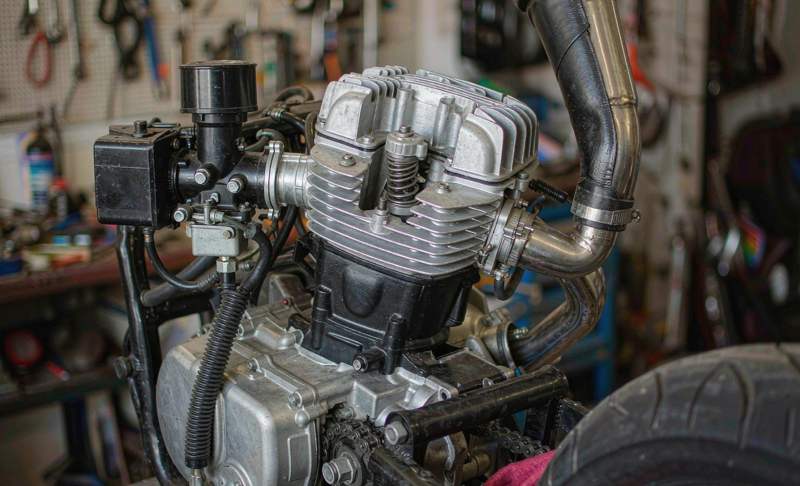
- Leistungstechnisch aufgerüstete Motoren und Bremsen im Vergleich zum Basismodell — Historisch lag der Fokus des Baus auf der Leistung, nicht auf Verzierungen.
Ein Café Racer ist daher nicht einfach “ein altes Motorrad mit flachem Sitz”. Ein Motorrad mit aufrechten Lenkern, einem Doppelsitz und einer Scheibe ist ein Standard- oder Scrambler-Motorrad, egal in welcher Farbe es lackiert ist.
Der Hubraum bestimmt, welchen Führerschein man braucht
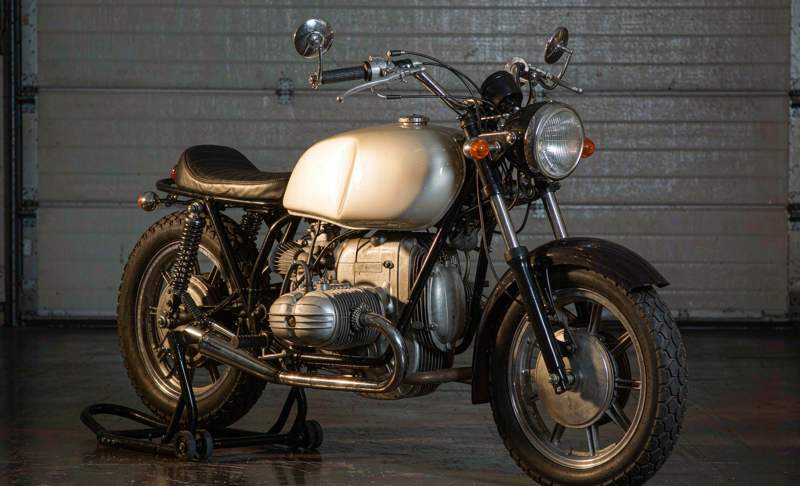
In der EU wird die Führerscheinklasse durch den Zylindervolumen, die Leistung und das Leistungsgewicht – nicht durch den Stil des Motorrads – festgelegt, gemäß Richtlinie 2006/126/EG. Dies ist der erste Filter bei der Vorauswahl, denn ein Motorrad, das man nicht legal fahren darf, kommt nicht infrage:
| Kategorie | Grenzwert | Mindestalter | Typischer Café-Racer-Bau |
|---|---|---|---|
| AM | Mofa, Höchstgeschwindigkeit 45 km/h | 16 | Stadt-Mofa, in der Regel keine Kandidaten |
| A1 | ≤ 125 cm³, ≤ 11 kW, ≤ 0,1 kW/kg | 16 | Leichter 125er-Café-Racer, in vielen Märkten für Fahranfänger geeignet |
| A2 | ≤ 35 kW, ≤ 0,2 kW/kg, nicht abgeleitet von einem Motorrad mit mehr als der doppelten Leistung | 18 | Zweizylinder- oder Einzylindermotoren in der 300–500-cm³-Klasse |
| A | Unbegrenzt | 20 (nach 2 Jahren mit A2) oder 24 direkt | Retro-Motorräder mit großem Hubraum und Big-Bore-Customs |
Die A2-Leistungsgewicht-Vorschrift ist die Regel, die Käufer überrascht: Ein leistungsreduziertes großes Motorrad darf nicht von einer Maschine abgeleitet sein, die mehr als 70 kW (doppelt 35 kW) leistet, daher kann nicht jedes gedrosselte 650er-Modell als A2-konform zugelassen werden.
Café Racer vs. Scrambler vs. Standard
| Stil | Fahrposition | Bodenfreiheit | Empfohlen für |
|---|---|---|---|
| Café-Racer | Vorne, niedrige Lenker | Niedrig | Verfestigte Straßen, kurze, dynamische Fahrten, stilorientiertes Pendeln |
| Scrambler | Aufrecht | Hoch | Mischgelände, unebere Straßen |
| Standard / Naked | Aufrecht | Mittel | Allround-Einsatz, längste Fahrzeiten im Sattel |
Wenn Sie täglich fahren und Ihre Route durch den Verkehr führt, ist die Standard-Motorradvariante das leichter zu bewältigende Motorrad; der Café-Racer belohnt kürzere Fahrten auf besserem Belag.
Das, was ein neues Motorrad rechtlich mitführen muss (EU)
Seit der L-Kategorie-Typprüfungsverordnung, Verordnung (EU) Nr. 168/2013, die ab dem 1. Januar 2016 gilt, müssen in der EU verkaufte neue Motorräder wie folgt ausgestattet sein:
- ABS Pflicht auf neuen Motorrädern über 125 cm³; ABS oder ein kombiniert Bremsesystem (CBS) bei solchen mit bis zu 125 cm³.
- Automatisches Licht ein (AHO) — Die Beleuchtung schaltet sich mit dem Motor ein.
- Abgase — Euro 4 ab 2016 und Euro 5 ab 2020 für neue Typen, mit Haltbarkeit der Schadstoffkontrolle von 20.000 km (A1) und 35.000 km (A2/A3).
- OBD — schrittweise vorgeschriebene Borddiagnose, mit standardisierten Zugangsporten.
- Manipulationsschutz Maßnahmen bei Fahrzeugen bis 35 kW.
Zwei Konsequenzen für einen Käufer: Ein echtes Neufahrzeug ist eine sicherere Wahl als ein vor-2016-Maschine, was allein die Bremsen betrifft, und ein Einzelstück-Custom-Build ist der Punkt, an dem diese Liste Ihr Problem statt das der Fabrik wird — individuell gebaute Fahrzeuge können nach Serien- oder nationalen Verfahren zugelassen werden, aber Sie sind es, der diese erfüllen muss.
Die Spezifikationen, die darüber entscheiden, ob es Ihnen gefällt
| Spezifikation | Prüfen | Warum es wichtig ist |
|---|---|---|
| Sitzhöhe | Können Sie am Stopp mit flachem Fuß abstellen? | Tiefe Griffe reduzieren die Langsamfahrstabilität; ein niedriger Sitz kompensiert dies |
| Leergewicht | Herstellerangabe, bereitet zum Fahren | Leichte Builds sind leichter zu manövrieren, einzuparken und aufzusetzen |
| Bremsen | Mindestens Scheibe vorn; ABS gemäß den oben genannten Regeln | Die größte Sicherheitsvariable an jedem Motorrad |
| Griff- und Fußrastenposition | Setzen Sie sich 20 Minuten hinein, nicht 2 | Die Belastung von Handgelenken und Knieen wird bei längeren Fahrten zu Ermüdung |
| Reifen und Räder | Größen, die noch in Produktion sind | Restaurierte Motorräder tragen oft veraltete Größen, die schwer zu ersetzen sind |
| Reichweite | Tankliter × realistischer Verbrauch | Kleine Café-Racer-Tanks können eine 150-km-Einsatzgrenze sein |
Neu, restauriert oder custom
| Weg | Sie erhalten | Der Haken |
|---|---|---|
| Neu Fabrik / OEM Build | Bekannte Spezifikation, Garantie, Ersatzteile, aktuelle Brems- und Abgasconformität | Weniger individuell als Einziges |
| Restaurierter Klassiker | Charakter und steigende Seltenheit | Zustand von Rahmen, Elektrik und Bremsen muss inspiziert werden; die Beschaffung der Teile liegt in Ihrer Verantwortung |
| Einzigartiges Custom | Einzigartigkeit und ein Aufbau, der zu Ihnen passt | Unterstützung, Konformität und Wiederverkaufsrisiko liegen vollständig bei Ihnen |
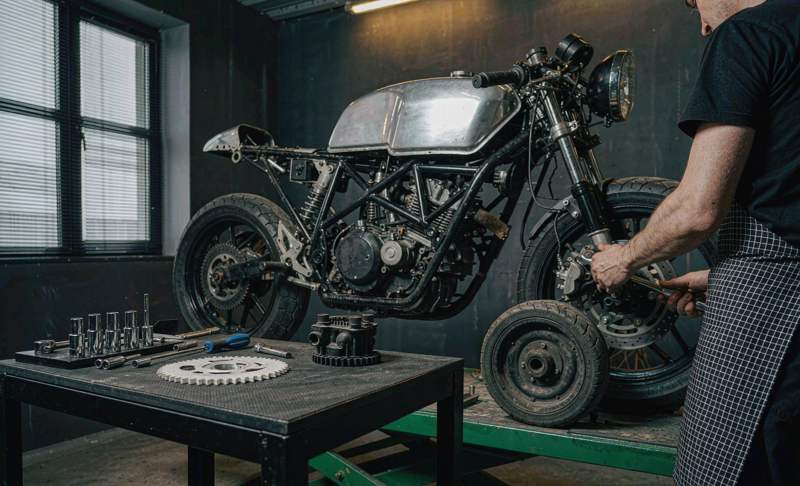
Beschaffung von Modellen im Café-Racer-Stil als Importeur
Für Händler oder Distributoren ist der praktische Weg zu einem Modell im Café-Racer-Stil nicht die Suche nach einzelnen Customs, sondern die Beauftragung eines solchen: Der Café-Racer-Stil ist ein Paket aus Karosserie, Sitz, Lenker und Auspuff, das auf einer bewährten Pendler- oder Einzylindermaschine entwickelt werden kann, sodass Mechanik, Abgasgenehmigung und Ersatzteilkette standardisiert bleiben.
Das ist das OEM/ODM-Modell, mit dem wir bei Zukida arbeiten. Unsere Fertigungswurzeln reichen bis 1997 zurück, und wir haben die Zukida-Exportmarke 2020 gegründet, um Benzinmotorräder, Roller und E-Bikes an Kunden in mehr als 40 Ländern zu liefern. In der Praxis läuft ein Programm im Café-Racer-Stil folgendermaßen ab: Anforderung und Zielmarkt → Designvorschlag, der Styling und Konformität der Basisplattform in Balance bringt → Prototyp für Tests und Freigabe → Produktion mit Prozessinspektion. Sie können die aktuelle Motorradpalette einsehen, auf der diese Programme normalerweise aufbauen, oder lesen , wie wir mit Partnern zusammenarbeiten.
Bevor Sie sich für einen Lieferanten entscheiden, klären Sie, was Standard und was optionales Equipment ist: Basisplattform und Hubraum, installiertes Bremssystem, Beleuchtung, Reifengrößen, die in fünf Jahren noch verfügbar sind, und wer die Typgenehmigungsdokumentation für Ihren Markt hält.
Kauf-Checkliste
- Zuerst Führerscheinklasse — Prüfen Sie Hubraum (cc), Leistung (kW) und Leistungsgewicht anhand Ihrer Kategorie, bevor Sie sich in ein Foto verlieben.
- Bremseinsätze — ABS (oder CBS bei 125 cc und darunter) bei jedem neu verkauften Motorrad in der EU sowie eine dokumentierte Bremsenwartung bei einem restaurierten Bike.
- Setzen Sie sich 20 Minuten darauf — Lenkererreichbarkeit, Fußrastenposition und Sitzhöhe entscheiden darüber, ob die Fahrt Spaß macht oder Arbeit.
- Wiegen Sie es — Fragen Sie nach dem Leergewicht, nicht nach dem trockenen Gewicht.
- Prüfen Sie die Teilekette — Reifen, Bremsbeläge und Verbrauchsmaterialien in Größen, die noch hergestellt werden.
- Wissen Sie, wer es unterstützt — Ein Fabrik- oder OEM-Aufbau bietet Gewährleistung und einen Ersatzteilkreislauf; ein Einziges bietet beides nicht.
Häufig gestellte Fragen
Ist ein Café Racer geeignet für Anfänger?
Eine leichte A1-Klasse (bis zu 125 cc, 11 kW) kann für einen selbstbewussten Anfänger auf befestigten Straßen geeignet sein und ist in vielen Märkten lernfahrzeuggerecht. Die vorgelagerte Sitzposition und der straffe Einzelsitz sind weniger verzeihend als bei einer Standardmaschine, passen Sie daher den Hubraum an Ihre Führerscheinklasse an und gewöhnen Sie sich an die Lenker, bevor Sie im Verkehr fahren.
Sind Café Racer auf langen Strecken bequem?
Im Allgemeinen weniger als Standards oder Scrambler. Geringe Lenker belasten die Handgelenke, und ein einzelner Sattel mit Erhöhung limitiert die Bewegung, daher eignen sie sich besser für kurze, schnelle Fahrten als für ganztägiges Touren. Wenn lange Reisen geplant sind, wählen Sie ein Standardmodell oder ein Café-Racer-Design-Modell, dessen Sitz- und Lenkergeometrie für lange Distanzen ausgelegt ist.
Warum kann ich ein restriktives großes Motorrad nicht mit einer A2-Lizenz anmelden?
Weil die A2-Regel sowohl die Leistung als auch den Ursprung begrenzt: Das Motorrad darf nicht mehr als 35 kW erzeugen, innerhalb von 0,2 kW/kg bleiben und darf nicht von einem Fahrzeug abgeleitet sein, das mehr als das Doppelte dieser Leistung erzeugt. Ein drosselndes 100-kW-Superbike scheitert dem letzten Test unabhängig davon, was es jetzt erzeugt.
Benötigt ein kundenspezifisches Café-Racer ABS?
Neue Motorräder über 125 cm³, die in der EU verkauft werden, müssen gemäß Verordnung (EU) Nr. 168/2013 mit ABS ausgestattet sein. Individuell gebaute Fahrzeuge können unter Kleinserien- oder nationalen Regelwerken zugelassen werden, aber die Verantwortung, die anwendbaren Anforderungen zu erfüllen, geht auf den Hersteller oder Importeur über — also bestätigen Sie den Status bei Ihrer Zulassungsbehörde, bevor Sie den Bau beginnen.
Weiterführende Lektüre
- Elektro- vs. Benzin-Kommutatorräder: Ein spezifikationsbasierter Vergleich für Importeure
- Zahlungsbedingungen für Motorradexporte: Wer schützt wen?
Wenn Sie ein Café-Racer-Design-Modell für einen bestimmten Markt spezifizieren, ist der schnellste Weg, uns die Zielverdrängung, die Lizenzklasse, in die Sie verkaufen, und die Styling-Referenz zu senden — unser Team meldet sich mit einem plattformangepassten Vorschlag und dem Konformitätsstatus für Ihren Markt zurück.
Zuletzt aktualisiert: September 2026. Lizenzkategorien folgen der Richtlinie 2006/126/EG und Fahrzeuganforderungen folgen der Verordnung (EU) Nr. 168/2013, veröffentlicht vom Europäischen Parlament; bestätigen Sie immer die aktuellen nationalen Regeln des Marktes, in dem Sie das Fahrzeug anmelden.