
Motoconmutadores eléctricos vs de gasolina: una comparación basada en especificaciones para importadores
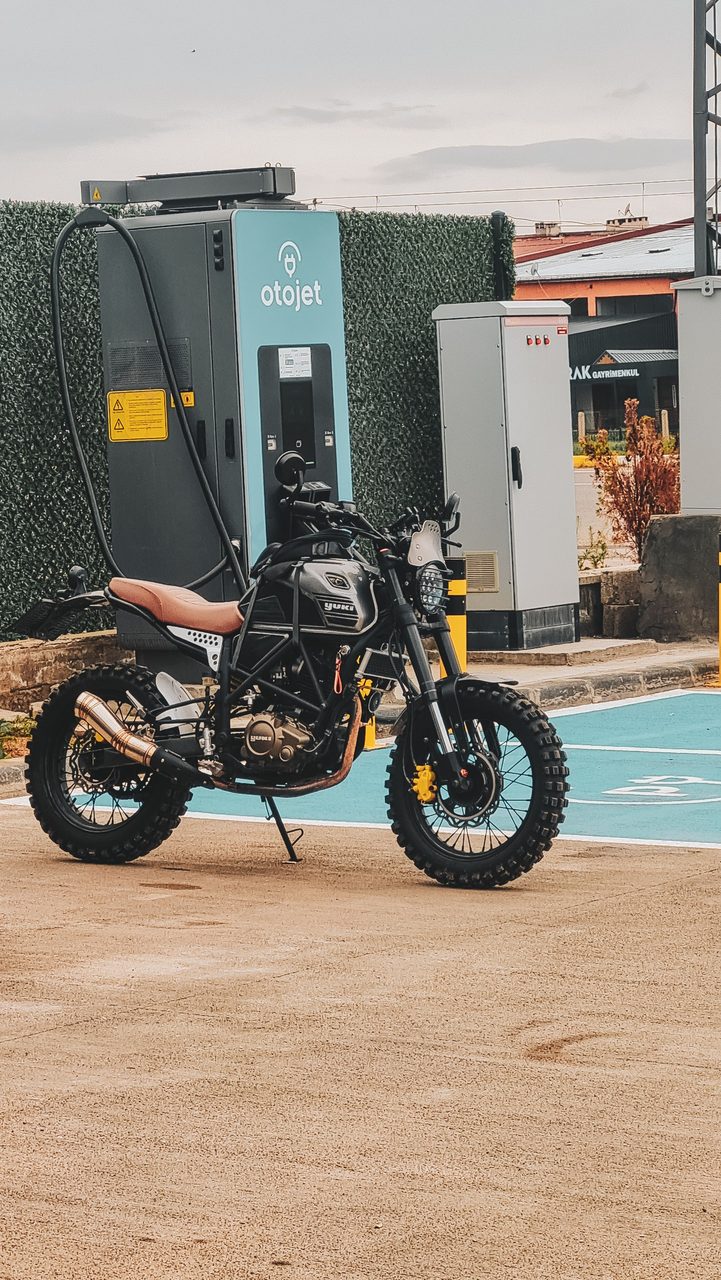
Todo importador que construya un programa de motos para trayectos urbanos se enfrenta eventualmente al mismo dilema: mantener en stock eléctrico, mantener en stock de gasolina o mantener ambos. El debate suele conducirse con eslóganes —“el eléctrico es el futuro”, “la gasolina es lo que el mercado confía”— y los eslóganes no sobreviven al contacto con un plan de contenedor. Lo que sí sobrevive es la hoja de especificaciones.
Esta comparación utiliza cifras publicadas de cuatro modelos reales de la gama urbana de Zukida: dos eléctricos y dos de gasolina. Cada número citado a continuación proviene de esas hojas, y allí donde una conclusión se deriva y no se afirma, se deriva mediante un cálculo aritmético que puede verificar.
La comparación comienza con el ciclo de servicio, no con el combustible
Antes de comparar los trenes motrices, defina el trabajo. La propia posicionamiento de Zukida para la gama urbana eléctrica es explícito: el E-Bike CG y el E-Bike GN se describen como construidos para flotas de última milla y servicio de bajo ruido. Sus notas de producto nombran a África, Oriente Medio y Sudamérica como los mercados donde se han convertido en modelos clásicos. La gama urbana de gasolina —la AX100 y la ARCH— se describe en términos similares como clásica en África y América Latina, pero sin el enfoque de bajo ruido y última milla.
Esa diferencia es el argumento entero en miniatura. Las motos urbanas eléctricas ganan donde las rutas son cortas, predecibles y vuelven a un punto de carga conocido: flotas de reparto, servicio en campus y municipal, trabajo de mensajería urbana, comunidades cerradas. Las motos urbanas de gasolina ganan donde la ruta es larga, el terreno es desconocido y el repostaje debe ser posible en cualquier lugar donde se venda un bidón de combustible. Un comprador que mantenga en stock eléctrico para una red de distribución rural no está apostando por la tecnología; está cometiendo un error sobre infraestructura.
Potencia y velocidad: Lo que las hojas de especificaciones dicen realmente
Coloque los cuatro modelos lado a lado y la primera sorpresa es cuán cercanos están en el rendimiento principal.
| Modelo | Unidad de potencia | Velocidad máxima | Par motor | Peso | Carga por contenedor de 40 pies HQ |
|---|---|---|---|---|---|
| E-Bike CG (eléctrico) | Motor 72 V, 2000 W; opciones de potencia nominal 1500–5000 W | 70 km/h (modo eco 50–55 km/h) | 160 N máx. | No especificado | 132 unidades |
| E-Bike GN (eléctrico) | Motor 72 V, 2000 W; opciones de potencia nominal 1500–5000 W | 70 km/h (modo eco 50–55 km/h) | 160 N máx. | No especificado | 105 unidades (SKD) |
| AX100 (gasolina) | Monocilíndrico 98 cc, refrigerado por aire, 2 tiempos; 6,8 kW a 7500 r/min | ≥85 km/h | 9,4 N·m a 6500 r/min | 82 kg en seco | 144 unidades SKD (doble embalaje) / 244 conjuntos CKD |
| ARCH125/150 (gasolina) | Monocilíndrico 124/150 cc, 4 tiempos, refrigerado por aire; 9,0 kW a 7000 r/min | ≥90 km/h | 9,8 N·m a 6500 r/min | 122 kg en seco | 105 unidades SKD / 175 unidades CKD |
Lea esa tabla cuidadosamente, porque desmonta dos supuestos a la vez. Primero, los modelos eléctricos no son lentos en comparación con los modelos de gasolina de entrada —70 km/h frente a 85 y 90 km/h es una brecha que la mayoría de los ciclos de servicio urbanos nunca revelarán—. Segundo, y más útil para las ventas, los modelos eléctricos publican una cifra de par máximo de 160 N, que es el número que gobierna cómo una moto cargada arranca desde un punto fijo o asciende una pendiente. La escalabilidad publicada para ambos modelos eléctricos es ≥25°. Para el trabajo de reparto con paradas y arranques frecuentes, esa característica de arranque importa más que la velocidad máxima.
También conviene anotar las opciones de potencia nominal: ambos modelos eléctricos se listan con opciones de 1500 W, 2000 W, 3000 W, 4000 W y 5000 W a 72 V nominales, con un motor de 72 V 35H 2000 W y un controlador de 72 V 80 A de tres velocidades con marcha atrás y punto muerto. En la práctica, esto significa que una sola plataforma puede especificarse para varias clases de potencia regulatorias o de clientes sin reingeniería del vehículo completo, lo cual es valioso si su mercado limita la potencia según la categoría de licencia.
Energía: 6.2 horas de carga frente a 2.2 litros por 100 kilómetros
Aquí es donde las dos tecnologías divergen genuinamente y donde las fichas técnicas son más útiles.
Los modelos eléctricos publican un alcance máximo de 90–120 km, un tiempo de carga de 6.2 horas, una batería de litio ternaria a 72 V 30–50 Ah (opciones) y un cargador que acepta CA 220 V o 110 V. La salida del cargador de la CG está listada como CC 84.2 V 3 A; la de la GN, como CC 84 V 8 A. Ambas ofrecen dos modos de conducción, Confort y Deporte, que es cómo un operador intercambia alcance por rendimiento.
Los modelos de gasolina publican en su lugar el consumo de combustible: 2,2 L por 100 km para el AX100 de 98 cc y ≤2,8 L por 100 km para el ARCH125/150. El AX100 transporta un depósito de combustible de 12 litros. Haciendo la aritmética sobre esas cifras publicadas, un depósito de 12 litros a 2,2 L/100 km implica aproximadamente 500 km de alcance teórico antes de repostar — frente a 90–120 km antes de una recarga de 6,2 horas.
Ese es el intercambio honesto. La electricidad gana decisivamente en costo de energía por kilómetro y en ruido. La gasolina gana en tiempo de repostaje y en alcance por parada, por un factor de aproximadamente cuatro a cinco en el papel. Si sus clientes montan todo el día y no pueden estacionar durante seis horas, la hoja de especificaciones ya les ha dado la respuesta — no necesitan un programa piloto para averiguarlo.
Vida útil de la batería: Trátela como un consumible con un número publicado
El error comercial más común en la importación de vehículos eléctricos de dos ruedas es no presupuestar el reemplazo de la batería. Las hojas de datos de Zukida son inusualmente directas al respecto: la vida en ciclos se enumera como 500 ciclos de carga a descarga de 3C, para un paquete de litio ternario ofrecido a 72 V 30–50 Ah.
Multiplique esa vida en ciclos publicada por el alcance máximo publicado y obtendrá una distancia de vida útil aproximada en el rango de 45.000 a 60.000 km, dependiendo de cómo se trate el paquete y qué capacidad esté instalada. Eso no es una reclamación de garantía — es aritmética sobre dos números publicados, y los resultados del mundo real variarán según el calor, la carga, la tasa de descarga y la disciplina de carga. Pero es suficiente para estructurar una conversación comercial: para una flota que cubre 100 km al día, 500 ciclos están en el orden de un año a un año y medio de servicio antes de que el paquete se convierta en el costo operativo dominante.
Siguen tres consecuencias prácticas. Primero, cotice la batería por separado del vehículo para que el precio del reemplazo sea visible desde el primer día. Segundo, consulte sobre los términos de batería como servicio o de ciclos de reemplazo antes de comprometerse con una licitación de flota — las notas de producto de Zukida estado que las cantidades por contenedor, los pedidos de flota mixta y las configuraciones de batería como servicio pueden discutirse. Tercero, especifique el voltaje del cargador para su mercado de antemano; las hojas de datos listan 220 V CA con 110 V como opción, lo cual es exactamente el tipo de campo que causa retrabajos costosos si nadie lo pregunta.
Economía del contenedor: SKD y CKD cambian la respuesta
El costo de aterrizaje por unidad lo decide cuántas unidades caben en un contenedor, y aquí los dos trenes de potencia están más cerca de lo esperado mientras que el método de embalaje importa enormemente.
- CG de E-Bike: 132 unidades por contenedor de 40 pies HQ.
- GN de E-Bike: 105 unidades por contenedor de 40 pies HQ, embalaje SKD.
- AX100: 144 unidades por contenedor de 40 pies HQ en embalaje doble SKD, o 244 juegos en CKD.
- ARCH125/150: 105 unidades SKD, o 175 unidades CKD por contenedor de 40 pies HQ.
El salto de SKD a CKD es la palanca única más grande sobre el costo de aterrizaje en esta comparación: el AX100 pasa de 144 unidades a 244 juegos, y el ARCH de 105 a 175. Si su mercado tiene capacidad de ensamblaje local, o una estructura arancelaria que favorece a los kits de desarmado, la decisión de embalaje puede importar más para su margen que la decisión del tren de potencia. Nuestra discusión separada sobre Estructuras de importación CBU, CKD y SKD cubre esa elección en detalle.
Obsérvese también que los dos modelos eléctricos difieren en 27 unidades por contenedor (132 frente a 105) a pesar de tener grupos propulsores casi idénticos, lo cual es función de las dimensiones del chasis, que se enumeran en 2000 × 760 × 1080 mm para la CG y 2000 × 690 × 1050 mm para la GN. Las pequeñas diferencias dimensionales se escalan en diferencias reales de flete en volúmenes de cuarenta contenedores.
Selección por mercado y construcción de un pedido mixto
Las notas de mercado publicadas son un punto de partida útil y se solapan de manera informativa: la eléctrica está nominada para África, Oriente Medio y Sudamérica; la de gasolina para África y América Latina. África aparece en ambas listas, que es el panorama realista: la mayoría de los grandes mercados no son apuestas de una sola tecnología.
De las especificaciones surge una lógica de inventario sensata, más que de la ideología:
- Reparto urbano y flotas municipales con aparcamiento fijo y estacionamiento nocturno: comience con la eléctrica. La autonomía de 90–120 km y la carga de 6,2 horas encajan con un ciclo nocturno; el par de 160 N y la capacidad de ascenso de pendientes de ≥25° manejan el trabajo de aceleración y frenado bajo carga.
- Transporte rural e interurbano donde hay combustible disponible y no hay carga: comience con la de gasolina. El depósito de 12 litros del AX100 y su cifra de 2,2 L/100 km, o la del ARCH de ≤2,8 L/100 km con ≥90 km/h, se ajustan a las rutas largas e impredecibles.
- Mercados urbanos regulados con normas de ruido o emisiones en los centros urbanos: elija la eléctrica y confirme cuál de las opciones con potencia nominal de 1500–5000 W permite su categoría de licencia.
- Mercados con ensamblaje local o ventajas arancelarias: cotice ambos grupos propulsores en CKD: 244 conjuntos para el AX100 y 175 unidades para el ARCH, y deje que el método de embalaje lleve el margen.
- Importadores por primera vez: comience con un mix. Un contenedor repartido entre la E-Bike CG y un modelo de gasolina como el ARCH125/150 permite a sus concesionarios descubrir el reparto de la demanda con sus propios clientes, en lugar de con sus suposiciones.
El detalle de la especificación mecánica también merece un vistazo antes de comprometerse. El AX100 lleva un motor de dos tiempos de 98 cc con arranque a pedal y frenos de tambor como equipo estándar (disco/tambor como opción), lo que mantiene el precio de compra competitivo y el mantenimiento simple en mercados donde la experiencia con motores de dos tiempos es común. El ARCH es de cuatro tiempos, con arranque eléctrico y a pedal, llantas de aleación y frenos de disco/tambor, con 122 kg en seco. Son proposiciones de propiedad distintas en distintas redes de servicio, no solo motores distintos.
Preguntas Frecuentes
¿Cuánto puede recorrer realmente el modelo eléctrico de trayectos urbanos?
El alcance máximo publicado tanto para el E-Bike CG como para el E-Bike GN es de 90–120 km, con un rango de velocidad eco de 50–55 km/h y un máximo de 70 km/h. El alcance real depende de la carga, el terreno y el modo de conducción; ambos modelos ofrecen los modos Cómodo y Deportivo, por lo que, para obtener cifras específicas por ruta, envíe el ciclo de trabajo a la fábrica en lugar de depender del número destacado.
¿Cuánto tiempo tarda la carga y qué suministro se necesita?
El tiempo de carga se lista en 6,2 horas. El cargador admite CA 220 V, con 110 V como opción, y entrega CC 84,2 V 3 A en el CG y CC 84 V 8 A en el GN. Confirme el voltaje de suministro de su mercado al realizar el pedido; las hojas de datos listan ambos, pero la configuración predeterminada es la que se envía.
¿Cuánto dura la batería?
La vida útil de ciclos se publica en 500 ciclos de carga a descarga 3C para el paquete de litio ternario, ofrecido en 72 V 30–50 Ah. Frente al alcance publicado de 90–120 km, esto implica una distancia de vida útil en el orden de 45,000–60,000 km por simple multiplicación, aunque los resultados reales varían con el calor, la carga y la práctica de carga. Incluya el precio del paquete de repuesto en cualquier licitación de flota desde el principio.
¿Qué paquetes encajan mejor en un contenedor?
La gasolina ligeramente, y el CKD drásticamente. Por 40ft HQ: AX100 a 144 unidades SKD doble empaquetado o 244 conjuntos CKD; ARCH125/150 a 105 SKD o 175 CKD; E-Bike CG a 132 unidades; E-Bike GN a 105 unidades SKD. El salto de SKD a CKD es el palanca mayor en el costo desembarcado que la elección del grupo motriz.
¿Los modelos eléctricos tienen poca potencia para uso comercial?
Según las cifras publicadas, no. Ambos equipan un motor de 72 V 2000 W con opciones de potencia nominal desde 1500 W hasta 5000 W, un par máximo de 160 N, capacidad de subida de ≥25° y una velocidad máxima de 70 km/h. Eso es competitivo con los通勤adores de gasolina de entrada para trabajos urbanos, y la cifra de par es lo que importa para la arrancada con carga.
Conclusión: Que la ruta decida
No hay un ganador universal aquí, y las especificaciones dejan eso claro en lugar de ocultarlo. Los commuters eléctricos ofrecen 160 N de par, capacidad de subida de ≥25°, un alcance de 90–120 km y una fracción del costo energético, al precio de 6,2 horas por carga y una batería publicada de 500 ciclos que debe presupuestarse como un consumible. Los commuters de gasolina ofrecen aproximadamente cuatro a cinco veces el alcance por parada según cifras publicadas, repostaje de cinco minutos y empaquetado CKD que coloca 244 conjuntos de AX100 en un 40ft HQ.
La respuesta correcta es la que dictan las rutas de sus clientes: eléctrico para flotas urbanas basadas en depósito, gasolina para trabajo rural largo e impredecible, y un pedido inicial mixto en donde aún no esté seguro. Para el desglose mecánico completo de la opción de 98 cc, vea la especificación del AX100, y para la plataforma eléctrica, la CG de bicicleta eléctrica hoja de datos contiene la tabla eléctrica completa.