
Electric vs Gasoline Commuter Motorcycles: A Spec-Driven Comparison for Importers
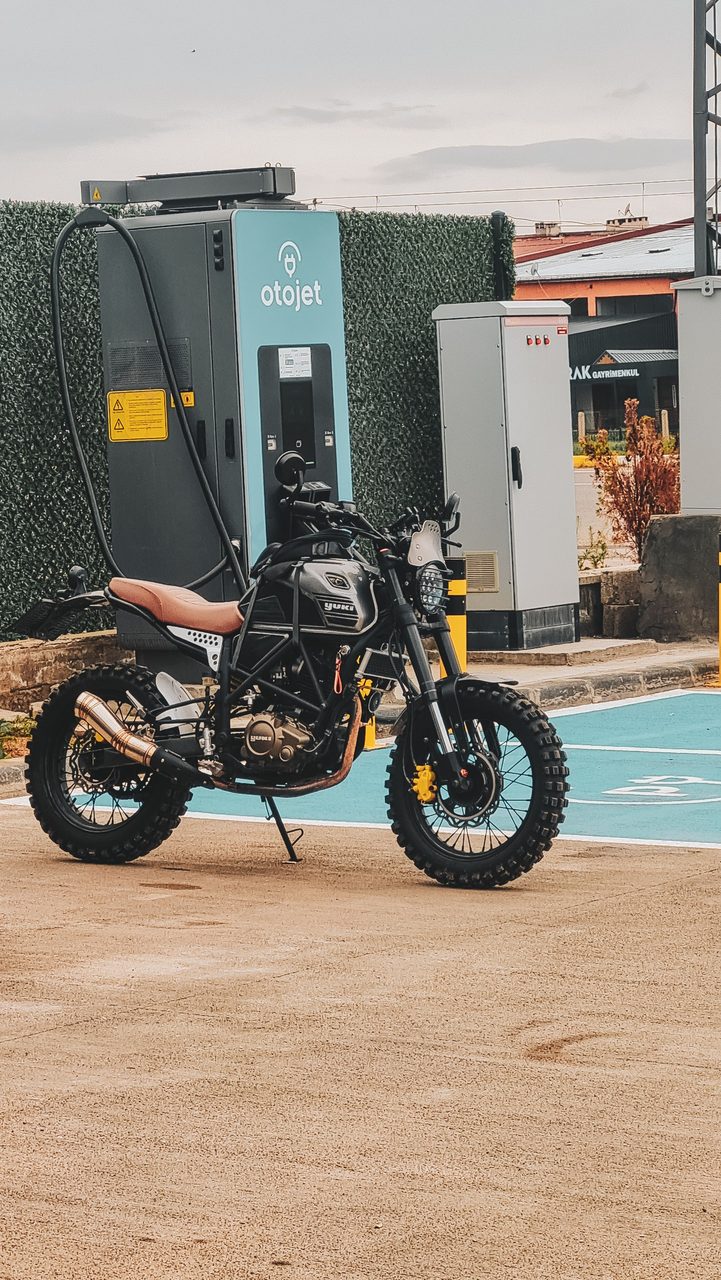
Every importer building a commuter motorcycle programme eventually faces the same fork: stock electric, stock gasoline, or stock both. The debate is usually conducted in slogans — “electric is the future”, “gasoline is what the market trusts” — and slogans do not survive contact with a container plan. What does survive is the specification sheet.
This comparison uses published figures from four real Zukida commuter models: two electric and two gasoline. Every number quoted below comes from those sheets, and where a conclusion is derived rather than stated, it is derived by arithmetic that you can check.
The Comparison Starts With Duty Cycle, Not With Fuel
Before comparing powertrains, define the job. Zukida’s own positioning for the electric commuter range is explicit: the E-Bike CG and E-Bike GN are described as built for last-mile and low-noise fleet duty. Their product notes name Africa, the Middle East and South America as the markets where they have become classical models. The gasoline commuter range — the AX100 and the ARCH — is described in similar terms as classical in Africa and Latin America, but without the low-noise and last-mile framing.
That difference is the whole argument in miniature. Electric commuters win where routes are short, predictable, and return to a known charging point: delivery fleets, campus and municipal duty, urban courier work, gated communities. Gasoline commuters win where the route is long, the terrain is unknown, and refuelling has to be possible anywhere a jerry can is sold. A buyer who stocks electric into a rural distribution network is not making a bet on technology; they are making a mistake about infrastructure.
Power and Speed: What the Spec Sheets Actually Say
Set the four models side by side and the first surprise is how close they are on headline performance.
| Model | Power unit | Max speed | Torque | Weight | Loading per 40ft HQ |
|---|---|---|---|---|---|
| E-Bike CG (electric) | 72 V motor, 2000 W; rated power options 1500–5000 W | 70 km/h (eco 50–55 km/h) | 160 N max | Not stated | 132 units |
| E-Bike GN (electric) | 72 V motor, 2000 W; rated power options 1500–5000 W | 70 km/h (eco 50–55 km/h) | 160 N max | Not stated | 105 units (SKD) |
| AX100 (gasoline) | 98 cc single-cylinder, air-cooled, 2-stroke; 6.8 kW at 7500 r/min | ≥85 km/h | 9.4 N·m at 6500 r/min | 82 kg dry | 144 units SKD (double packing) / 244 sets CKD |
| ARCH125/150 (gasoline) | 124/150 cc single-cylinder, 4-stroke, air-cooled; 9.0 kW at 7000 r/min | ≥90 km/h | 9.8 N·m at 6500 r/min | 122 kg dry | 105 units SKD / 175 units CKD |
Read that table carefully, because it dismantles two assumptions at once. First, the electric models are not slow relative to the entry-level gasoline models — 70 km/h against 85 and 90 km/h is a gap most urban duty cycles will never reveal. Second, and more usefully for sales, the electric models publish a 160 N maximum torque figure, which is the number that governs how a loaded bike pulls away from a stop or climbs a gradient. Published gradeability for both electric models is ≥25°. For stop-start delivery work, that pull-away characteristic matters more than top speed.
The rated power options are worth noting too: both electric models are listed with 1500 W, 2000 W, 3000 W, 4000 W and 5000 W options at a nominal 72 V, with a 72 V 35H 2000 W motor and a 72 V 80 A three-speed controller with reverse and park gears. In practice that means one platform can be specified for several regulatory or customer power classes without re-engineering the whole vehicle — valuable if your market caps power by licensing category.
Energy: 6.2 Hours of Charging Against 2.2 Litres per 100 Kilometres
This is where the two technologies genuinely diverge, and where spec sheets are most useful.
The electric models publish a maximum range of 90–120 km, a charging time of 6.2 hours, a lithium ternary battery at 72 V 30–50 Ah (options), and a charger accepting AC 220 V or 110 V. The CG’s charger output is listed as DC 84.2 V 3 A; the GN’s as DC 84 V 8 A. Both offer two ride modes, Comfort and Sport, which is how an operator trades range against performance.
The gasoline models publish fuel consumption instead: 2.2 L per 100 km for the 98 cc AX100 and ≤2.8 L per 100 km for the ARCH125/150. The AX100 carries a 12-litre fuel tank. Doing the arithmetic on those published figures, a 12-litre tank at 2.2 L/100 km implies roughly 500 km of theoretical range before refuelling — against 90–120 km before a 6.2-hour recharge.
That is the honest trade. Electric wins decisively on energy cost per kilometre and on noise. Gasoline wins on refuelling time and on range per stop, by a factor of roughly four to five on paper. If your customers ride all day and cannot park for six hours, the specification sheet has already told you the answer — you do not need a pilot programme to find out.
Battery Life: Treat It as a Consumable With a Published Number
The most common commercial mistake in electric two-wheeler importing is failing to price the battery replacement. Zukida’s sheets are unusually direct about it: cycle life is listed as 500 charging cycles at 3C discharge, for a lithium ternary pack offered at 72 V 30–50 Ah.
Multiply that published cycle life by the published maximum range and you get a rough lifetime distance in the region of 45,000 to 60,000 km, depending on how the pack is treated and which capacity is fitted. That is not a warranty claim — it is arithmetic on two published numbers, and real-world results will vary with heat, load, discharge rate and charging discipline. But it is enough to structure a commercial conversation: for a fleet covering 100 km a day, 500 cycles is on the order of a year to a year and a half of service before the pack becomes the dominant operating cost.
Three practical consequences follow. First, quote the battery separately from the vehicle so replacement pricing is visible from day one. Second, ask about battery-as-service or replacement-cycle terms before you commit to a fleet tender — Zukida’s own product notes state that container quantities, mixed-fleet orders and battery-as-service configurations can be discussed. Third, specify charger voltage for your market up front; the sheets list AC 220 V with 110 V as an option, which is exactly the kind of field that causes expensive rework if nobody asks.
Container Economics: SKD and CKD Change the Answer
Landed cost per unit is decided by how many units fit in a container, and here the two powertrains are closer than expected while the packing method matters enormously.
- E-Bike CG: 132 units per 40ft HQ.
- E-Bike GN: 105 units per 40ft HQ, SKD packing.
- AX100: 144 units per 40ft HQ in SKD double packing, or 244 sets in CKD.
- ARCH125/150: 105 units SKD, or 175 units CKD per 40ft HQ.
The jump from SKD to CKD is the largest single lever on landed cost in this comparison: the AX100 goes from 144 units to 244 sets, and the ARCH from 105 to 175. If your market has local assembly capacity, or a tariff structure that favours knockdown kits, the packing decision may matter more to your margin than the powertrain decision. Our separate discussion of CBU, CKD and SKD import structures covers that choice in detail.
Note also that the two electric models differ by 27 units per container (132 versus 105) despite near-identical powertrains — a function of body dimensions, listed at 2000 × 760 × 1080 mm for the CG and 2000 × 690 × 1050 mm for the GN. Small dimensional differences scale into real freight differences at forty-container volumes.
Choosing by Market, and Building a Mixed Order
The published market notes are a useful starting point, and they overlap in an informative way: electric is named for Africa, the Middle East and South America; gasoline for Africa and Latin America. Africa appears on both lists, which is the realistic picture — most large markets are not single-technology bets.
A sensible stocking logic follows from the specifications rather than from ideology:
- Urban delivery and municipal fleets with fixed depots and overnight parking: lead with electric. The 90–120 km range and 6.2-hour charge fit an overnight cycle; the 160 N torque and ≥25° gradeability handle loaded stop-start work.
- Rural and inter-city transport where fuel is available and charging is not: lead with gasoline. The AX100’s 12-litre tank and 2.2 L/100 km figure, or the ARCH’s ≤2.8 L/100 km with ≥90 km/h, match long unpredictable routes.
- Regulated urban markets with noise or emissions rules in city centres: electric, and confirm which of the 1500–5000 W rated options your licensing category permits.
- Markets with local assembly or tariff advantages: quote both powertrains in CKD — 244 sets for the AX100, 175 units for the ARCH — and let the packing method carry the margin.
- First-time importers: start mixed. A container split across the E-Bike CG and a gasoline model such as the ARCH125/150 lets your dealers discover the demand split with their own customers instead of your assumptions.
The mechanical specification detail also deserves a look before you commit. The AX100 runs a two-stroke 98 cc engine with kick start and drum brakes as standard (disc/drum as an option), which keeps purchase price competitive and servicing simple in markets where two-stroke expertise is widespread. The ARCH is four-stroke with electric and kick start, alloy wheels and disc/drum brakes, at 122 kg dry. Those are different ownership propositions in different service networks, not just different engines.
Frequently Asked Questions
How far can the electric commuter actually go?
The published maximum range for both the E-Bike CG and E-Bike GN is 90–120 km, with an eco speed band of 50–55 km/h and a maximum of 70 km/h. Real range depends on load, terrain and ride mode — both models offer Comfort and Sport modes — so for route-specific figures, send the duty cycle to the factory rather than relying on the headline number.
How long does charging take, and what supply is needed?
Charging time is listed at 6.2 hours. The charger accepts AC 220 V with 110 V as an option, and outputs DC 84.2 V 3 A on the CG and DC 84 V 8 A on the GN. Confirm your market’s supply voltage when ordering; the sheets list both, but the default configuration is the one that ships.
How long does the battery last?
Cycle life is published as 500 charging cycles at 3C discharge for the lithium ternary pack, offered at 72 V 30–50 Ah. Against the published 90–120 km range that implies a lifetime distance in the region of 45,000–60,000 km by simple multiplication, though real results vary with heat, load and charging practice. Price the replacement pack into any fleet tender from the start.
Which packs better into a container?
Gasoline, slightly, and CKD dramatically. Per 40ft HQ: AX100 at 144 units SKD double packing or 244 sets CKD; ARCH125/150 at 105 SKD or 175 CKD; E-Bike CG at 132 units; E-Bike GN at 105 units SKD. The SKD-to-CKD jump is the bigger lever on landed cost than the powertrain choice.
Are the electric models underpowered for commercial use?
On published figures, no. Both carry a 72 V 2000 W motor with rated power options from 1500 W to 5000 W, a maximum torque of 160 N, gradeability of ≥25° and a top speed of 70 km/h. That is competitive with entry-level gasoline commuters for urban work, and the torque figure is what matters for loaded pull-away.
Conclusion: Let the Route Decide
There is no universal winner here, and the specifications make that clear rather than obscuring it. Electric commuters offer 160 N of torque, ≥25° gradeability, 90–120 km of range and a fraction of the energy cost, at the price of 6.2 hours per charge and a published 500-cycle battery that must be budgeted as a consumable. Gasoline commuters offer roughly four to five times the range per stop on published figures, five-minute refuelling, and CKD packing that puts 244 AX100 sets into a 40ft HQ.
The right answer is the one your customers’ routes dictate: electric for depot-based urban fleets, gasoline for long and unpredictable rural work, and a mixed first order wherever you are not yet sure. For the full mechanical breakdown of the 98 cc option, see the AX100 specification, and for the electric platform, the E-Bike CG sheet carries the complete electrical table.