
Motorcycle Tire Size Explained: Reading the Sidewall Codes
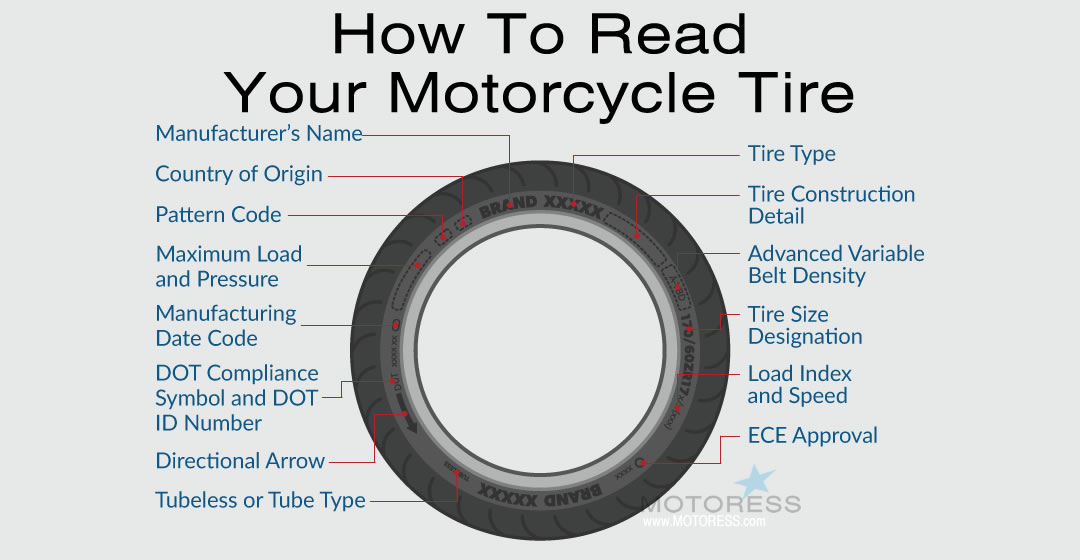
A code like 120/70-17 reads as 120 mm section width, 70% aspect ratio, 17-inch rim. Once you can decode a motorcycle tire size, you can check whether a replacement will actually fit and whether it carries the load your bike puts on it. This guide explains every part of the code and the three mistakes that follow from misreading it.
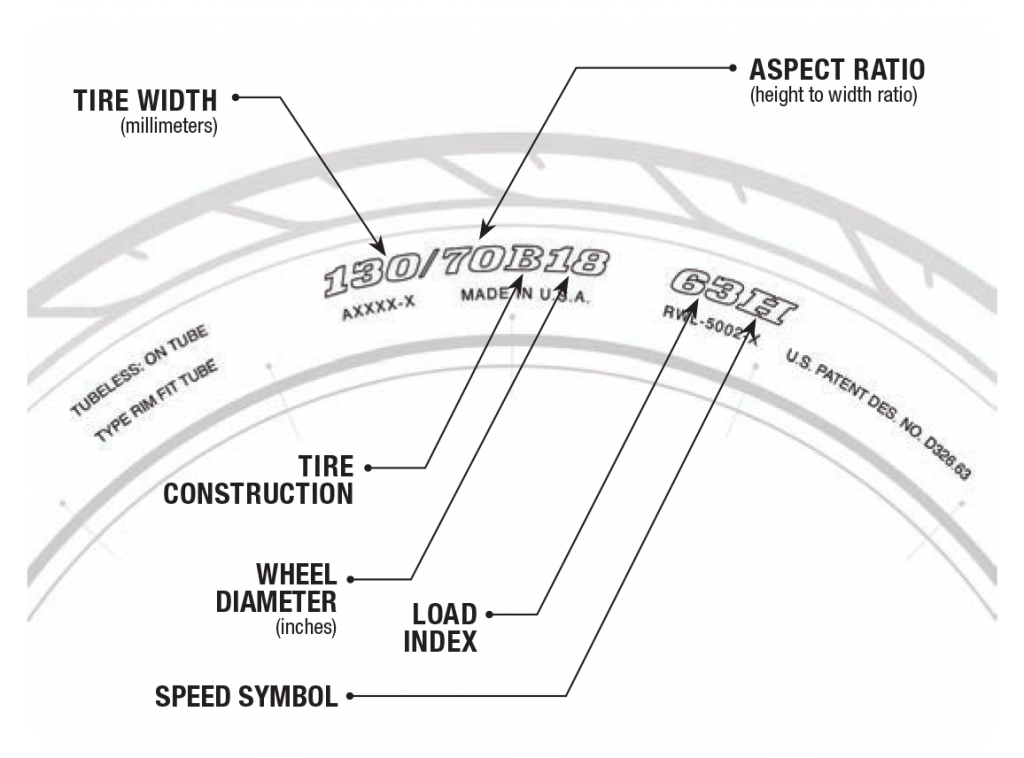
Motorcycle Tire Size: Decode the Code in One Pass
| Example | Meaning |
|---|---|
| 120 | Section width in millimetres |
| 70 | Sidewall height as % of width |
| – or B | Bias-ply (-) or belted (B) |
| ZR / R | Radial construction and speed class |
| 17 | Rim diameter in inches |
| 58W | Load index 58, speed rating W |
The last two characters matter more than most riders think: a load index below the bike’s requirement can overheat a tyre at highway speed even when the size looks right.
Width, Profile, and What They Change
A wider tyre puts more rubber down but slows steering and can foul the swingarm. A lower profile sharpens turn-in and transmits more road shock to the rider.
The safe rule is to stay within the sizes the manufacturer homologated for that model. Small deviations change handling in ways most riders do not enjoy. Our dirt bike sizing guide covers the fit side.
Load and Speed Ratings Are Not Optional
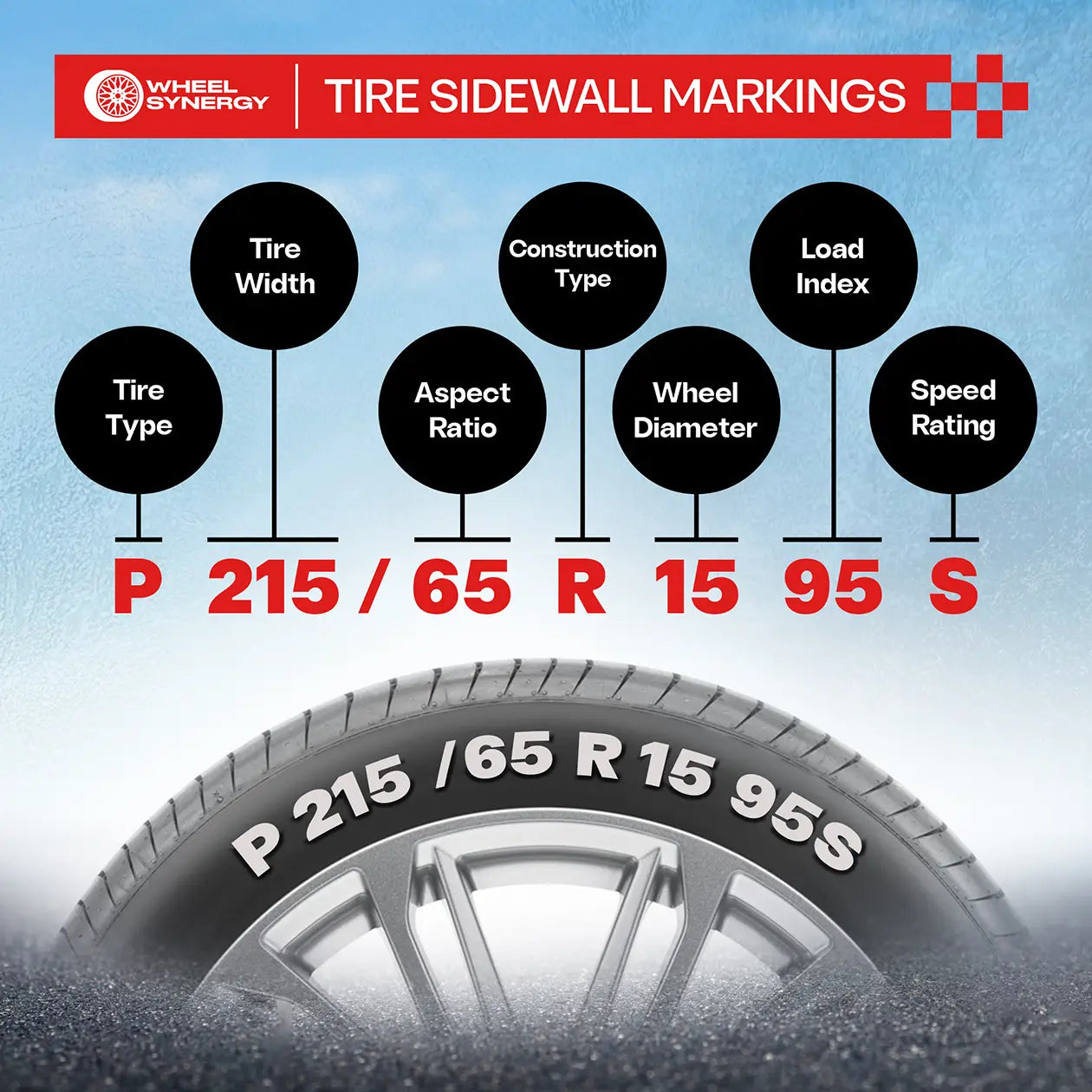
The load index is a code, not kilograms, so check it against a chart before fitting. Replacing a 58 with a 54 on a bike that regularly carries a passenger is a real safety downgrade.
Speed ratings work the same way: fitting a tyre rated below the bike’s capability is a legal and insurance problem in several markets, not just a theoretical one.
Front and Rear Are Different Animals
Front and rear tyres carry different loads and do different jobs — the front turns and does most braking, the rear puts power down. They are often different sizes and profiles on the same machine.
Rotating them or fitting a rear-spec tyre on the front is a handling experiment you do not want to run at speed. Our maintenance guide sets the inspection cadence.
Age Beats Tread Depth
A tyre with plenty of tread can still be past it. Rubber hardens with time, and most manufacturers treat six years from the date code as the outer service life regardless of wear.
Read the four-digit date code on the sidewall — week and year of manufacture — before fitting any tyre that has been in storage. Our maintenance schedule includes the check.
Preguntas Frecuentes
What does 120/70-17 mean on a motorcycle tire?
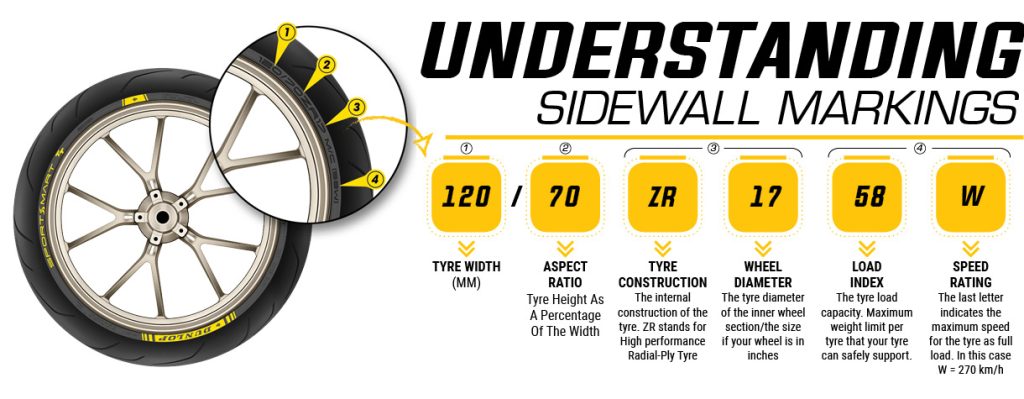
It means 120 mm section width, a sidewall height equal to 70% of that width, and a 17-inch rim diameter; a following load and speed code such as 58W completes the specification.
Can I fit a wider tire than the original?
A veces, dentro de las medidas homologadas para el modelo, pero un neumático más ancho ralentiza la dirección y puede rozar el balancín o la cadena, así que verifica el espacio libre y las medidas aprobadas por el fabricante primero.
¿Necesito igualar las marcas del neumático delantero y del trasero?
No estrictamente, pero coincidir el delantero y el trasero de la misma serie mantiene el manejo predecible, ya que los fabricantes diseñan el par para funcionar juntos como un conjunto.
¿Qué tan vieja puede ser una llanta de motocicleta y seguir siendo segura?
La mayoría de los fabricantes tratan alrededor de seis años desde la fecha de fabricación como la vida útil máxima, independientemente de la profundidad del dibujo; lea el código de fecha de cuatro dígitos en el flanco para comprobarlo.
Lea el ancho, el perfil, el rin y los códigos de carga y velocidad juntos; cualquiera de ellos puede descartar un neumático. Envíenos su modelo y condiciones de conducción, y confirmaremos las dimensiones homologadas y la clasificación de carga que su máquina necesita realmente.
Lecturas Adicionales
Para más información detallada, consultar overview de motorcycle en Wikipedia y Red Económica de China para datos de la industria.