
Motorcycle Tire Size Explained: Reading the Sidewall Codes
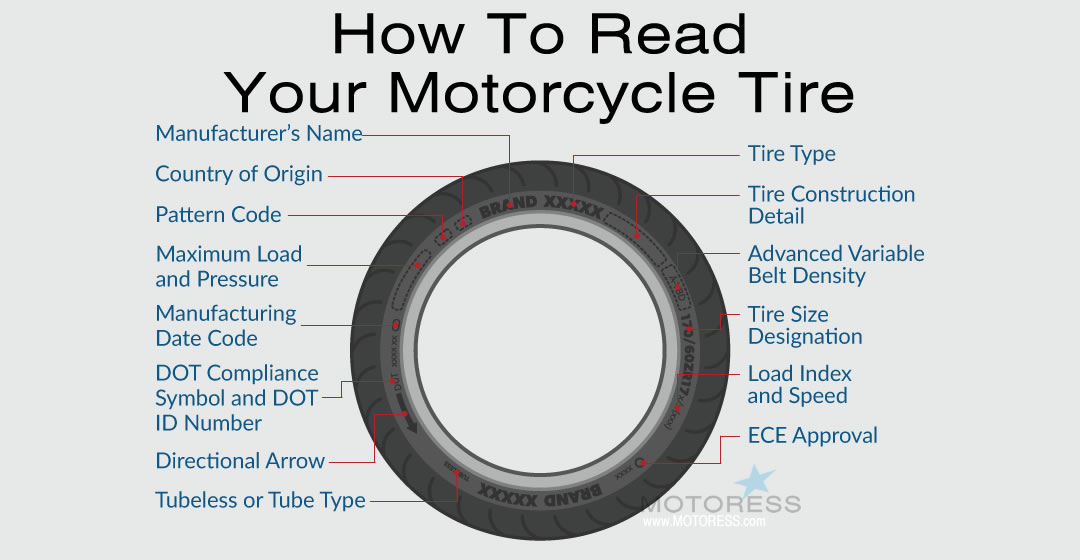
A code like 120/70-17 reads as 120 mm section width, 70% aspect ratio, 17-inch rim. Once you can decode a motorcycle tire size, you can check whether a replacement will actually fit and whether it carries the load your bike puts on it. This guide explains every part of the code and the three mistakes that follow from misreading it.
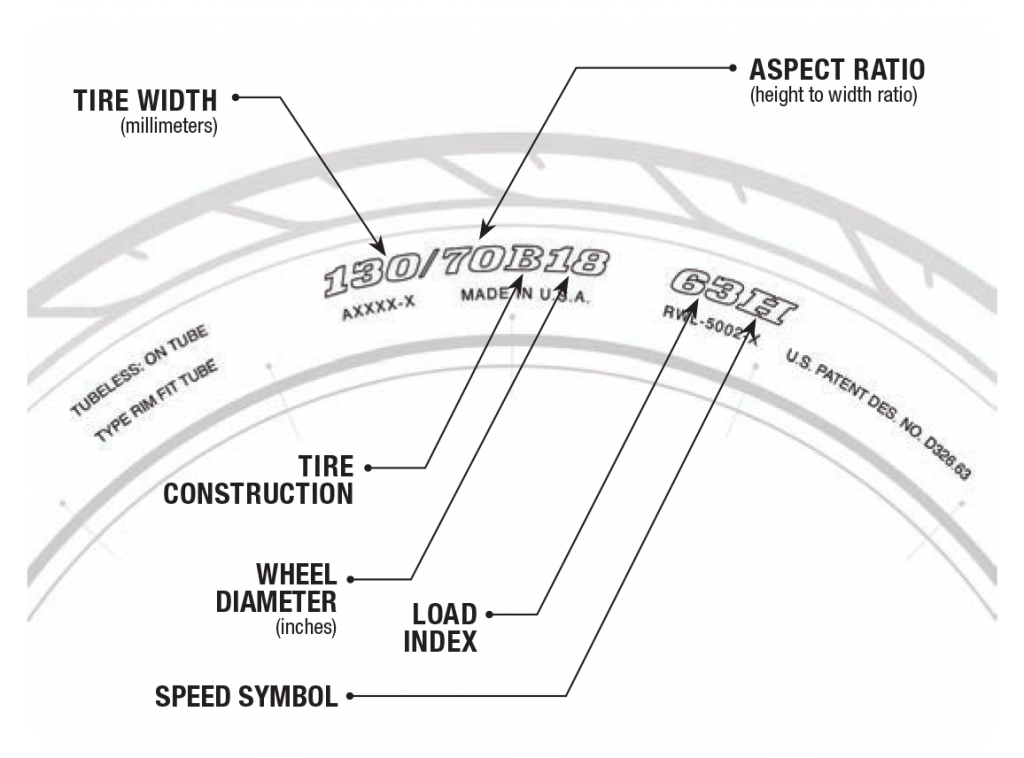
Motorcycle Tire Size: Decode the Code in One Pass
| Example | Meaning |
|---|---|
| 120 | Section width in millimetres |
| 70 | Sidewall height as % of width |
| – or B | Bias-ply (-) or belted (B) |
| ZR / R | Radial construction and speed class |
| 17 | Rim diameter in inches |
| 58W | Load index 58, speed rating W |
The last two characters matter more than most riders think: a load index below the bike’s requirement can overheat a tyre at highway speed even when the size looks right.
Width, Profile, and What They Change
A wider tyre puts more rubber down but slows steering and can foul the swingarm. A lower profile sharpens turn-in and transmits more road shock to the rider.
The safe rule is to stay within the sizes the manufacturer homologated for that model. Small deviations change handling in ways most riders do not enjoy. Our dirt bike sizing guide covers the fit side.
Load and Speed Ratings Are Not Optional
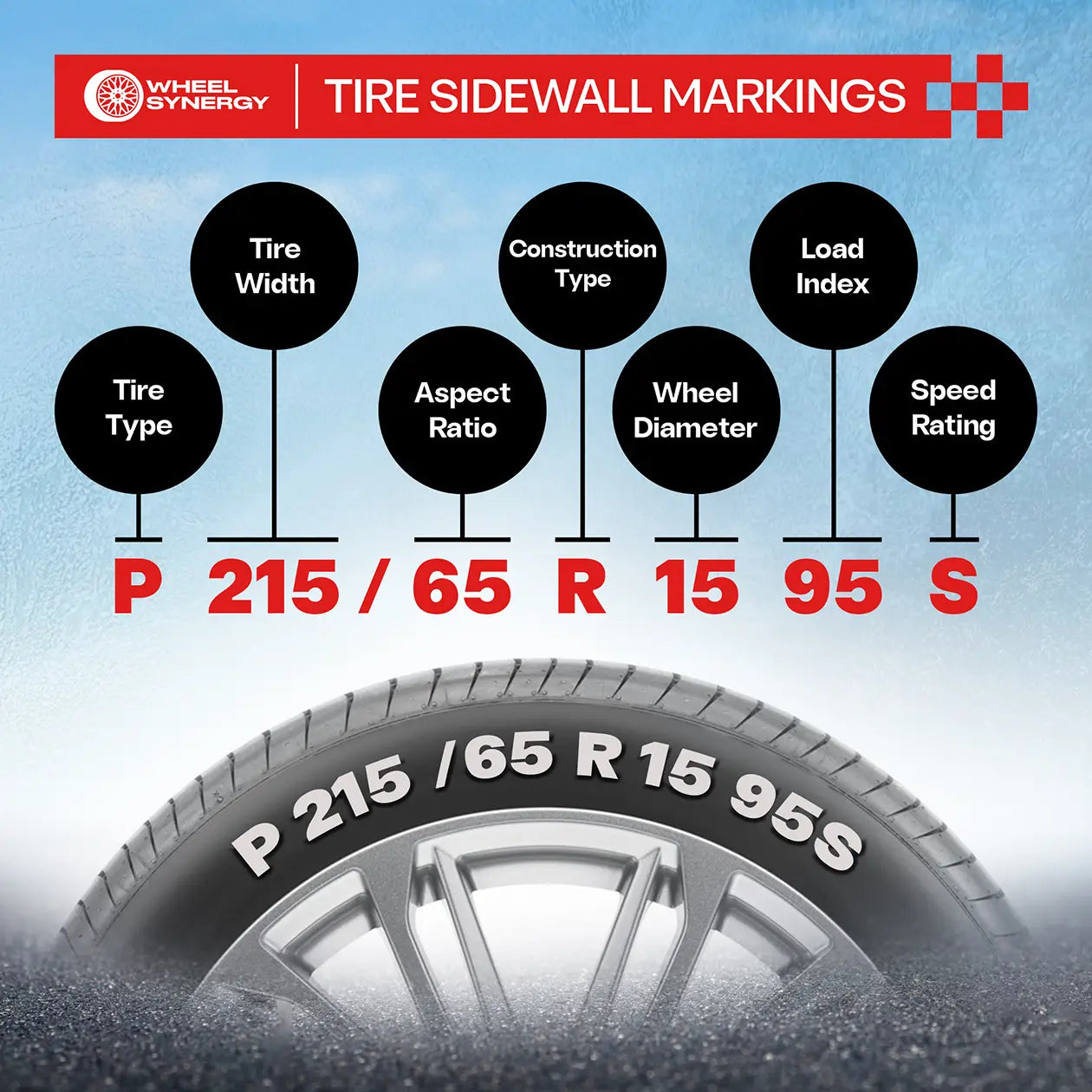
The load index is a code, not kilograms, so check it against a chart before fitting. Replacing a 58 with a 54 on a bike that regularly carries a passenger is a real safety downgrade.
Speed ratings work the same way: fitting a tyre rated below the bike’s capability is a legal and insurance problem in several markets, not just a theoretical one.
Front and Rear Are Different Animals
Front and rear tyres carry different loads and do different jobs — the front turns and does most braking, the rear puts power down. They are often different sizes and profiles on the same machine.
Rotating them or fitting a rear-spec tyre on the front is a handling experiment you do not want to run at speed. Our maintenance guide sets the inspection cadence.
Age Beats Tread Depth
A tyre with plenty of tread can still be past it. Rubber hardens with time, and most manufacturers treat six years from the date code as the outer service life regardless of wear.
Read the four-digit date code on the sidewall — week and year of manufacture — before fitting any tyre that has been in storage. Our maintenance schedule includes the check.
Часто задаваемые вопросы
What does 120/70-17 mean on a motorcycle tire?
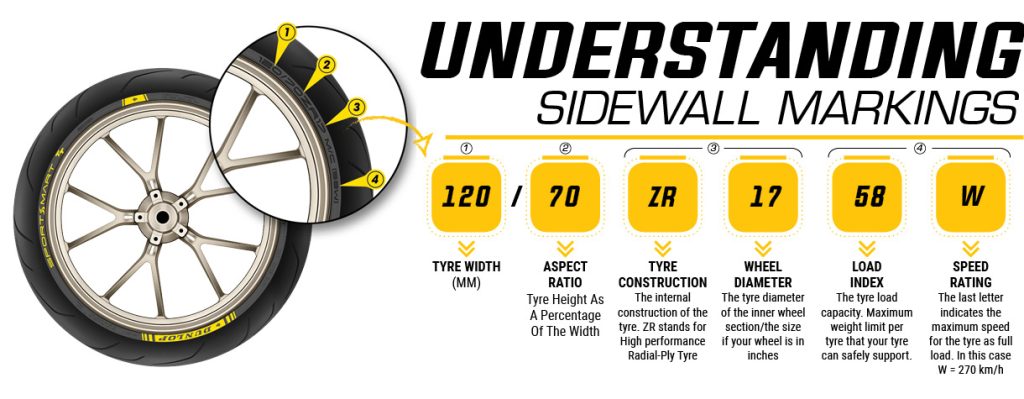
It means 120 mm section width, a sidewall height equal to 70% of that width, and a 17-inch rim diameter; a following load and speed code such as 58W completes the specification.
Can I fit a wider tire than the original?
Sometimes, within the sizes homologated for the model, but a wider tyre slows steering and can foul the swingarm or chain, so check clearance and the manufacturer’s approved sizes first.
Do I need to match front and rear brands?
Not strictly, but matching front and rear from the same range keeps handling predictable, because manufacturers design the pair to work together as a set.
How old can a motorcycle tire be and still be safe?
Most manufacturers treat about six years from the manufacture date as the outer service life regardless of tread depth; read the four-digit date code on the sidewall to check.
Read width, profile, rim, and the load and speed codes together — any one of them can rule a tyre out. Send us your model and riding conditions, and we will confirm the homologated sizes and the load rating your machine actually needs.
Дополнительное чтение
Для более глубокого ознакомления см. обзор мотоциклов на Wikipedia и Китайское экономическое агентство для отраслевых данных.