
CBU vs SKD vs CKD Motorcycle Export: Tariffs, Freight and Local Assembly Compared

You are evaluating a motorcycle import order from China and the first commercial question is how the factory ships the product: ready to ride, partially assembled, or as a full parts kit. The choice between CBU, SKD and CKD is not just a logistics detail — it changes your landed cost, the tariff you pay on arrival, whether you need your own assembly line, and how fast you can put a sellable motorcycle in front of customers.
This guide compares the three export forms with the packing, commercial and warranty terms Zukida Motorcycle actually operates — so you can choose the form that fits your market’s policy, your assembly capability and your cash-flow position before you commit to a container.

What CBU, SKD and CKD Actually Mean
Three terms, three very different import projects:
- CBU (completely built unit) — the motorcycle ships fully assembled and ready to ride, protected for container transit. The buyer can resell, demo or register it immediately; no assembly facility is required on the importer’s side.
- SKD (semi-knocked down) — most sub-assemblies ship complete, but the final joining, wiring and quality check are left to the importer. At Zukida this is packed as a steel frame with major assemblies in a carton, or in a plywood box, depending on the model and market.
- CKD (completely knocked down) — the motorcycle ships as a parts kit: engine in one carton, body parts in a separate carton or plywood box. The importer handles 100% of final assembly. CKD kits are the standard form for markets that subsidize local assembly.
Which form you are actually allowed to import depends on the destination country’s policy. Many developing markets apply the lowest tariff to CKD (and sometimes SKD) and a higher tariff to fully built CBU imports, precisely to encourage local assembly jobs. Some markets add assembly obligations or local-content requirements to that tariff benefit. Before choosing, ask your supplier for the HS code and declared-value basis they will use, and confirm with your customs broker how your country classifies each form.
Packing: What Each Form Actually Looks Like in the Container
Zukida’s standard packing for export, listed on the FAQ page:
- SKD — steel frame + carton, or plywood box
- CKD — engine in 1 carton, body parts in 1 plywood box; or engine in 1 carton, body parts in 1 carton
- CBU — fully assembled bike protected for container transit
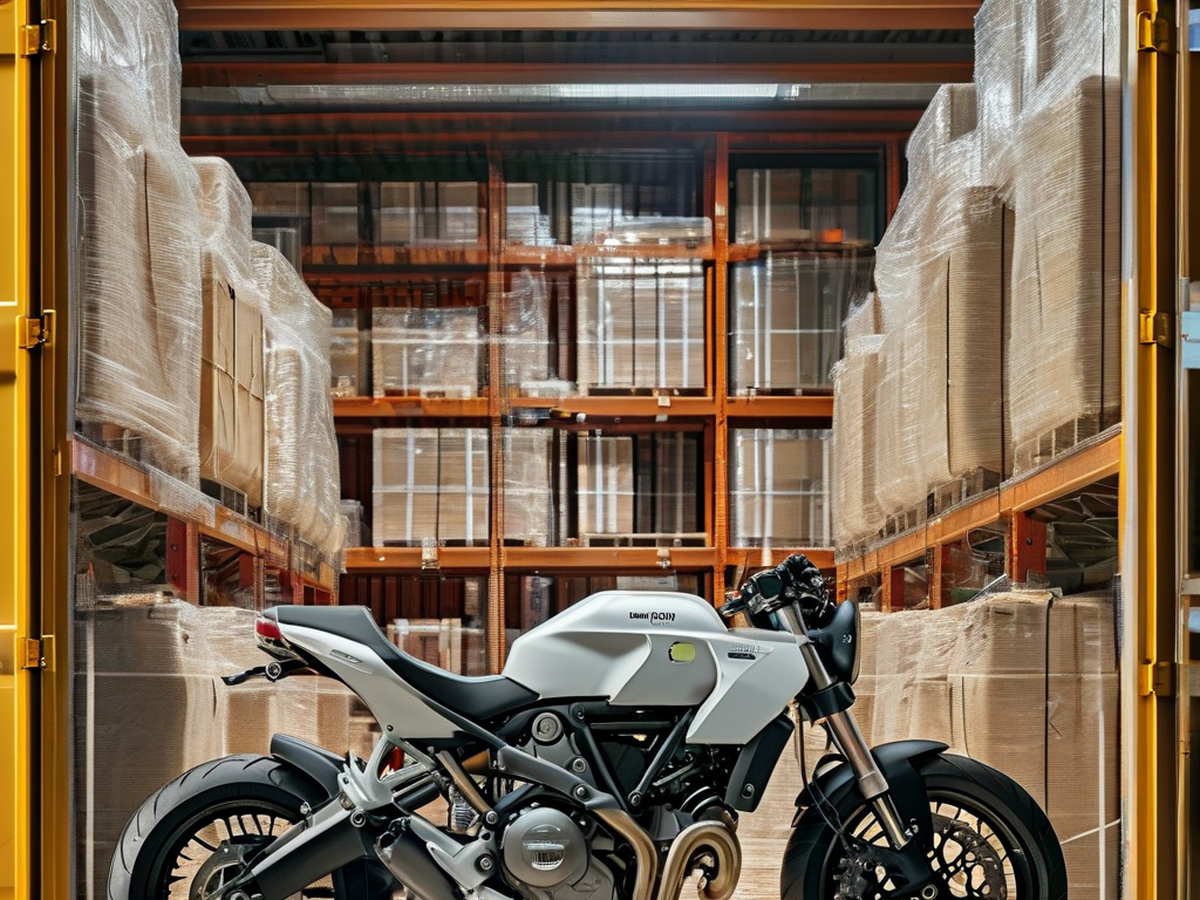
Packing style is negotiable per buyer and per market, and the specific container loading quantities depend on the exact model mix. If you are planning around a loading count, ask the sales team for the written loading plan for your model mix before you commit to a shipment — the number of units per 20′ or 40′ container differs significantly between CBU, SKD and CKD on the same model.
Tariff, Freight and Local-Assembly Trade-Off
The same model in three export forms gives you three different cost and operational pictures:
| Factor | CBU (assembled) | SKD (semi-assembled) | CKD (parts kit) |
|---|---|---|---|
| Arrival state | Ride-ready | Final assembly needed | Full assembly needed |
| Typical applicable tariff* | Higher (fully built import) | Often mid/low | Lowest in markets that subsidize local assembly |
| Freight per unit | Highest (fully built, bulky) | Mid | Lowest (max container fill, densest) |
| Handling risk on arrival | Lowest | Mid | Highest (more parts to manage) |
| Buyer capability required | Resale / demo only | Final-join shop, QC | Assembly line, welding, QC, spare-parts logistics |
| Time to sellable product | Immediate | Days | Weeks, depending on line |
| Customization / local branding | Limited | Moderate | Highest (you own the build) |
* Tariff treatment varies by country; confirm with your customs broker before order. The pattern — CBU highest, CKD lowest — is the standard structure that makes local-assembly markets work, but the exact rates and any local-content rules are set by the destination country, not the supplier.
Two practical points that follow from the table:
- Freight economy favors CKD. A parts kit fills the container more densely than full bikes, so the cost per unit of freight goes down. That advantage only helps you if you can absorb the assembly work locally — the freight saving is real, but it does not pay for the assembly line by itself.
- Local assembly is a real investment, not just a tariff play. To run CKD (or SKD) you need your own assembly space, tooling, trained staff, a QC step, and a working spare-parts pipeline. If you do not have that capability yet, CBU is the safer first order even if the tariff is higher — it protects your cash flow and your reputation while you build the capability.

The Commercial Terms That Tie All Three Forms Together
Whatever form you pick, the same payment, production and warranty terms apply. From Zukida’s FAQ:
- Minimum order quantity (MOQ) — based on the loading capacity of a 20′ or 40′ container; the exact quantity is confirmed per model mix with the sales team.
- Payment terms — (1) Full T/T: 30% deposit by T/T, balance by T/T before shipment; or (2) T/T + L/C: 30% deposit by T/T, balance by irrevocable L/C at sight.
- Lead time — first order approximately 40 days after deposit or confirmed irrevocable L/C; from the second order approximately 30 days on the same basis.
- Warranty — 1 year / 10,000 km on permanent parts (engine, chassis, muffler, carburetor, etc.) across all models, plus 100% post-assembly testing (power, speed, lights, emission, etc.) for each batch.
- OEM/ODM — OEM and ODM services are offered, and a spare-parts supply is available for all models. Confirm your specific customization scope (logo, colors, spec changes) with the factory before placing the order, since customization affects MOQ, lead time and price.
If you plan to combine forms in one order — for example CBU for your demo/retail line and SKD or CKD for your assembly-benefit line — say so up front in the inquiry. The loading plan, packing and per-form price differ by form, and the combined-quantity calculation depends on the exact model mix.
Which Form Should You Choose: A Practical Decision Check
Work through this before writing to any supplier — including Zukida:
- Does my destination country give a lower tariff to CKD or SKD for this motorcycle category? Confirm with a customs broker, and confirm the HS code the supplier will use. If the answer is “no tariff difference,” the local-assembly advantage disappears and CBU is usually simpler.
- Do I have (or can I fund) an assembly capability? If no — pick CBU for the first order, or SKD if a light final-join shop is realistic. Do not order CKD into a warehouse that cannot absorb it.
- What is my cash-flow position on inventory and freight? CKD has the best freight economy but the longest path to a sellable unit and the highest handling complexity. Match the form to how fast you need revenue back.
- Do I want to build local branding? CKD with your own assembly line and a local brand is the strongest path; CBU is the weakest path to local brand. Be clear about which strategy you are actually pursuing.
- What will my spare-parts pipeline look like? A CKD importer needs a working parts pipeline from day one of selling. Confirm with the supplier that parts are available for the exact models and revisions you will build, and price that pipeline into the order.
Bringing your answers to this checklist to the supplier means your inquiry is specific enough to get a real quote — a comparison across forms, a realistic MOQ, a lead time and payment terms you can plan around.
How to Write the Inquiry So You Get a Usable Answer
When you send your procurement request to a motorcycle manufacturer, include these eight fields — they are the minimum detail a factory needs to give you a comparable per-form quote:
- Destination market — country, and whether you are a dealer, an assembler or a distributor
- Preferred form — CBU / SKD / CKD, or “all three, with a landed-cost comparison”
- Model mix — the specific models you are considering (see the product catalog for current listings)
- Quantity — units or container count; note if you want a mix of forms across containers
- Customization scope — logo, colors, spec changes, or none
- Your assembly capability — if you are considering SKD or CKD
- Payment terms you can work with — T/T, L/C at sight, or both
- Target arrival date
With that level of detail, a manufacturer like Zukida can respond with a concrete per-form price comparison, a confirmed MOQ per your model mix, the expected lead time (around 40 days on a first order) and the packing/loading plan — which is everything you need to compare quotes across suppliers on the same basis.
Why This Matters for a First-Order Import
Most new importers lose money on the first order by picking the “wrong” form: ordering CKD without an assembly plan, or paying the full CBU tariff when their country’s tariff schedule clearly favors local assembly. The fix is to treat the form decision as part of the commercial negotiation, not a logistics afterthought. Get the tariff treatment confirmed first, then ask the supplier to quote all applicable forms on the same model mix so you can compare landed cost and capability requirement side by side.
If you are ready to start that comparison, send your model mix and destination market to Zukida’s sales team at export@zukidamotorcycle.com (phone: (+86) 13632216145), or use the contact page. The team will return a per-form quote with confirmed MOQ, lead time, packing and payment terms — no obligation to commit before you compare.
FAQ
What is the difference between SKD and CKD in motorcycle export?
SKD ships most sub-assemblies complete with final joining done by the importer; CKD ships everything as a parts kit and the importer handles 100% of assembly. SKD needs less local capability than CKD but usually does not get the deepest tariff benefit.
Does CBU shipping protect the bike better than CKD?
Yes. CBU ships assembled and protected for container transit, with the least handling risk at arrival. CKD has the most parts to manage, so it demands the most careful local warehouse and assembly management.
Can I order a mix of CBU and CKD in one container or one order?
Yes, provided you state the model mix and the form breakdown up front. The loading plan, per-form price and total quantity will be calculated on the specific mix you give.
Who pays for shipping in each form?
Shipping is a separate commercial line, not fixed by the export form. Negotiate Incoterms (FOB, CIF, etc.) explicitly with the supplier; this does not change the tariff structure, but it changes who pays the freight and at which port the risk transfers.
Are the payment terms the same for CBU, SKD and CKD orders?
At Zukida the payment terms are set at the order level, not the form level: 30% deposit by T/T with balance by T/T before shipment, or 30% deposit by T/T with balance by irrevocable L/C at sight, with a first-order lead time of around 40 days. Confirm the exact terms in writing with the sales team for your specific order.
What should a new importer choose first: CBU, SKD or CKD?
If you have no local assembly capability yet, start with CBU — it protects your cash flow and reputation while you build the capability. Move to SKD or CKD only once your assembly space, tooling, trained staff and spare-parts pipeline are in place, or when your destination market’s tariff structure makes the local-assembly benefit large enough to justify the investment.