
Chinese Dirt Bikes Wholesale: Complete Sourcing Guide for Importers
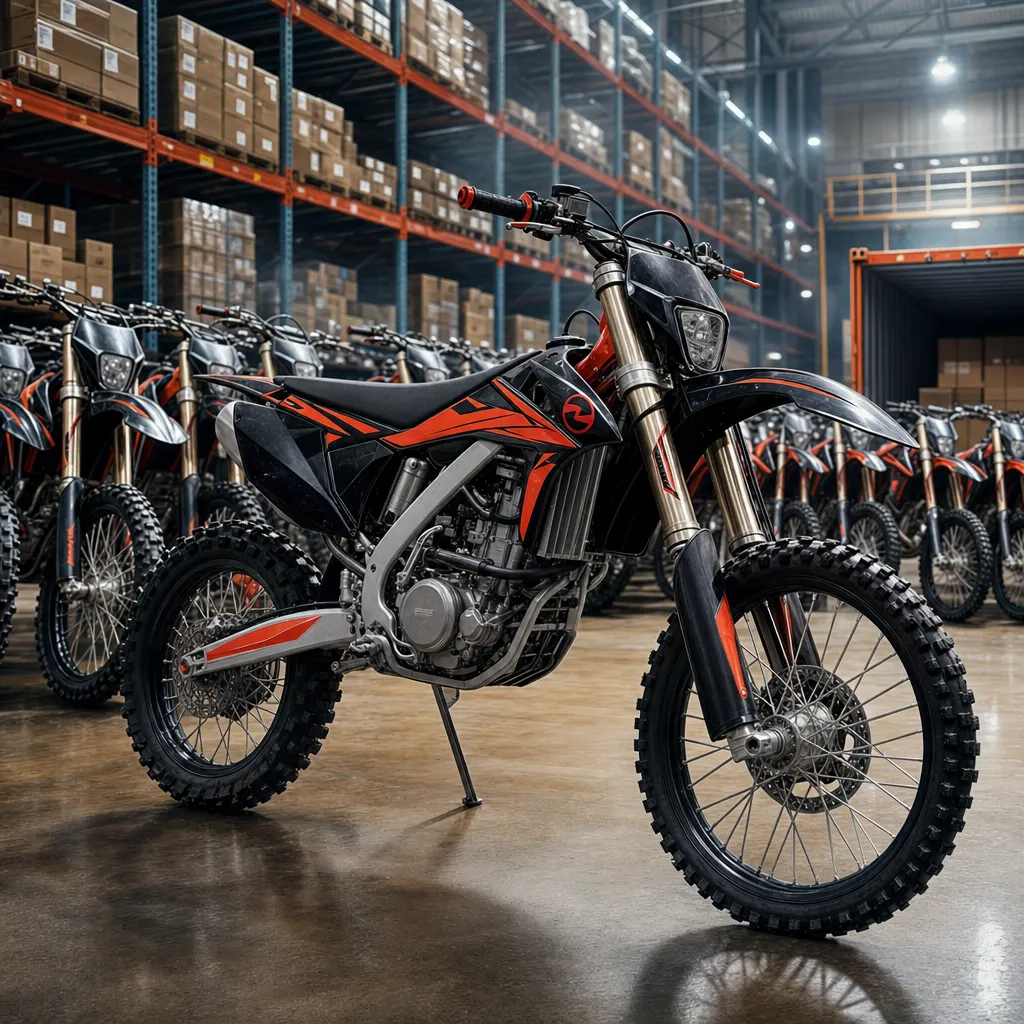
Introduction: The 2026 Dirt Bike Sourcing Landscape
The global demand for off-road recreation continues to expand. According to a 2025 global powersports market report by Statista, the off-road vehicle sector is projected to maintain a compound annual growth rate (CAGR) of 5.8% through 2030. For B2B buyers, dealerships, and importers, sourcing dirt bike wholesale fleets directly from Chinese manufacturers represents the most viable path to capturing strong retail margins. However, navigating the international sourcing process involves more than just finding the lowest price per unit. Regulatory changes, supply chain logistics, customs duties, and the rapid shift from internal combustion engines (ICE) to electric off-road powertrains have reshaped the importing landscape. This guide provides an actionable, step-by-step roadmap to sourcing, verifying, and importing wholesale dirt bikes from China, drawing on decades of supply chain expertise from the LUNG KAY trading and distribution network.
What You Will Learn in This Guide
- The core differences between the major Chinese manufacturing hubs.
- How to evaluate gasoline versus electric dirt bike specifications.
- Step-by-step compliance processes for EPA, DOT, CE, and EEC regulations.
- Logistics strategies to protect your cargo and reduce shipping costs.
- Red flags to avoid when negotiating with wholesale suppliers.
Prerequisites Before You Contact Suppliers
Before initiating negotiations with Chinese dirt bike manufacturers, ensure you have established the following foundations to demonstrate professional purchasing intent:
- Import Licenses: Confirm that your business entity is registered to import motorized vehicles in your target country (e.g., an importer of record number in the US).
- HS Code Identification: Familiarize yourself with the Harmonized System codes for dirt bikes (typically HS Code
8711.20for gas motorcycles under 250cc, or8711.60for electric motorcycles) to calculate import tariffs and anti-dumping duties. - Clarify Target Demographics: Define whether your market requires entry-level pit bikes (50cc–125cc), mid-tier trail bikes (150cc–250cc), or high-performance professional enduro models (300cc and electric alternatives).
Section 1: Navigating China’s Dirt Bike Manufacturing Hubs
China’s motorcycle industry is highly clustered. When sourcing dirt bike wholesale orders, your target supplier will almost certainly be located in one of two major geographic hubs. Understanding these hubs helps you match your specific product needs with regional manufacturing strengths.
1. Chongqing: The Capital of Internal Combustion Engines
Chongqing is the heavy industrial heartland of China’s motorcycle production. If you are sourcing traditional gas-powered dirt bikes, trail bikes, or high-cc enduro models, Chongqing is your primary destination. Factories here have deep-rooted supply chains for engine manufacturing, chassis stamping, and metallurgy. Companies in this region benefit from immediate access to major engine developers like Zongshen, Lifan, and Loncin.
2. Zhejiang: The Hub of Innovation, Pit Bikes, and E-Mobility
Zhejiang Province (centering around Jinhua, Yongkang, and Ningbo) specializes in light electric vehicles, mini pit bikes, and innovative leisure powersports. Zhejiang factories are highly agile, adapting quickly to design trends. If you are looking to source lightweight electric dirt bikes, youth entry-level pit bikes, or highly customized OEM designs, the Zhejiang cluster offers flexible manufacturing lines and lower minimum order quantities (MOQs).
Section 2: Gas vs. Electric Dirt Bikes — The Import Matrix
The choice between stocking gasoline-powered models and electric powertrains is a critical strategic decision for 2026. Global regulatory trends, such as emission restrictions in urban zones, are driving a rapid adoption of off-road electric vehicles. The table below provides a comparative analysis designed to assist wholesale buyers in evaluating inventory configurations:
| Feature / Parameter | Gasoline Dirt Bikes (ICE) | Electric Dirt Bikes (E-Dirt) |
|---|---|---|
| Popular Engine Sizes / Power | 110cc, 125cc, 150cc, 250cc, 300cc | 3kW, 5kW, 8kW, 12kW+ peak power |
| Maintenance Profile | High (Oil changes, carburetor tuning, piston rings) | Low (Battery care, chain lubrication, brake pads) |
| Regulatory Hurdles | Strict emissions certifications (EPA, CARB, Euro 5) | Battery safety standards (UN38.3, MSDS, UL listing) |
| Target Retail Audience | Traditional off-road riders, farm workers, racers | Suburban riders, tech-forward youths, noise-sensitive areas |
| Shipping Constraints | Standard shipping (must be drained of oil/fuel) | Class 9 Hazardous Goods due to Lithium batteries |
To ensure high customer satisfaction and minimal returns, check out our expert-compiled guide on motorcycle maintenance tips, which you can pass along as valuable resources to your retail buyers.
Section 3: Step-by-Step Importing Process
Step 1: Finding and Verifying Genuine OEM Manufacturers
Many listings on online wholesale directories are put up by trading companies rather than factories. While trading companies offer value through diverse product ranges and low MOQs, importing directly from a verified OEM motorcycle manufacturer ensures lower pricing and direct technical support.
- Verify Business Licenses: Look for the “Scope of Business” on their Chinese registration. It must state “Manufacturer of motorcycles/vehicles” rather than just “Trading” or “Import/Export”.
- Request a Factory Video Walkthrough: Check for frame-welding robots, assembly lines, engine-testing dyno rooms, and quality control stations.
- Check E-E-A-T: Trustworthy partners have established industry histories. Verify if they exhibit at major international trade shows like the Canton Fair or EICMA in Milan.
Step 2: Securing Compliance & Certifications
Customs authorities will seize and destroy non-compliant vehicles. Ensure your wholesale dirt bike supplier can provide verifiable, matching certificates for your target market:
For North America (USA & Canada): Off-road motorcycles require an EPA (Environmental Protection Agency) certificate for emissions. If you plan to import into California, the manufacturer must have CARB (California Air Resources Board) approval. For highway or street-legal models, dual-sport bikes must carry DOT compliance stickers and have 17-digit VINs compliant with NHTSA requirements.
For Europe: Off-road leisure dirt bikes need CE marking, ensuring compliance with machinery, low voltage, and electromagnetic compatibility directives. Street-legal enduro models require EEC (European Economic Community) certification and a Certificate of Conformity (COC) for license plate registration.
Step 3: Sample Testing and Specifying Components
Never place a full container order without first testing a prototype sample. Dirt bikes are subjected to high mechanical stress, making component specification critical. When finalizing your purchase agreement with your supplier, clearly specify the following system components:
- Suspension: Specify adjustable inverted front forks and rear mono-shocks with reliable seals to prevent oil leakage under heavy load.
- Carburetor vs. EFI: For gasoline engines, determine if your market prefers cost-effective carburetors (such as Nibbi brand upgrades) or electronic fuel injection (EFI) systems for better cold-start performance and emissions control.
- Chassis & Swingarm: Request reinforced chromoly steel or lightweight aluminum alloy frames to balance strength and weight.
Step 4: Managing Logistics, Packing, and Container Optimization
Shipping fully assembled dirt bikes (CBU – Completely Built Up) is highly inefficient and dramatically increases ocean freight costs. Instead, specify one of the following packaging options:
- SKD (Semi-Knocked Down): The front wheel, handlebars, and rear shock are disassembled. The bike is secured in a rigid steel frame cradle and covered with thick cardboard. This maximizes container capacity while keeping reassembly times under 30 minutes for your dealers.
- CKD (Completely Knocked Down): Individual parts are packed into separate boxes. While this maximizes shipping efficiency, it requires dedicated assembly staff in your destination warehouse and is only recommended for high-volume operations.
Ensure that all lithium batteries for electric models are shipped with proper UN38.3 certification to comply with maritime hazardous materials shipping guidelines.
Section 4: High-Demand Dirt Bike Models for 2026 Importers
To maximize return on investment, focus your sourcing efforts on proven, high-demand platforms. Based on global sales trends and dealer feedback, we have highlighted three popular wholesale models below:
1. The Heavy-Duty Enduro: Defender Series
2. The Classic Track Performer: CRF Inspired Series
3. The Future of Trail Riding: Supermach E-Off-Road
Section 5: Key Pitfalls to Avoid in Dirt Bike Sourcing
Many direct-importing mistakes can be avoided by maintaining proper supply chain oversight. Here are three common pitfalls to watch out for:
- Failing to Source Spare Parts: Dirt bikes undergo heavy wear and tear. Always negotiate a 2% to 5% free-of-charge spare parts package (including levers, gaskets, air filters, clutch cables, and brake pads) with your container order. This ensures you can provide prompt warranty support to your retail buyers.
- Ignoring Anti-Dumping and Import Tariffs: Ensure you check your country’s specific tariff schedules. For instance, importing electric dirt bikes into certain EU zones or the USA may attract additional countervailing duties depending on the vehicle’s classification and origin.
- Overlooking PDI (Pre-Delivery Inspection): Establish a clear pre-shipment testing protocol with your manufacturer. Ensure that every bike undergoes engine run tests, electrical inspections, and torque checks on critical fasteners before being packed.
FAQ: Sourcing Dirt Bikes Wholesale
Q: What is the typical MOQ when ordering wholesale from a Chinese manufacturer? A: Most factory-level manufacturers require a minimum order of 10 to 30 units, which is generally equivalent to a 20-foot container (FCL). Sourcing by container load significantly reduces unit shipping costs and protects the cargo from handling damage associated with LCL (Less than Container Load) shipping. Q: Can we customize the bikes with our own dealership brand logos and graphics? A: Yes, most Chinese OEM factories offer OEM (Original Equipment Manufacturer) services. They can apply customized graphic kits, laser-etch your business logo onto the engine casing or triple clamps, and design customized user manuals, provided you meet their OEM MOQ requirements (typically 50-100 units). Q: How long is the production lead time for a container of dirt bikes? A: Average factory production lead times range from 30 to 45 days after deposit confirmation. Importers should factor in an additional 25 to 40 days for ocean freight transit, depending on the destination port.
Conclusion & Next Steps for Importers
Importing dirt bike wholesale shipments from China is a highly profitable venture when executed with careful planning, robust quality control, and strict compliance checks. By choosing verified manufacturers, securing correct EPA or CE certifications, and selecting high-demand models like the Defender and Supermach, you can establish a reliable, high-margin powersports business. As your dedicated supply chain and trading partner, LUNG KAY simplifies this entire process. We manage factory audits, ensure regulatory compliance, coordinate quality control, and streamline international logistics, delivering premium off-road motorcycles directly to your warehouse.
Start Your Wholesale Sourcing Partnership
Contact the LUNG KAY and Zukida Motorcycle export team today to request catalog pricing and container shipping quotes:
- 📧 Primary Export Email: export@zukidamotorcycle.com
- 📧 Alternative Contacts: wen-xuwen@163.com | steven.wun@zukidamotorcycle.com | glory.huang@zukidamotorcycle.com
- 📞 Telephone (WeChat/WhatsApp): +86 13632216145 / +86 13660750701
- 🔗 Official Websites: LUNG KAY Homepage | Zukida Motorcycle Portal
- 👥 Professional Network: Connect with our export director Xia Huang on LinkedIn or follow our updates on Facebook.