
Aufbau der CKD-Motorradmontagelinie: Werkzeuge, Vorrichtungen und Schulung der operativen Mitarbeiter
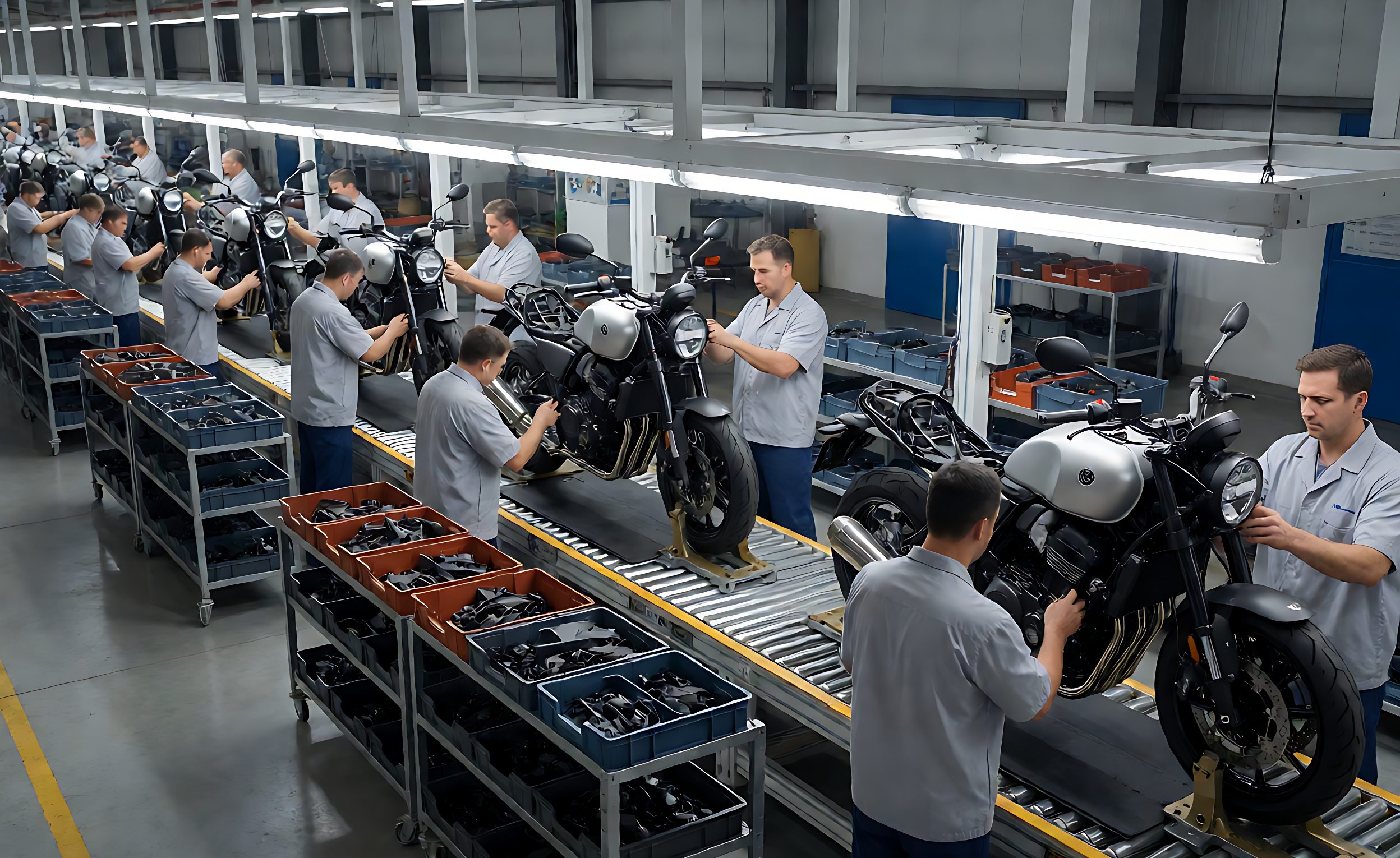
CKD wirkt wie ein geradliniger Arbitrage-Geschäft: man versendet die Teile, montiert sie vor Ort und zahlt weniger Zoll und weniger Fracht. Die Arbitrage ist real, und genau deshalb unterperformen so viele CKD-Programme. Die Einsparungen werden auf der Frachtrechnung berechnet, während die Kosten einer Linie, die Drehmoment, Sequenz oder Sauberkeit nicht halten kann, Monate später als Garantiefälle und in einem Händlernetz auftauchen, das aufhört, an die Marke zu glauben.
Diese Anleitung befasst sich mit dem Teil, der entscheidet, ob die Rechnung aufgeht: mit der Linie selbst. Stationssequenz und Taktzeit, die wirklich relevante Werkzeugliste, Vorrichtungsdesign, Operatorenschulung, Qualitätskontrollen und eine realistische Ramping Curve statt einer Fantasie.
Was CKD tatsächlich enthält
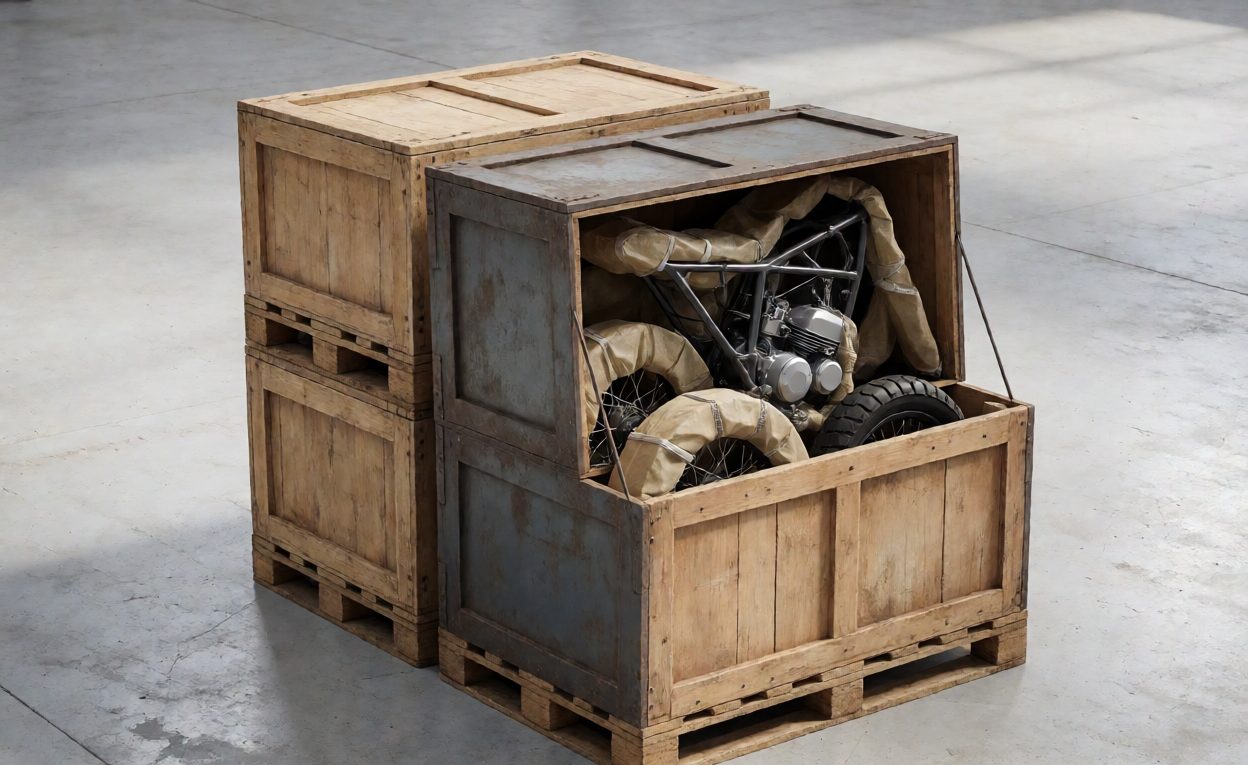
Ein CKD-Kit ist kein auseinandergebautes Motorrad im Sinne, den die meisten Leute sich vorstellen. Die Teile werden nach Montagesequenz statt nach System verpackt, und der Verpackungsplan bestimmt, wie schnell die Linie versorgt werden kann.
- Rahmen und Schwinge: meistens das größte Einzelstück und das Strukturelement der Kiste.
- Ein schweres Geländefahrzeug ist schwierig zu handhaben, ermüdend zu fahren und nach einem Sturz schwerer aufzurichten. vollständig oder teilweise montiert, im eigenen Schutzgestell versendet.
- Räder und Reifen: oft als Einheiten versendet, manchmal getrennt, um das Volumen zu sparen.
- Verkleidung und Kunststoffteile: die beschädigungsanfälligsten Artikel, separat mit Schaumstoff oder geformter Pappmasse verpackt.
- Elektrik: Zuleitungsbüschel, Batterie (trocken), Instrumente, Beleuchtung.
- Befestigungselemente und Kleinteile: pro Station in Tüten, was das Detail ist, das entscheidet, ob die Montage reibungslos verläuft oder zur Schnitzeljagd wird.
Die Tüte nach Station statt nach Teilart zu verpacken ist die einzige große, kostengünstige Verbesserung in einem CKD-Kit. Ein Kit, bei dem jede Schraube für Station drei in Tüte drei steckt, lässt sich in einem Bruchteil der Zeit zusammenbauen, die ein Kit braucht, bei dem sich Befestigungselemente nach Größe sortiert anliefern.
Der Vergleich von CBU, SKD und CKD erklärt die Zoll- und Frachtrechnung. Die in dieser Rechnung versteckte Annahme ist, dass die Kosten für die lokale Montage kalkulierbar sind, und diese Annahme hängt vom Linienentwurf ab.
Stationssequenz und Taktzeit
Eine kleine CKD-Linie läuft typischerweise mit acht bis zwölf Stationen, und die Sequenz folgt der physischen Logik, vom Rahmen aus nach außen hin aufzubauen.
- Station 1: Rahmen auf Ständer, Lenkkopflager, Vorderradgabel.
- Station 2: Motorinstallation und Motorschellen, mit Drehmoment nach Spezifikation angezogen.
- Station 3: Schwinge, Federbein, Kette oder Riemenantrieb.
- Station 4: Räder, Bremsen, Bremsflüssigkeitswechsel und Einstellung.
- Station 5: Verlegung des Zuleitungsbüschels, Batterie, Instrumente.
- Station 6: Beleuchtung, Schalter, Hupe und elektrische Funktionsprüfung.
- Station 7: Verkleidung, Sitz, Tank, Betriebsflüssigkeiten.
- Station 8: Endprüfung, Probefahrt, Einstellung und Verpackung für die Lieferung.
Die Taktrate ist die gesamte verfügbare Arbeitszeit dividiert durch die erforderliche Auslieferung. Für eine Linie, die acht Stunden mit einem Ziel von sechzehn Motorrädern läuft, beträgt die Taktrate dreißig Minuten, was bedeutet, dass keine Station länger als dreißig Minuten dauern darf, sonst wird sie zur Engstelle. Das Messen der tatsächlichen Stationszeiten in der ersten Woche ist der einzige Weg herauszufinden, ob der Plan der Realität standhält, und die Antwort lautet in der Regel, dass eine Station das Doppelte ihrer Toleranz überschreitet.
Die Werkzeugliste, die zählt
Werkzeuglisten in CKD-Projekten neigen dazu, lang und undifferenziert zu sein. Dies sind die Artikel, die tatsächlich die Qualität bestimmen.
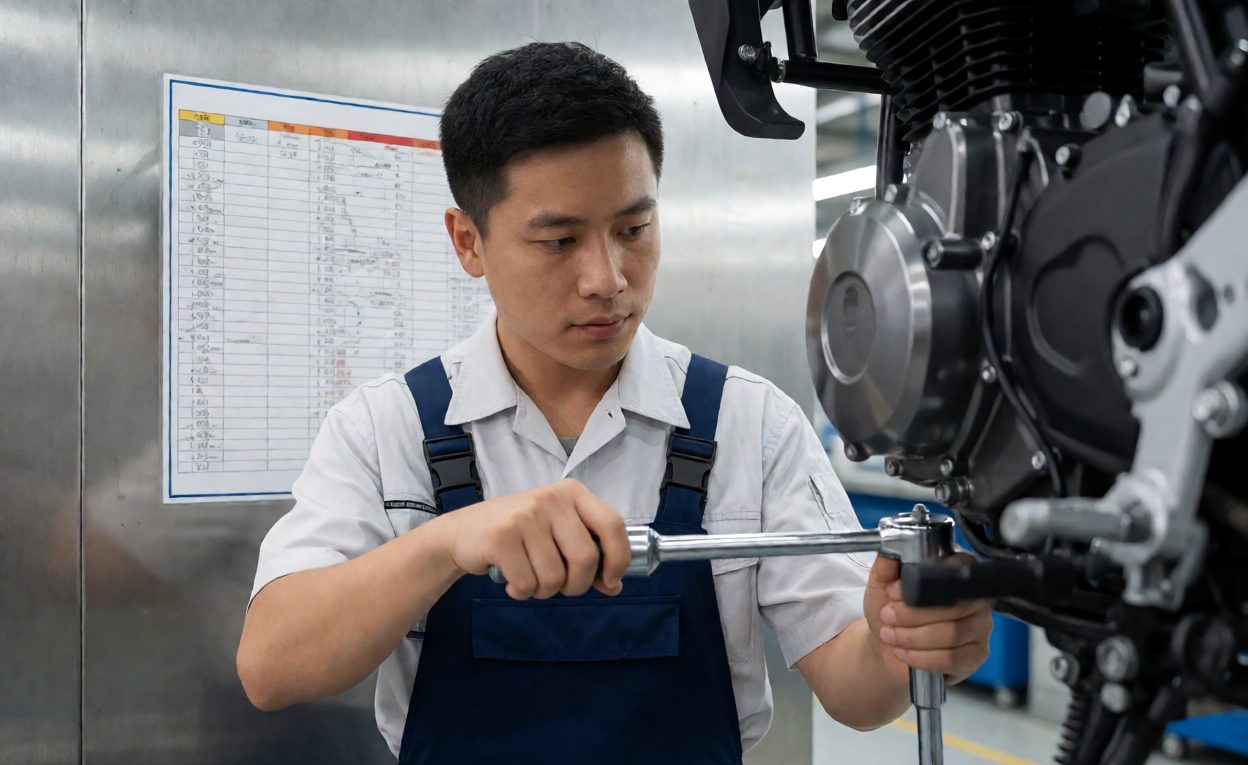
- Kalibrierte Drehmomentschlüssel: mindestens drei Bereiche, mit Kalibrierungsprotokoll und täglichem Check. Drehmoment ist der häufigste Montagefehler in CKD-Betrieb.
- Geräte zum Heben oder zur Aufnahme von Motoren: Ein Motor ist schwer und sperrig, und ein fallender Motor ist ein verschrotteter Motor.
- Bremsflüssigkeitspresse oder Abspüleinrichtung: Vakuumbelüftung oder Druckbelüftung, nicht manuelles Pumpe, weil Luft in einer Bremse eine Sicherheitsmangel ist, der den Kunden erreicht.
- Radauswucht: statische oder dynamische Auswuchtung, die viele kleine Linien überspringen und dann auf Reifen schieben.
- Elektrisches Prüfgerät: ein Multimeter und ein Diagnosestecker, plus ein definierter Funktionstestablauf.
- Air line with a dryer: moisture in the air line contaminates brake fluid and paint, and a dryer is cheap.
- Fluid dispensing: measured dispensing for oil and brake fluid, so fill quantities are repeatable.
Quality perception is built at these stations. A buyer who inspects a showroom bike is really inspecting the discipline of the line that built it.
Jigs and Fixtures
Three fixtures do most of the work, and each has a specific purpose.
Frame stand. Holds the frame at working height and allows rotation. Without one, operators work at floor level, which slows assembly and increases the chance of damage to the frame and to the operator. A stand with a rotating cradle pays for itself in the first week.
Engine cradle. Supports the engine during installation and alignment, so the mounts can be fitted without loading the bolts. An engine hung on bolts before alignment is an engine that will vibrate.
Wheel and alignment fixture. Holds the front end straight while the fork, handlebar and wheel are aligned. Misalignment shows up as a bike that pulls to one side, which is a warranty claim that is almost impossible to argue against.
Fixtures should be locally manufacturable from drawings, because importing them defeats part of the CKD cost advantage and creates a long lead time for replacements.
Training and Documentation
Operators on a new CKD line are usually competent mechanics and unfamiliar with this specific product. The gap is not skill, it is product knowledge, and it closes with documentation rather than experience.
- Work instruction per station: photographs of each step, the torque value, the tool, and the check that confirms the step is complete.
- Torque tables: posted at the station in the operator’s language, not buried in a manual.
- First-off inspection: the first bike of each shift is inspected in full before the line continues.
- Ramp-up plan: expect roughly half output in week one, seventy to eighty percent in week two, and full rate by week three or four, with a defined intervention if the curve is flat.
A training plan that assumes full rate from day one produces a month of defects that are attributed to parts quality rather than to the line, which is the most expensive kind of misunderstanding in a CKD programme.
Quality Gates and the Rework Loop
Quality gates are only useful if the rework loop feeding them is measured. Four gates cover a small line.
- In-station check: the operator confirms the step against the work instruction before the bike moves.
- Torque audit: a sample of fasteners marked and re-checked at the end of the line, with a recorded pass rate.
- Function test: electrical, braking, lighting and fluid leaks, on every unit.
- Road test: a short dynamic check on every unit, with a defined route and a defect log.
Warranty terms should reflect what the line can actually control. A programme that offers a full warranty without a torque audit and a road test is transferring line defects into the warranty budget, where they cost several times more to resolve.
A Realistic Ramp-Up
Assume a line designed for sixteen bikes per shift. Week one might produce eight with heavy rework, week two twelve with moderate rework, week three fifteen, and week four sixteen with a stable defect rate. The first month’s average is well below design capacity, and the business case should be built on that average rather than on the design rate. A plan that assumes design rate from week one produces a cash flow surprise in the same month the first container of parts arrives.
Dealer and territory terms should be set after the line has demonstrated a stable rate, because a dealer network that is signed up before the line can supply it becomes a network that is waiting.
Technical Background
CKD assembly is an application of assembly line principles at small scale: work is divided into stations, each station completes a defined scope within a takt time, and flow replaces batch build. The economics only work when station times are balanced, which is why measuring them is the first task rather than the last.
Much of the quality outcome depends on jigs and fixtures, which locate a part rather than simply hold it. A fixture that constrains the wrong degrees of freedom forces the operator to compensate by hand, and hand compensation is variable. The third influence is lean manufacturing thinking applied honestly: standard work, visual control and a measured rework loop, rather than a set of tools adopted for appearance.

A Line Setup Checklist
- Kit packed by station, with fasteners bagged per station rather than per size.
- Station sequence defined and station times measured in the first week.
- Takt time calculated from available hours and required output, not from aspiration.
- Calibrated torque wrenches in three ranges, with a daily check and a calibration record.
- Frame stand, engine cradle and wheel alignment fixture available locally.
- Work instruction per station with photographs and torque values in the local language.
- Four quality gates operating, with the rework loop measured.
- Ramp-up curve agreed with the parts supply plan, so parts arrive at the rate the line can absorb.
How many stations does a CKD motorcycle line need?
Typically eight to twelve for a small programme, moving from frame and fork through engine, running gear, electrical, bodywork and final inspection. The count follows takt time rather than a fixed template.
What is takt time and why does it matter?
Available working time divided by required output. It sets the maximum time any station may take, and a single station over takt becomes the constraint for the whole line.
What is the most common CKD assembly defect?
Incorrect torque, usually from uncalibrated wrenches or missing torque tables at the station. It is also the defect most likely to become a safety issue.
Should jigs be imported or made locally?
Locally, from supplied drawings, wherever local fabrication capability exists. Importing fixtures adds lead time and cost, and makes replacements slow when one is damaged.
How long does ramp-up take?
Plan for roughly half output in week one, seventy to eighty percent in week two, and full rate by week three or four, with a defined intervention if output stalls.
Do we need a road test on every unit?
Yes on a small line. A short dynamic check catches brake, alignment and electrical defects that a static inspection misses, and it is the cheapest warranty prevention available.
How should parts be packed for CKD?
By assembly station, with fasteners bagged per station. Packing by part type looks tidy in the warehouse and costs hours on the line.