
Настройка линии сборки CKD-мотоциклов: инструменты, шаблонные приспособления и обучение операторов
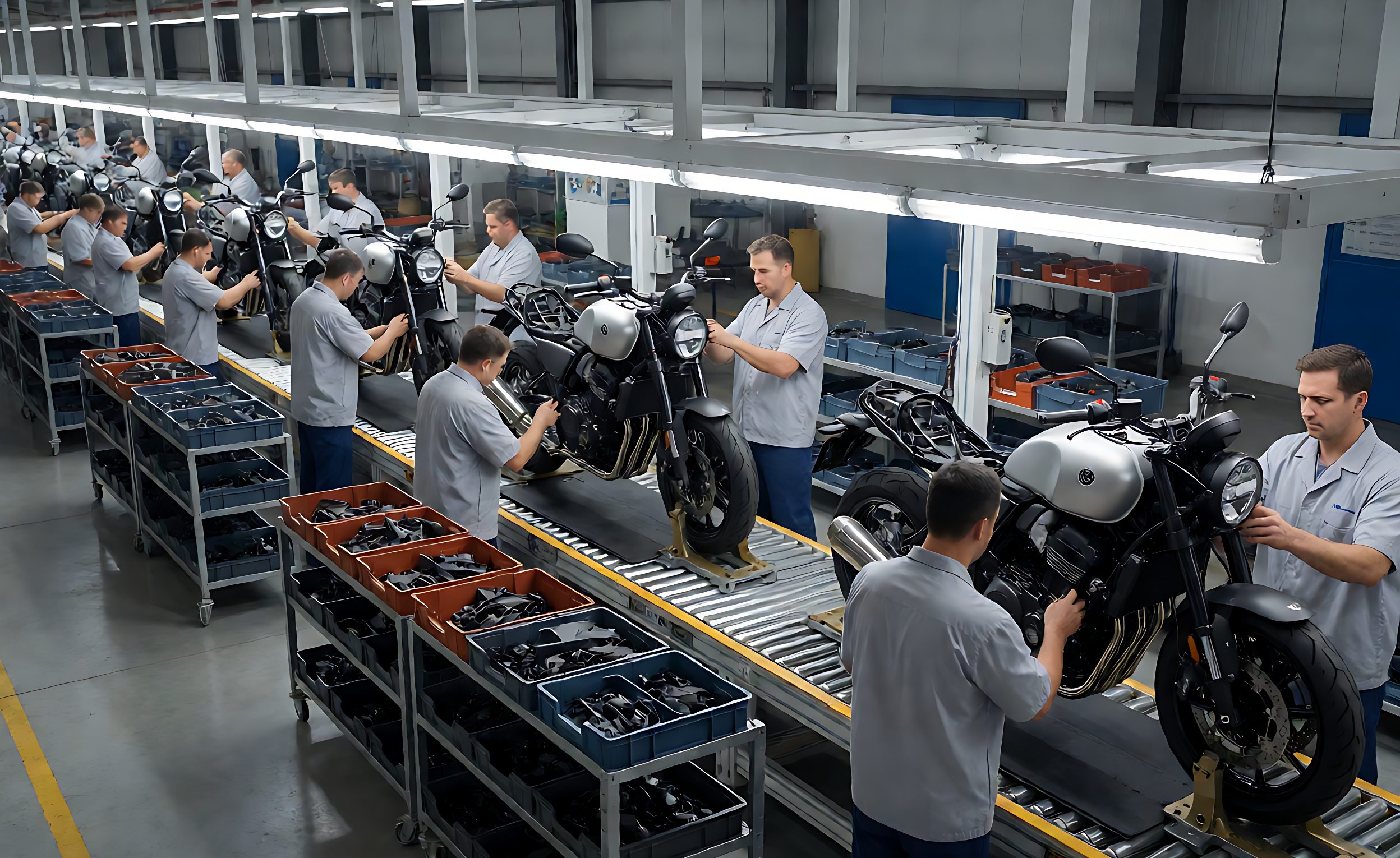
CKD выглядит как простая арбитражная сделка: доставить детали, собрать их локально, заплатить меньший пошлинный сбор и меньшую стоимость фрахта. Арбитраж реален, и именно поэтому многие программы CKD дают результат ниже ожидаемого. Экономия рассчитывается на основе счета за доставку, тогда как стоимость линии, которая не может удерживать крутящий момент, последовательность или чистоту, проявляется месяцами позже в виде гарантийных требований и дилерской сети, которая перестает верить в бренд.
Это руководство посвящено той части, от которой зависит, сработает ли математика: самой линии. Последовательность рабочих мест и такт времени, список инструментов, который действительно важен, конструкция шаблонных приспособлений, обучение операторов, контрольные точки качества и реалистичная кривая разгона вместо фантастической.
Что на самом деле входит в CKD
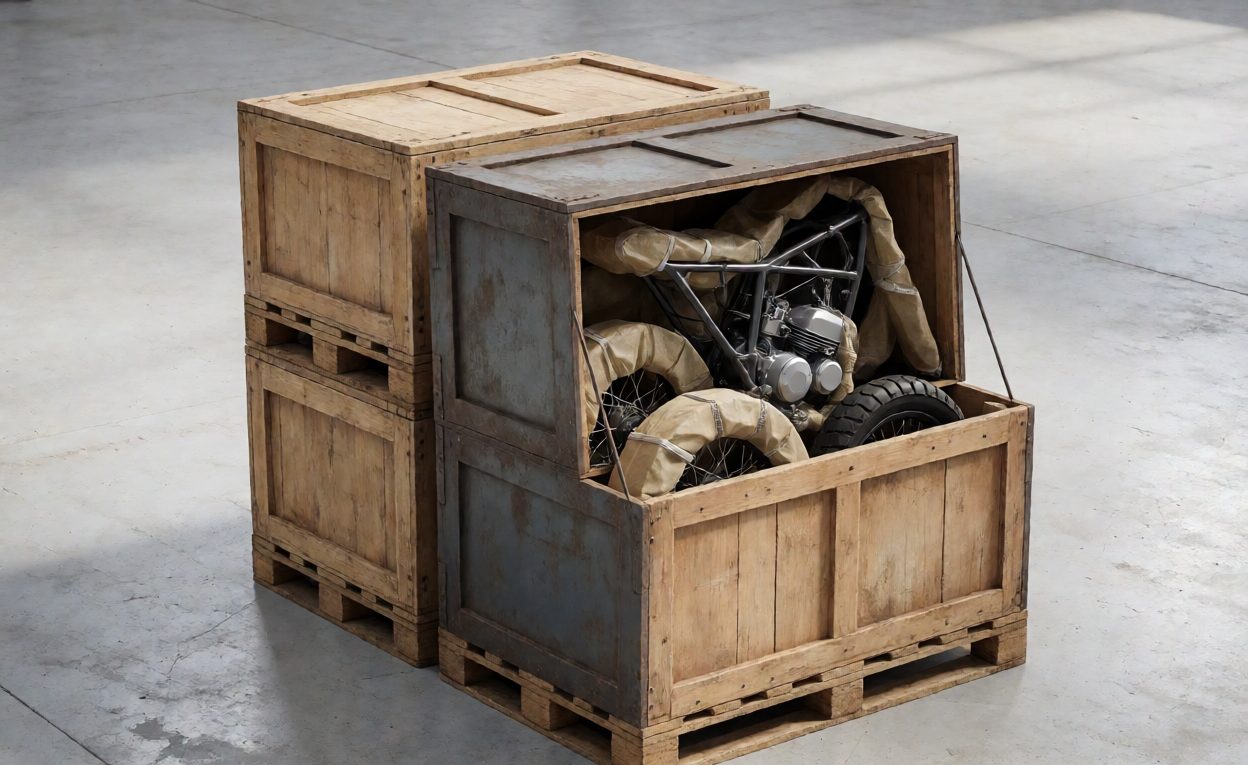
Комплект CKD — это не разобранный мотоцикл в том смысле, как большинство людей себе это представляет. Детали упакованы по последовательности сборки, а не по системам, и план упаковки определяет, насколько быстро можно пополнять линию.
- Рама и маятник: обычно крупнейший отдельный элемент и несущая часть ящика.
- Двигатель: в сборе или частично собранный, доставляется в собственной защитной обойме.
- Колеса и шины: часто доставляются в сборе, иногда разделяются для экономии объема.
- Кузовные детали и пластиковые элементы: наиболее подверженные повреждению предметы, упаковываются отдельно с пеной или molded pulp.
- Электрическая часть: жгуты, аккумулятор (сухой), приборы, освещение.
- Крепеж и мелкие детали: расфасовываются по рабочим местам, что является подробностью, определяющей, будет ли сборка плавной или превратится в охоту за деталями.
Расфасовка по рабочим местам, а не по типу детали — самое крупное недорогое улучшение в комплекте CKD. Комплект, где все болты для третьего рабочего места находятся в третьем пакете, собирается во фракцию времени того, где крепеж доставляется отсортированным по размеру.
Сравнение CBU, SKD и CKD объясняет арифметику пошлин и фрахта. Допущение, скрытое в этой арифметике, заключается в том, что стоимость локальной сборки предсказуема, и это допущение зависит от проектировки линии.
Последовательность рабочих мест и такт времени
Небольшая линия CKD обычно работает с восемью до двенадцати рабочих мест, и последовательность следует физической логике сборки наружу от рамы.
- Рабочее место 1: рама на подставке, подшипники рулевой колонки, передняя вилка.
- Рабочее место 2: установка двигателя и кронштейны двигателя, затяжка согласно спецификации.
- Рабочее место 3: маятник, задний амортизатор, цепной или ременной привод.
- Рабочее место 4: колеса, тормоза, слив тормозной жидкости и регулировка.
- Рабочее место 5: прокладка электрических жгутов, аккумулятор, приборы.
- Рабочее место 6: освещение, переключатели, клаксон и функциональный тест электрики.
- Рабочее место 7: кузовные детали, сиденье, топливный бак, жидкости.
- Рабочее место 8: окончательная проверка, дорожное испытание, регулировка и упаковка для доставки.
Тактовое время — это общее доступное рабочее время, деленное на необходимую производительность. Для линии с восьмичасовым рабочим днём и целевым показателем в шестнадцать мотоциклов такт составляет тридцать минут, что означает: ни одна станция не должна занимать больше тридцати минут, иначе она станет узким местом. Замер фактического времени работы станций в первую неделю — единственный способ узнать, выдержит ли план столкновение с реальностью, и ответ обычно таков, что одна станция занимает вдвое больше отведённого на неё времени.
Список инструментов, который имеет значение
Списки инструментов в проектах CKD, как правило, длинные и не дифференцированные. Ниже перечислены элементы, которые на самом деле определяют качество.
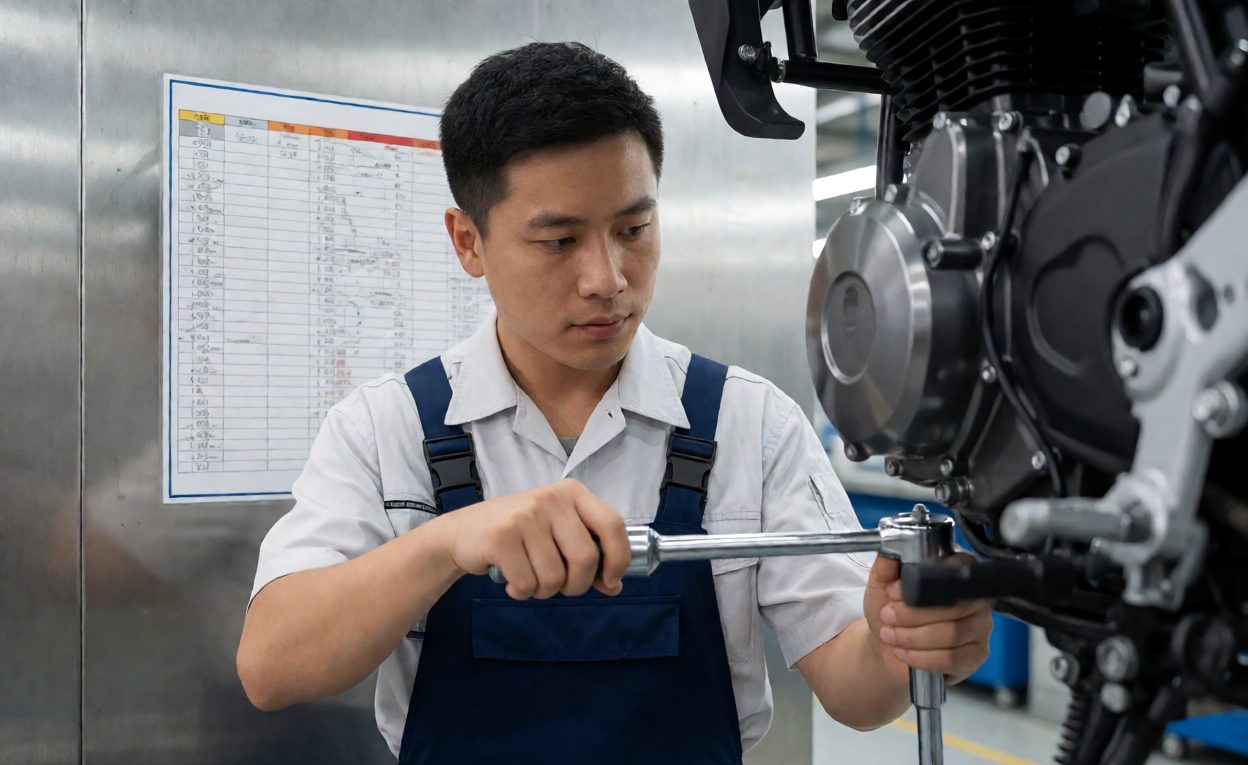
- Калиброванные динамометрические ключи: минимум три диапазона, с журналом калибровки и ежедневной проверкой. Момент затяжки — дефект номер один при сборке в операциях CKD.
- Оборудование для подъёма или станины для двигателя: двигатель тяжёлый и неудобный, а упавший двигатель — это списанный двигатель.
- Оборудование для прокачки тормозов: вакуумная или прокачка под давлением, а не ручная накачка, поскольку воздух в тормозной магистрали — это дефект безопасности, который доходит до клиента.
- Балансировка колёс: статическая или динамическая балансировка, которую многие небольшие линии пропускают и потом сваливают на шины.
- Электроизмерительное оборудование: мультиметр и диагностический разъём, а также определённая последовательность функциональных испытаний.
- Air line with a dryer: moisture in the air line contaminates brake fluid and paint, and a dryer is cheap.
- Fluid dispensing: measured dispensing for oil and brake fluid, so fill quantities are repeatable.
Quality perception is built at these stations. A buyer who inspects a showroom bike is really inspecting the discipline of the line that built it.
Jigs and Fixtures
Three fixtures do most of the work, and each has a specific purpose.
Frame stand. Holds the frame at working height and allows rotation. Without one, operators work at floor level, which slows assembly and increases the chance of damage to the frame and to the operator. A stand with a rotating cradle pays for itself in the first week.
Engine cradle. Supports the engine during installation and alignment, so the mounts can be fitted without loading the bolts. An engine hung on bolts before alignment is an engine that will vibrate.
Wheel and alignment fixture. Holds the front end straight while the fork, handlebar and wheel are aligned. Misalignment shows up as a bike that pulls to one side, which is a warranty claim that is almost impossible to argue against.
Fixtures should be locally manufacturable from drawings, because importing them defeats part of the CKD cost advantage and creates a long lead time for replacements.
Training and Documentation
Operators on a new CKD line are usually competent mechanics and unfamiliar with this specific product. The gap is not skill, it is product knowledge, and it closes with documentation rather than experience.
- Work instruction per station: photographs of each step, the torque value, the tool, and the check that confirms the step is complete.
- Torque tables: posted at the station in the operator’s language, not buried in a manual.
- First-off inspection: the first bike of each shift is inspected in full before the line continues.
- Ramp-up plan: expect roughly half output in week one, seventy to eighty percent in week two, and full rate by week three or four, with a defined intervention if the curve is flat.
A training plan that assumes full rate from day one produces a month of defects that are attributed to parts quality rather than to the line, which is the most expensive kind of misunderstanding in a CKD programme.
Quality Gates and the Rework Loop
Quality gates are only useful if the rework loop feeding them is measured. Four gates cover a small line.
- In-station check: the operator confirms the step against the work instruction before the bike moves.
- Torque audit: a sample of fasteners marked and re-checked at the end of the line, with a recorded pass rate.
- Function test: electrical, braking, lighting and fluid leaks, on every unit.
- Road test: a short dynamic check on every unit, with a defined route and a defect log.
Warranty terms should reflect what the line can actually control. A programme that offers a full warranty without a torque audit and a road test is transferring line defects into the warranty budget, where they cost several times more to resolve.
A Realistic Ramp-Up
Assume a line designed for sixteen bikes per shift. Week one might produce eight with heavy rework, week two twelve with moderate rework, week three fifteen, and week four sixteen with a stable defect rate. The first month’s average is well below design capacity, and the business case should be built on that average rather than on the design rate. A plan that assumes design rate from week one produces a cash flow surprise in the same month the first container of parts arrives.
Dealer and territory terms should be set after the line has demonstrated a stable rate, because a dealer network that is signed up before the line can supply it becomes a network that is waiting.
Техническое обоснование
CKD assembly is an application of assembly line principles at small scale: work is divided into stations, each station completes a defined scope within a takt time, and flow replaces batch build. The economics only work when station times are balanced, which is why measuring them is the first task rather than the last.
Much of the quality outcome depends on jigs and fixtures, which locate a part rather than simply hold it. A fixture that constrains the wrong degrees of freedom forces the operator to compensate by hand, and hand compensation is variable. The third influence is lean manufacturing thinking applied honestly: standard work, visual control and a measured rework loop, rather than a set of tools adopted for appearance.

A Line Setup Checklist
- Kit packed by station, with fasteners bagged per station rather than per size.
- Station sequence defined and station times measured in the first week.
- Takt time calculated from available hours and required output, not from aspiration.
- Calibrated torque wrenches in three ranges, with a daily check and a calibration record.
- Frame stand, engine cradle and wheel alignment fixture available locally.
- Work instruction per station with photographs and torque values in the local language.
- Four quality gates operating, with the rework loop measured.
- Ramp-up curve agreed with the parts supply plan, so parts arrive at the rate the line can absorb.
How many stations does a CKD motorcycle line need?
Typically eight to twelve for a small programme, moving from frame and fork through engine, running gear, electrical, bodywork and final inspection. The count follows takt time rather than a fixed template.
What is takt time and why does it matter?
Available working time divided by required output. It sets the maximum time any station may take, and a single station over takt becomes the constraint for the whole line.
What is the most common CKD assembly defect?
Incorrect torque, usually from uncalibrated wrenches or missing torque tables at the station. It is also the defect most likely to become a safety issue.
Should jigs be imported or made locally?
Locally, from supplied drawings, wherever local fabrication capability exists. Importing fixtures adds lead time and cost, and makes replacements slow when one is damaged.
How long does ramp-up take?
Plan for roughly half output in week one, seventy to eighty percent in week two, and full rate by week three or four, with a defined intervention if output stalls.
Do we need a road test on every unit?
Yes on a small line. A short dynamic check catches brake, alignment and electrical defects that a static inspection misses, and it is the cheapest warranty prevention available.
How should parts be packed for CKD?
By assembly station, with fasteners bagged per station. Packing by part type looks tidy in the warehouse and costs hours on the line.