
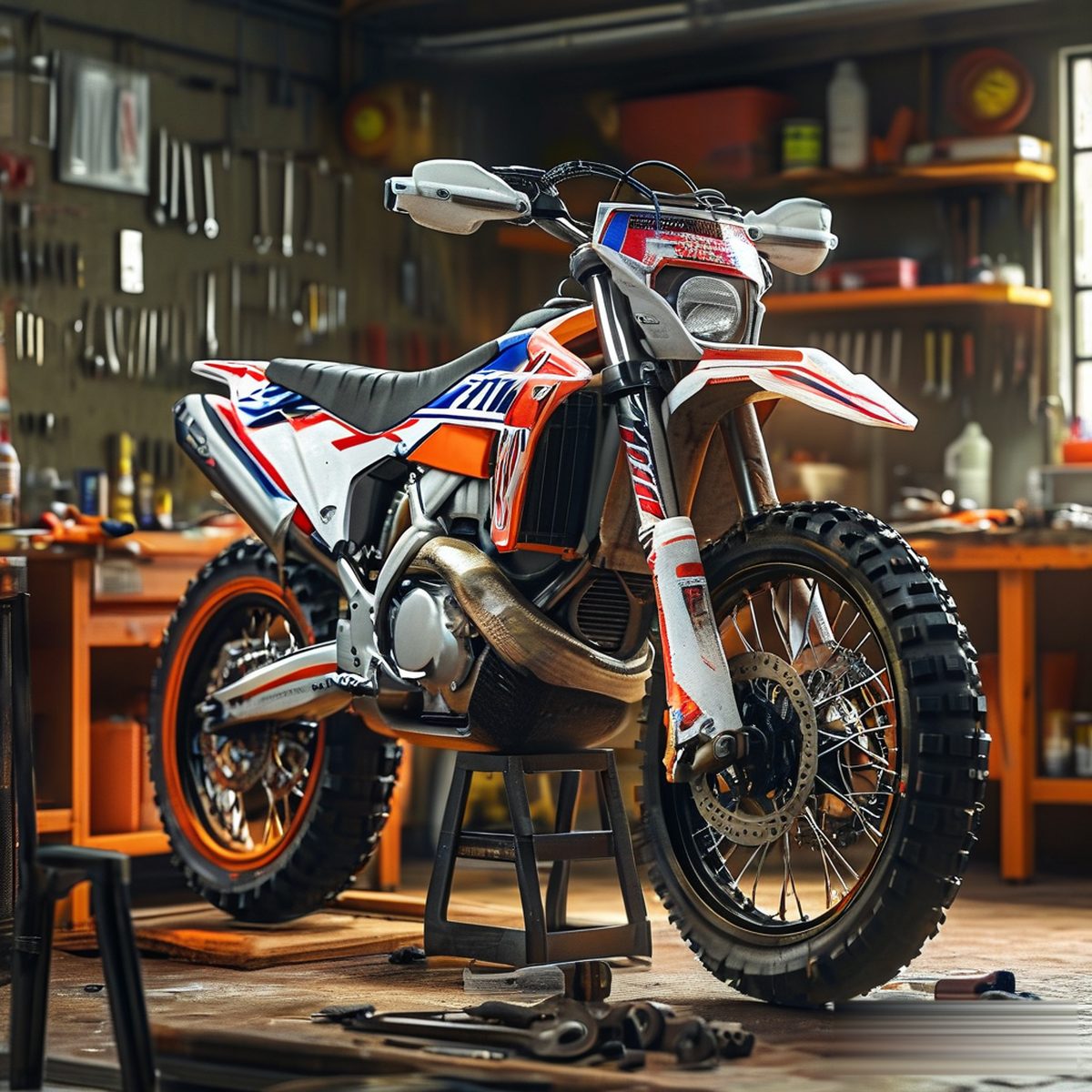
Dirt bikes live or die on interval maintenance. Road bikes forgive neglect; a motocross bike ridden in sand and mud punishes it within hours. This checklist organises the work by interval — before the ride, after the ride, weekly, and monthly — so nothing depends on memory, and the checks that catch expensive failures early are always in the right rotation.
Pre-Ride Checklist (Every Ride)
Ten minutes before you load the bike prevents most trail-side recoveries:
- Chain: check tension at the midpoint (typically 30–45 mm total play per your manual) and lube if dry.
- Spokes: tap-check a sample; a dull “thud” means a loose spoke waiting to egg the rim.
- Tires: pressure to your terrain (commonly 10–14 psi off-road), and inspect knobs for tears.
- Controls: levers return freely, throttle snaps closed, cables not frayed.
- Fluids: coolant level visible in the radiator; no fuel leaks at the bowl or lines.
- Bolts: axle nuts, triple-clamp bolts, and the sprocket bolts — a quick wrench pass.
Post-Ride Wash and Inspection
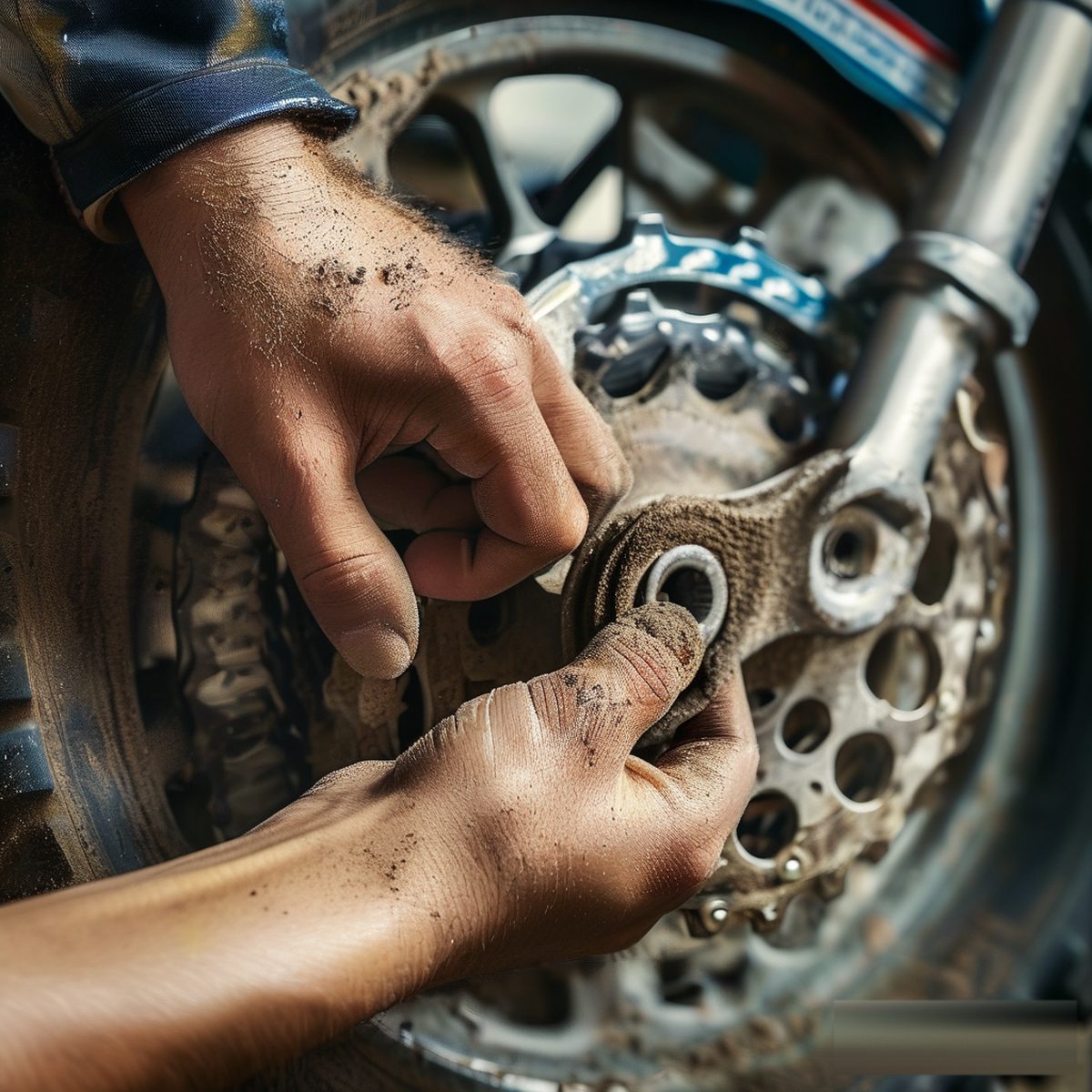
Wash the bike soon after riding — dried mud holds moisture against aluminum and wicks grease out of seals. Use low-pressure water near bearings and seals; a pressure washer at close range injects water past seal lips and is the leading cause of premature wheel-bearing failure. After washing: run the engine briefly to dry the exhaust, lube the chain while warm, and wipe the forks and shock shaft. Then do the two-minute inspection our between-services guide expands on — what to check between services — looking for fresh leaks, bent levers, and anything loose that was tight this morning.
| Task | Interval | Notes |
|---|---|---|
| Chain clean, tension, lube | Every ride / weekly deep clean | Tension warm, at midpoint, per manual |
| Air filter clean & oil | 1–2 rides dusty; 3–5 rides clean conditions | Never run without filter; oil per filter spec |
| Oil change (4-stroke) | 5–10 hours | More often for hard MX use; check screen/magnet |
| Coolant check/replace | Check every ride; replace yearly | Use specified coolant; check for weep at pump seal |
| Brake pads & fluid | Pads monthly; fluid yearly | Sintered pads for mud; spongy lever = bleed now |
| Spoke torque & wheel true | Monthly | Pattern check; truing stand ideal |
| Valve clearance (4-stroke) | Per manual (~15–30 h checks) | Tight valves are the warning before bigger damage |
Weekly: Chain, Controls and Fasteners
Once a week in the riding season, do a deeper pass: clean the chain properly with a brush and solvent rather than just topping up lube, and set tension to spec — a chain adjusted too tight loads the countershaft bearing; too loose and it derails under load. Check cable free-play (throttle and clutch), verify brake pad wear visually, and re-torque the fastener set you checked pre-ride. Two-stroke riders: this is also the moment to inspect the reed valves and change transmission oil on the same 5–10 hour clock as four-strokes.
Monthly: Filters and Fluids
The monthly block is where mechanical sympathy pays off. Clean and oil the air filter regardless of perceived use — fine dust passes a dirty filter invisibly and scores the cylinder. Change four-stroke engine oil with the drain screen cleaned and the magnetic drain plug wiped. Check coolant condition and top up with the specified mix, not plain water. Inspect brake fluid colour; dark fluid absorbs water and fades on long downhills. For engines approaching the hours where valve clearance checks fall due, our two-stroke versus four-stroke guide explains why four-stroke owners carry that extra calendar.
Track vs Trail Intervals
Motocross track use compresses every interval: sustained high RPM, jump landings, and loamy dust multiply chain, filter, and oil wear — run the short end of every range above, and check spoke tension and chain every ride. Trail riding is gentler on the engine but harder on everything structural: rocks bend rotors, trees grab levers, and slow-speed work overheats clutches. Adjust the checklist emphasis rather than skipping blocks: structural inspection up, engine consumables down.
Frequently Asked Questions
How often should I change the oil in a 4-stroke dirt bike?
Every 5–10 riding hours, or after any particularly dusty or hard session. Check the drain screen for metal particles each change — they are the earliest honest report of internal wear.
How tight should a dirt bike chain be?
Typically 30–45 mm of total play at the chain’s midpoint, measured with the bike loaded per your manual’s spec. Too tight overloads the countershaft bearing; too loose risks derailing under drive loads.
How often should I clean the air filter?
After every 1–2 rides in dusty conditions, 3–5 rides in clean conditions — and always after a wash day when water has reached the airbox. A lightly oiled filter is the cheapest engine insurance on the bike.
Can I use a pressure washer to clean my dirt bike?
With distance and discipline. Keep the stream away from wheel bearings, suspension seals, the airbox intake, and electrical connectors — high pressure drives water past seals and is a leading cause of premature bearing failure.