
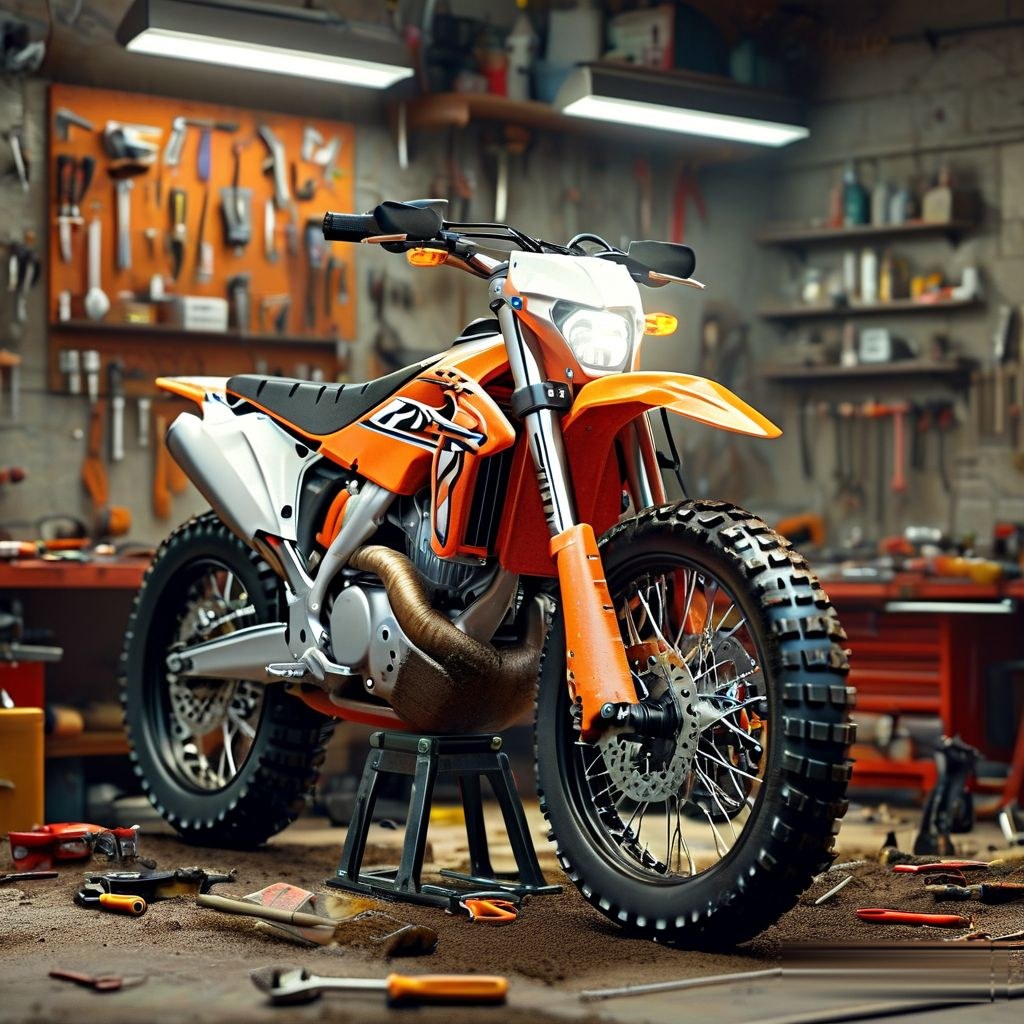
Dirt Bike Maintenance: What to Check Between Services
Dirt bike maintenance advice is usually organized by the calendar, which is wrong for a bike that gets ridden hard for three months and stored for nine. The right unit is ride hours. This guide lays out what to check, and when, using intervals you can actually track.
Why intervals are in ride hours
Engine wear, chain stretch and fork oil degradation are functions of use, not of the date on a calendar. A bike ridden twice a month for a year has less wear than one ridden every weekend for a season, even though the calendar says the first bike is older.
Track your hours on the bike — a simple hour meter or a note in your phone after each ride. Every interval below assumes you know that number.
After every ride
Five minutes after a ride prevents most of the expensive failures.
- Clean the air filter. A dirty filter is the most common cause of a rich-running, hard-starting two-stroke. Check it after every ride in dust.
- Rinse and dry the bike. Mud holds water against seals and fasteners. Dry it, especially the chain and the sprockets.
- Lube the chain. After it is dry, not before. Wet chain plus new lube is a paste.
- Check spoke tension by feel. A quick tap with a screwdriver handle tells you more than a visual check.
- Look at the controls. Cables, levers, and the throttle free play.
Every 5–10 hours
| Item | Check |
|---|---|
| Engine oil (four-stroke) | Level and color |
| Coolant (liquid-cooled) | Level and condition |
| Chain and sprockets | Wear, tension, alignment |
| Brake pads | Remaining material |
| Tire pressure | Cold, with a gauge |
| Fasteners | Anything that has loosened since the last check |
Chain tension is the one people get wrong most often. Too tight accelerates wear on the countershaft and rear sprocket; too loose throws a link. Check it with the bike on a stand, at the tightest point in the chain’s rotation.
Every 20–30 hours
This is the interval where you start replacing things rather than checking them.
- Fork oil. Roughly once a season for a ridden bike, sooner if the forks feel harsh or the travel feels inconsistent.
- Spark plug. Color tells you the mixture story. Read it before you clean it.
- Air filter replacement. Cleaning only goes so far; replace rather than over-clean.
- Brake fluid. Check level and condition. Fluid that has gone dark has absorbed water.
- Pivot bearings. Swingarm, linkage, and shock bushings. Play here shows up as vague handling before it shows up as a failure.
For the two-stroke versus four-stroke split at this interval, our two-stroke vs four-stroke comparison covers what changes on each side.
Annual or seasonal
- Full suspension service. Fork and shock. Not a DIY job unless you have the tools and the seals.
- Carburetor or fuel-injection check. Ethanol fuel left sitting is the leading cause of hard starting after storage.
- Brake system. Pads, and fluid if it is due.
- Wheel and tire condition. Not just tread — spoke tension, rim condition, and tire age.
- Storage prep. Fuel stabilizer or a drained tank, and a charged battery if the bike has one. Our winter storage guide covers this in detail.
What needs a shop
Be honest about the line. Suspension internals, engine bottom-end work, and anything involving the frame are shop jobs. Everything else on this list is within reach of a decent tool roll and an afternoon.
If you are still choosing a bike and want the maintenance picture before you buy, the 250cc dirt bike overview and dirt bikes for adults cover the popular displacement classes side by side.
Frequently asked questions
How often should I change the oil on a four-stroke dirt bike?
Roughly every 10–15 hours of hard riding, and sooner if you ride in dust or deep water. Check the level every few rides and the color at each check.
Do I need to clean the air filter after every ride?
In dusty conditions, yes. In clean conditions, every few rides is enough. A dirty filter is the fastest way to make a two-stroke run badly.
How tight should the chain be?
Check the manufacturer’s specification, and measure at the tightest point of the chain’s rotation with the bike on a stand. Guessing by feel is the most common maintenance error.
What is the most important thing to do before storage?
Deal with the fuel. Stabilize it or drain the tank. Ethanol fuel left sitting for a season causes more hard-starting complaints than any mechanical wear item.