
Motorcycle Battery Export: Lead-Acid vs Lithium and Shipping Rules
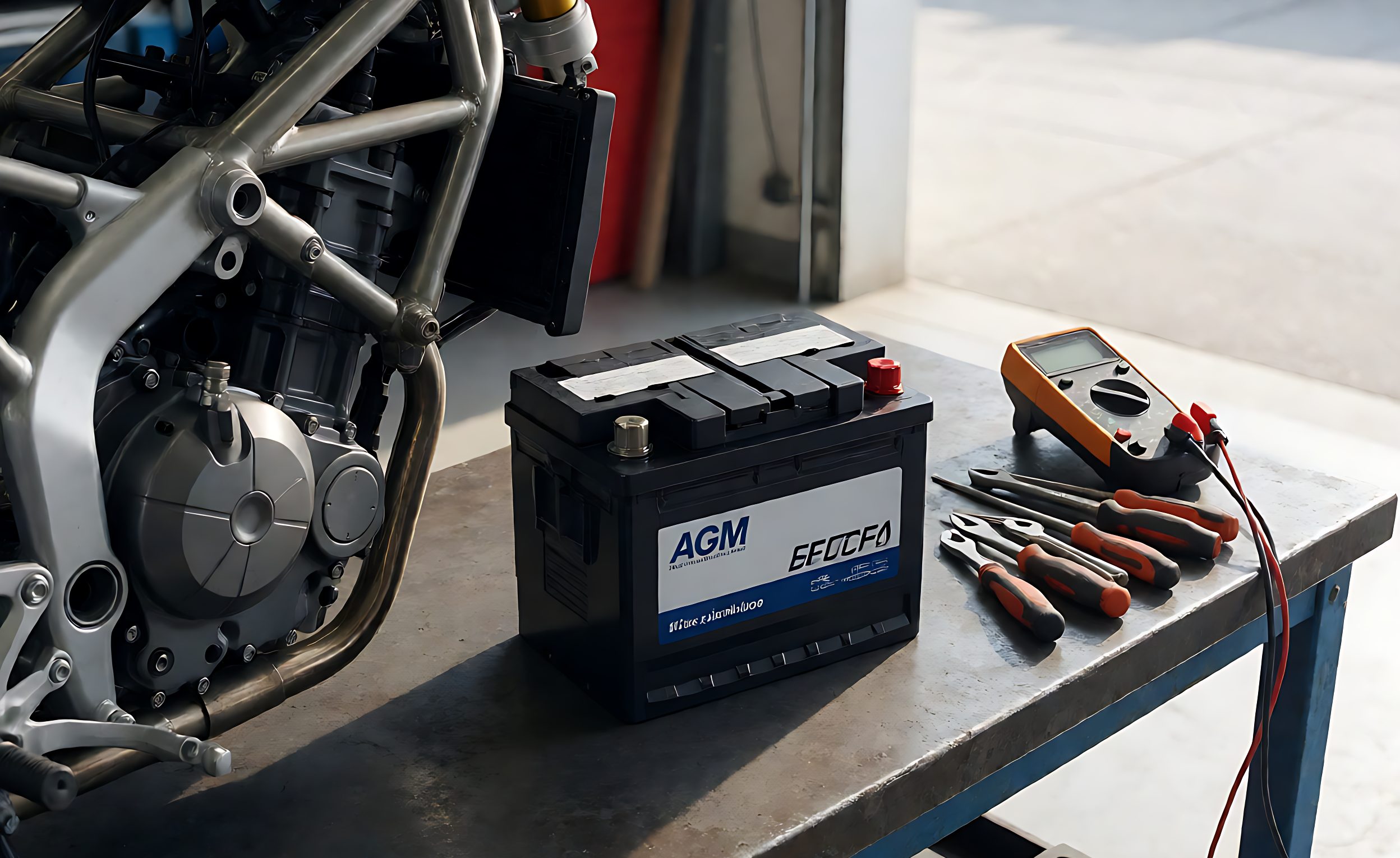
Of all the parts in a motorcycle shipment, the battery is the one most likely to stop the container. It is a regulated article with its own UN number, its own packaging rules and its own paperwork, and a forwarder who discovers it late will either refuse the booking or charge for the discovery. Importers who treat the battery as an accessory rather than a dangerous good tend to learn this once.
The commercial question and the compliance question run in parallel. Commercially, the choice is between lead-acid, which dominates OEM supply, and lithium, which is lighter and more expensive. Compliance-wise, each has a different classification and a different set of rules. This guide covers both sides.
What Actually Ships With a Motorcycle
Three supply models exist, and the battery content differs in each.
- Factory-fitted, filled and charged: the bike arrives ready to start. Convenient for the dealer and the most heavily regulated shipping option, because a filled lead-acid battery is a dangerous good in every mode.
- Factory-fitted but dry: the battery is installed but the acid is supplied separately in a sealed bottle, to be filled and charged by the dealer. This is the most common export configuration because it separates the hazardous liquid from the battery and simplifies transport.
- Battery not fitted: supplied loose in the crate, often dry-charged. Best for container density and for markets where local battery supply is cheap.
Pre-delivery inspection should confirm which model was actually applied, because a container declared as dry can contain a filled battery if a factory worker fitted and filled one to move a bike on the line.
Lead-Acid: Three Types, One Family
Lead-acid remains the default because it is cheap, tolerant of abuse and available everywhere. Three variants matter.
Flooded. Liquid electrolyte, requires maintenance and venting, cheapest per amp-hour. Still common in low-cost markets and older models, and increasingly rare in export specifications because it can leak if tipped.
AGM, also called VRLA. The electrolyte is absorbed in a glass mat, so the battery is sealed and non-spillable under normal handling. This is the OEM standard for most motorcycles now, because it can be mounted at an angle, does not need topping up, and ships under a less restrictive classification when it meets the non-spillable criteria.
Gel. Electrolyte immobilised in a gel, good deep-cycle behaviour and very low self-discharge, but poor cold cranking performance and higher cost. Common in applications that sit unused for long periods rather than in daily riders.
The specification that matters most in practice is cold cranking amps at the lowest temperature the market will see, not amp-hour capacity. A battery with adequate capacity but insufficient cranking current starts a warm engine and fails in winter, and that failure reads as a warranty claim against the motorcycle.
Lithium: Where It Fits
Lithium iron phosphate batteries have become a credible option, mainly on premium and performance models. The advantages are real: a fraction of the weight, very low self-discharge, and a longer cycle life. The disadvantages are equally real.
- Cold cranking: lithium chemistry delivers high current but performs poorly at low temperature until it warms, which is the opposite of what a winter commuter needs.
- Charging system compatibility: an older regulator-rectifier may overcharge a lithium battery, and a lithium battery’s internal protection can disconnect the battery while the engine is running, which risks damaging the charging system.
- Costo: several times the price of an equivalent AGM, which is hard to justify on a commuter model.
- Regulation: lithium cells bring UN38.3 testing, state-of-charge limits and per-package quantity limits that lead-acid does not.
For most export programmes the pragmatic answer is AGM across the range, with lithium offered as an accessory for the models where weight or cranking performance is a selling point.
Shipping Classification and Paperwork
The UN number decides the rules, and the rules decide the cost. Four entries cover most motorcycle battery shipments.
- UN2794: batteries, wet, filled with acid. The most heavily regulated case, with acid-resistant packaging, venting and marking requirements.
- UN2800: batteries, wet, non-spillable. The AGM and gel route, available only if the battery passes the vibration and pressure differential tests that define non-spillable.
- UN2796: battery fluid, acid. Applies to the separate acid bottle in a dry-charged shipment.
- UN3480 and UN3481: lithium ion cells and batteries, alone or with equipment, with UN38.3 test documentation and state-of-charge requirements.
Documentation follows the classification: a test summary for non-spillable status, a safety data sheet for the acid, and a shipper’s declaration naming the UN number and packing instruction. Import certification requirements in the destination market may also treat the battery as a separate regulated article, which is worth confirming before the first shipment rather than after.
Storage, Shelf Life and the Dealer Problem
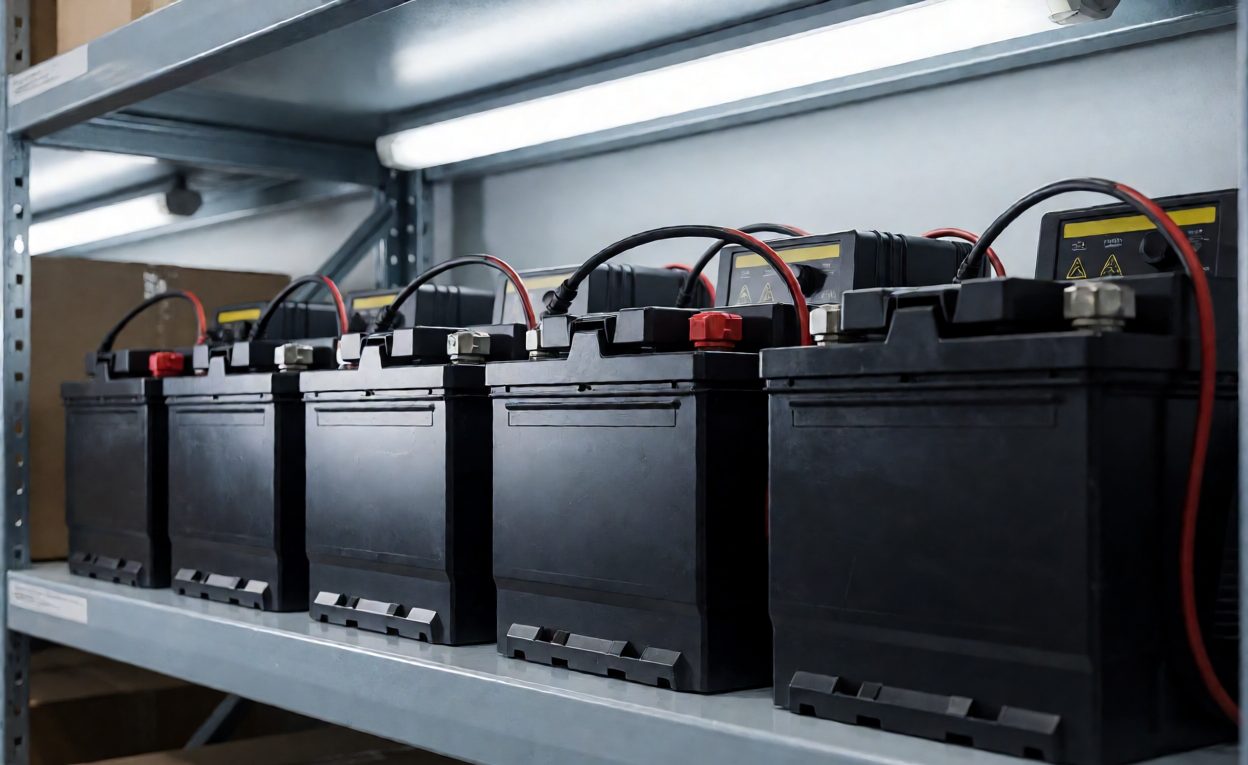
A battery that sits in a warehouse loses capacity, and the loss is not recoverable. Lead-acid self-discharges at a few percent per month, and a battery left below about half charge for long enough sulfates permanently. In a hot climate the rate roughly doubles for every ten degrees of temperature rise, which means a battery stored in a warm warehouse for six months may be unsellable.
The operating answer is a rotation rule plus maintenance charging. Date-code every battery on receipt, apply a first-in-first-out rule, and put anything older than a set interval on a maintenance charger. For dealers, specify a charging interval in the service documentation, because a bike that sits on a showroom floor for months with a connected battery will drain it.
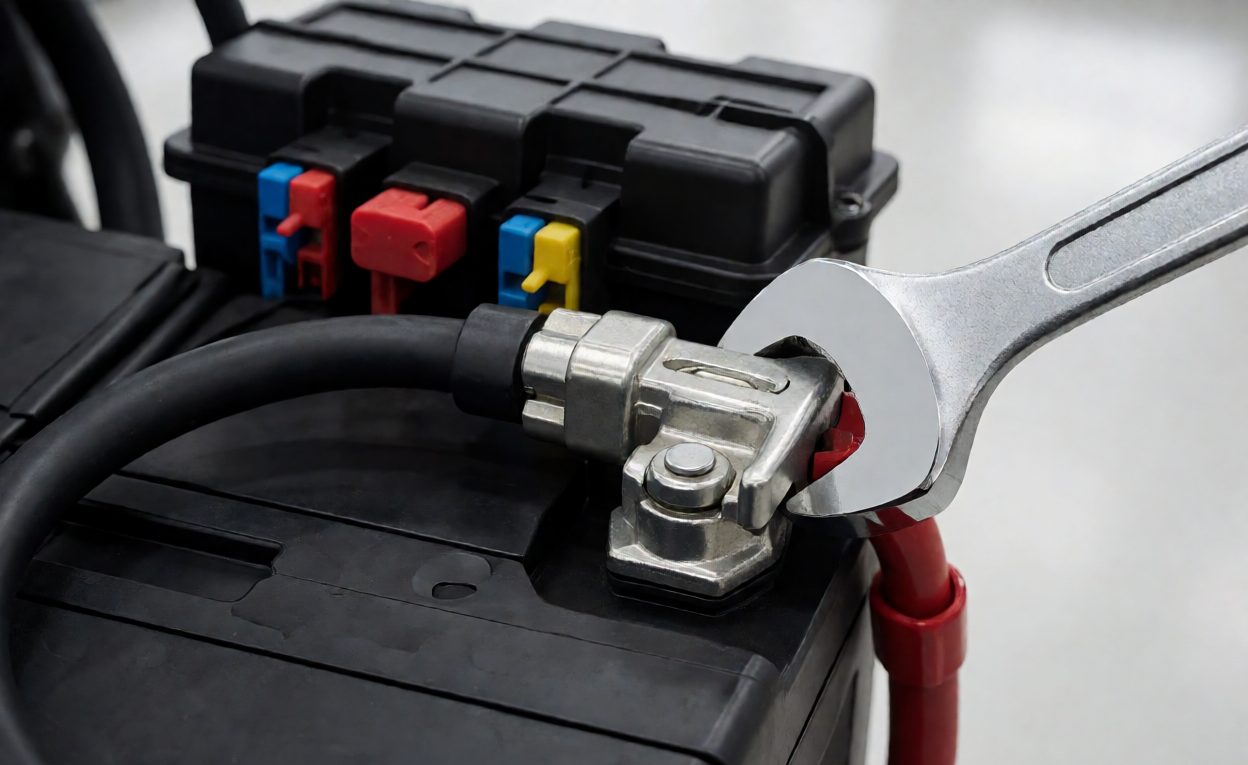
Spare parts kits should include the battery terminal hardware and the vent tube where applicable. Missing terminal bolts are a trivial part that stops a dealer from delivering a bike, and they cost almost nothing to include.
What to Specify in a Purchase Order
- Chemistry and type: flooded, AGM or gel, named explicitly.
- Cold cranking amps at a stated temperature, plus capacity in amp-hours.
- Case dimensions and terminal orientation, matched to the bike’s battery box.
- Supply model: fitted and filled, fitted dry, or loose.
- UN number and packing instruction, confirmed in writing by the forwarder.
- Non-spillable test evidence if UN2800 is claimed.
- Date code format and the maximum age at shipment.
- Warranty terms and the test method used to adjudicate a claim.
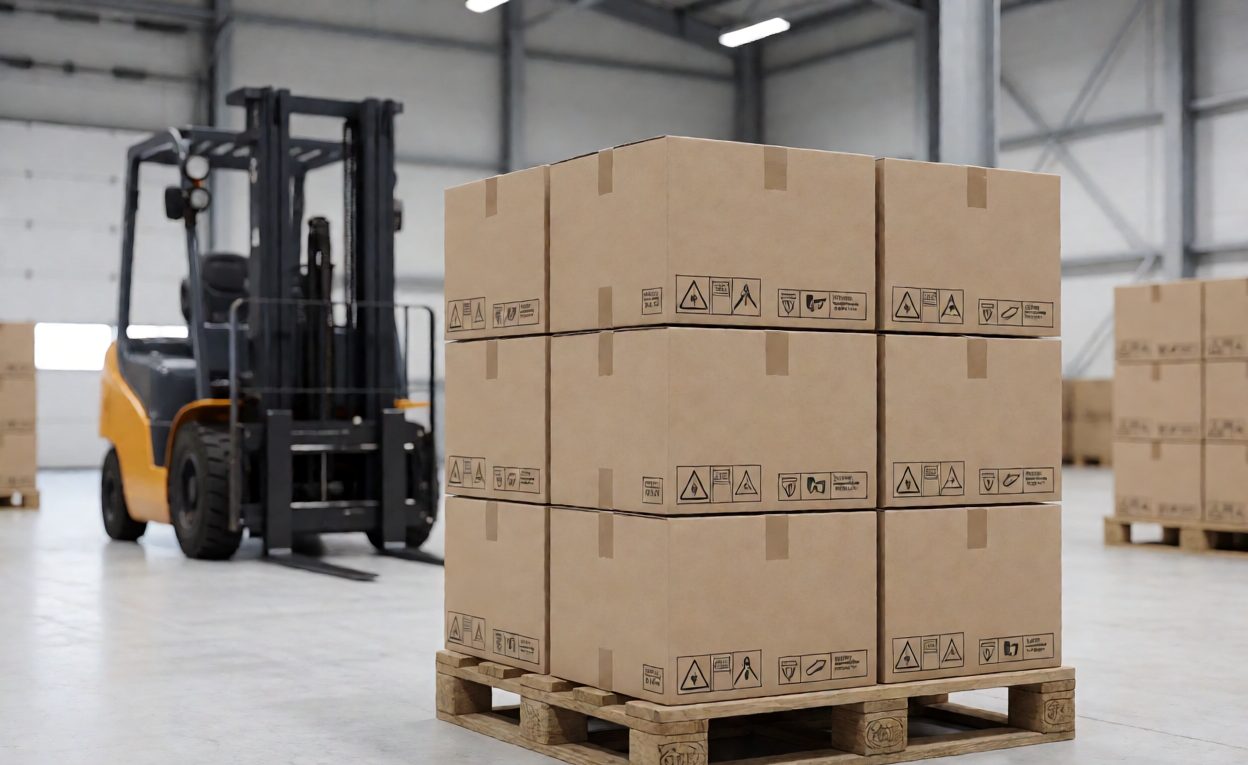
Container loading arithmetic changes when batteries ship loose, because a crate of batteries is dense and cannot be stacked like body panels. Plan the load with the battery cartons as a separate block rather than assuming they fill gaps.
Technical Background
La lead-acid battery works by a reversible reaction between lead, lead dioxide and sulfuric acid, and its failure modes follow from that chemistry: sulfation when left discharged, stratification of the electrolyte, and grid corrosion over time. The valve regulated lead-acid construction immobilises the electrolyte so the battery can recombine gases internally, which is what makes it sealed and, critically, what qualifies it as non-spillable for transport.
Lithium alternatives in this application are usually lithium iron phosphate, chosen over other lithium chemistries for thermal stability and cycle life. That stability is why the chemistry is viable on a vehicle at all, but it does not remove the transport regime: the cells still need UN38.3 evidence and a state-of-charge limit, because the hazard being managed is energy, not chemistry names.
An Export Checklist
- Decide the supply model per model per market, and write it into the purchase order.
- Confirm whether the battery qualifies as non-spillable, and get the test evidence.
- Confirm the UN number and packing instruction with the forwarder before booking.
- Set a maximum age at shipment and a date-code format.
- Specify cold cranking amps at the coldest temperature the market sees.
- Include terminal hardware and vent tube in the crate or parts kit.
- Define a storage rotation and maintenance charging rule for the warehouse and the dealer.
- Agree the warranty adjudication test so claims are decided by measurement rather than opinion.
Can motorcycle batteries be shipped by air?
Lead-acid batteries generally ship by sea, and filled batteries are restricted or refused by many air carriers. Lithium batteries can fly under UN3480 or UN3481 with UN38.3 documentation and quantity limits, but cost and paperwork usually favour sea.
What is the difference between UN2794 and UN2800?
UN2794 covers wet batteries filled with acid. UN2800 covers wet non-spillable batteries such as AGM and gel, and is available only if the battery passes the vibration and pressure differential tests that define non-spillable.
Is AGM better than flooded for export?
For most export programmes yes. AGM is sealed, does not leak if tipped, needs no topping up, and can qualify for the less restrictive non-spillable classification.
Why do bikes ship with a dry battery and a separate acid bottle?
Separating the acid from the battery simplifies transport and extends shelf life, because an unfilled battery does not self-discharge or sulfate. The dealer fills and charges before delivery.
How long can a motorcycle battery sit in storage?
Months, not years, and only with maintenance charging. Lead-acid self-discharges a few percent per month and sulfates permanently if left below about half charge, faster in heat.
Can I fit a lithium battery to an older motorcycle?
Sometimes, but the charging system must be compatible. An older regulator-rectifier can overcharge a lithium battery, and its protection circuit can disconnect the battery while the engine runs, which risks damaging the charging system.
What battery specification matters most for a hot market?
Heat tolerance and shelf life rather than cold cranking. High ambient temperature accelerates self-discharge and grid corrosion, so date coding and rotation matter more than a capacity headline.