
Motorcycle Export Documentation Timeline and Owners

Motorcycle export documentation is a chain, and a chain is only as fast as its slowest link. Most importers who describe a shipment as late are actually describing a document that arrived late – a certificate, a bill of lading, an inspection result – while the vessel waited at anchor. The cost of that delay lands on the importer as demurrage, storage, and a customer who was promised a date.
The fix is not more documents. It is a written map of which document is needed at which step, who produces it, and by when. Once that map exists, the timeline becomes manageable and the delays become visible early enough to act on.
The Document Chain
The core chain for a CBU or CKD motorcycle shipment runs from purchase order through to port release, and each stage has a natural owner. Commercial documents come from the trading parties; regulatory documents come from authorities and testing bodies; transport documents come from the forwarder. Confusion arises when two parties each assume the other is producing a given document.
- Order and payment documents – purchase order, proforma invoice, payment evidence; owned by the trading parties.
- Regulatory documents – certificate of origin, conformity or type approval, emissions and noise certification where required; owned by authorities and testing bodies.
- Shipping documents – packing list, bill of lading or air waybill, inspection report; owned by the forwarder and the inspection agency.
- Import-side documents – customs entry, import licence where applicable, registration pack; owned by the importer or their broker.
The letter of credit sits alongside this chain where payment terms require it, and its documentary conditions must be met exactly, which is why the document list and the payment terms should be reconciled before the order is placed rather than at presentation.
Where Timelines Slip
Three failure points account for most late documents. The first is a certificate that requires testing the buyer did not schedule; emissions and noise certification in particular cannot be rushed. The second is an inspection agency booking that was left to the last week. The third is a bill of lading that needs a corrected detail after the vessel has loaded, which requires the cooperation of three parties to fix.
Each of these is visible in advance if the timeline is written down. A certificate with a lead time, an inspection with a booking date, and a document review before loading turn a surprise into a managed task.

Building a Timeline That Holds
Work backwards from the vessel. Fix the cargo-ready date, then the inspection date, then the certification completion date, then the order placement date. Assign an owner and a due date to each line, and share the timeline with the supplier and the forwarder rather than keeping it internal. A shared timeline is the cheapest project management available to an importer.
Keep a simple tracker per shipment: document, owner, due date, received date. When something slips, the tracker shows immediately which downstream item is at risk, and that is the difference between a managed delay and an expensive one.
Customs Release and the Broker
The import side has its own clock. Customs entry, duty payment and release depend on the completeness of the import pack, and a missing certificate stops the container at the terminal while storage accrues. Nominate the broker early, share the document list with them, and ask them to review the pack before the vessel sails rather than after it arrives.
Where destination-market certification is required at import, confirm whether it can be completed before departure. Certification obtained at origin is usually faster and cheaper than at destination, where laboratories are booked by local importers rather than by the factory.
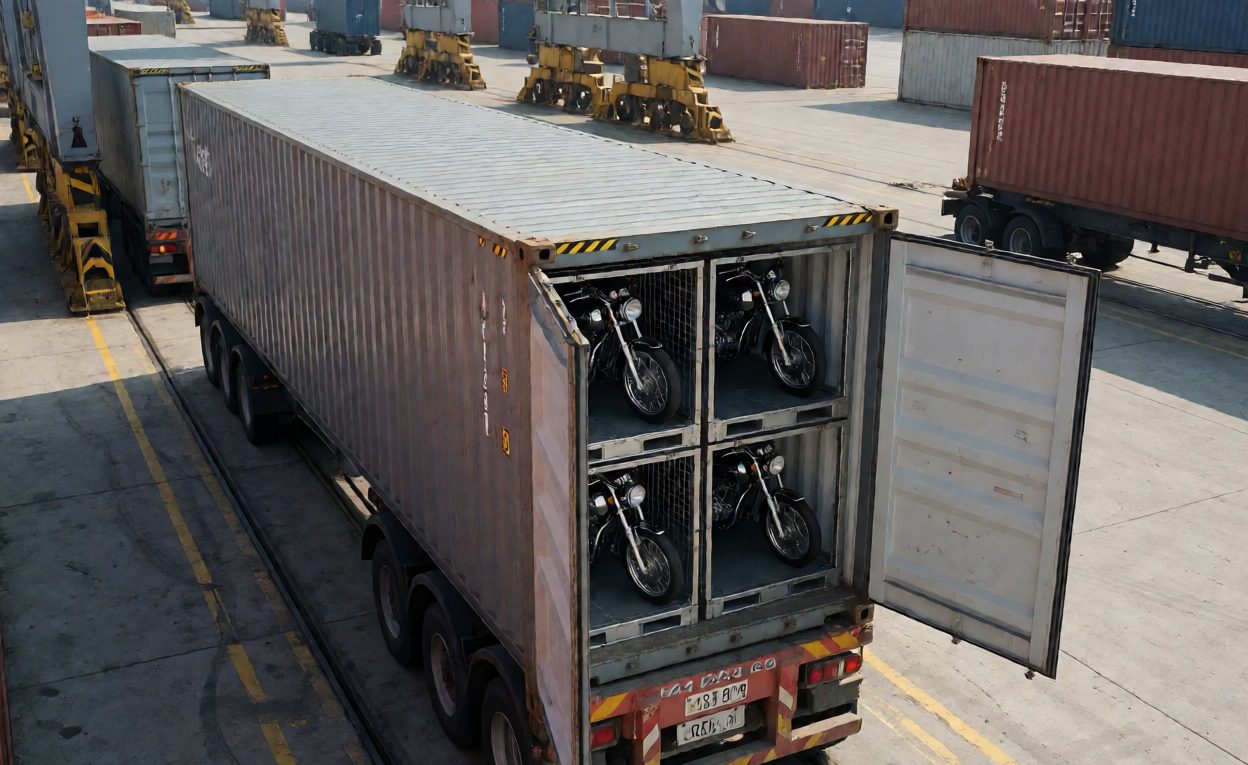
The import side has its own clock. Customs entry, duty payment and release depend on the completeness of the import pack, and a missing certificate stops the container at the terminal while storage accrues. Nominate the broker early, share the document list with them, and ask them to review the pack before the vessel sails rather than after it arrives. A customs broker who sees the pack a week before arrival will find the gaps that a broker seeing it at the terminal can only report, and the bill of lading details are the ones most worth reviewing twice, because corrections after loading require three parties to cooperate.
Related reading for buyers working through the same question: 125cc street motorcycle wholesale a technical guide to selecting a trusted supplier for global distribution, 125cc vs 150cc vs 250cc motorcycles how importers choose the right mix and 2024 motorcycle chain care guide pro techniques for peak performance cover the surrounding decisions this specification depends on.
Frequently Asked Questions
Which document has the longest lead time?
Emissions and type approval certification, because it depends on testing capacity. Book testing before finalising the shipping schedule, not after.
Who issues the bill of lading?
The carrier or the forwarder on the carrier’s behalf. Corrections after loading require cooperation between shipper, consignee and carrier, which is why details should be reviewed before loading.
Can shipment start before all certificates are complete?
Physically yes, commercially no. Customs release will fail without the full set, so an incomplete certificate is a container that cannot clear regardless of how fast it sailed.
What is the most commonly missed document?
The certificate of origin or conformity for the destination market, because it is the one the buyer often assumes the supplier has already obtained.
How far ahead should testing be booked?
Book against the cargo-ready date with a buffer of at least several weeks, since testing laboratories schedule weeks ahead and cannot be expedited by payment.
What happens if the VIN on documents is wrong?
Correction requires reissuing at least the invoice and the registration pack, and possibly re-inspection. Verify VINs against the physical units before documents are issued.
Do CKD and CBU shipments need different documents?
The core chain is similar; CKD adds assembly records and a locally issued or re-stamped VIN, and the consistency across all documents matters more because it is checked at registration.