
Parts Obsolescence and Lifetime Buy: Keeping a Model Serviceable After Production Ends

Every motorcycle model eventually stops being produced, and its parts supply begins shrinking well before the last unit is built. For an importer the risk arrives as a notice listing part numbers, with a deadline for the final order – usually discovered when a customer’s bike is already off the road.
The planning has three parts: knowing which parts will go first, sizing the final purchase correctly, and having substitutes ready for what the final purchase cannot cover. None of it is intellectually difficult. All of it has to happen before the notice arrives, because a lifetime buy is the one order that cannot be repeated.

Where Obsolescence Comes From
Parts disappear for reasons that have little to do with the motorcycle: worn tooling, an emissions change, a sub-supplier consolidating two numbers, or a model superseded and its slowest numbers dropped. Obsolescence in a parts supply is therefore continuous rather than a single event, and the distributor who watches only the model line misses most of it.
- Model-driven: the model stops; bodywork, decals and model-specific electronics go first.
- Supplier-driven: a sub-supplier exits a component line, affecting several models at once.
- Regulation-driven: lighting, emissions or safety components are replaced by a compliant version.
- Rationalisation-driven: two similar parts are consolidated, and one number is retired.
The practical consequence is that risk concentrates in model-specific, low-volume parts. Generic wear items – filters, chains, pads, cables, bulbs – stay available because they fit many models.
Reading the Obsolescence Notice
A proper notice states the part number, the last order date, the last shipment date and whether an alternative exists. Anything less is a conversation, and three questions should be answered in writing:
- Is there a superseding part? A new number that fits without modification removes the problem entirely.
- What is the fitting population? How many units of that model are in the market and under warranty, because that number sizes the buy.
The automotive aftermarket sometimes absorbs a discontinued number within a season for high-population models, so check whether a quality source exists locally. Where it does, size the lifetime buy for the warranty period rather than the full fleet life.
Sizing a Lifetime Buy
A lifetime buy is a single, final order for a part that will never be made again. Sizing it is a judgement between stranding customers and writing off stock a decade later.
- Fitting population: units sold, minus an honest estimate of attrition from accidents, theft and scrappage.
- Failure rate: annual replacement rate for that part, taken from warranty and counter data rather than from theory.
- Service horizon: how many years the distributor commits to supporting the model – typically warranty period plus five to seven years.
- Warranty obligation: a floor quantity the distributor cannot go below, whatever the demand estimate says.
The arithmetic is population times failure rate times horizon, adjusted down for parts a substitute covers: cheap and large, buy it; expensive and large, buy the warranty floor and plan substitutes. Consumption data makes the call easier – the ranking in spare parts ABC analysis shows which numbers have a measurable failure rate, and fill rate and backorder records show unmet demand.
Substitutes, Cross-References and Approved Alternatives
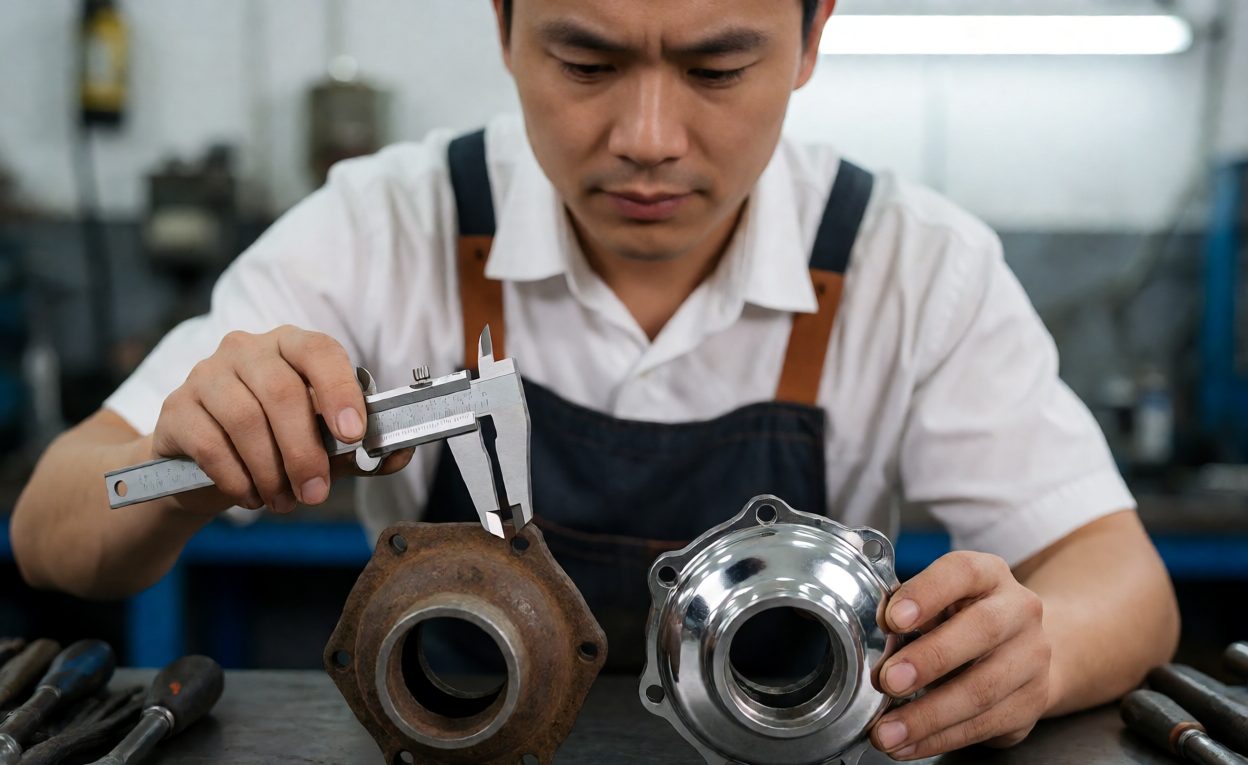
A substitute programme is what makes a modest lifetime buy survivable. Each discontinued number needs a documented answer: an approved alternative, a modification note, or a statement that no substitute exists.
- Direct supersession: new number, no modification, documented in the parts catalogue.
- Conditional substitute: fits with a defined modification – a different bracket, connector or hose length.
- Universal component: a generic part meeting the specification, such as a hose cut to length or a standard bearing size.
- No substitute: model-specific electronics, bodywork and trim, which must be covered by the lifetime buy or by salvage.
Cross-references belong in the dealer catalogue, not in a technician’s memory: every substituted fitment is recorded against the vehicle record so the next service uses the right number. A substitute fitted under warranty must be documented in terms the supplier accepts, so the export warranty terms and the substitution policy should be read together.
Salvage, Reconditioning and Local Manufacture
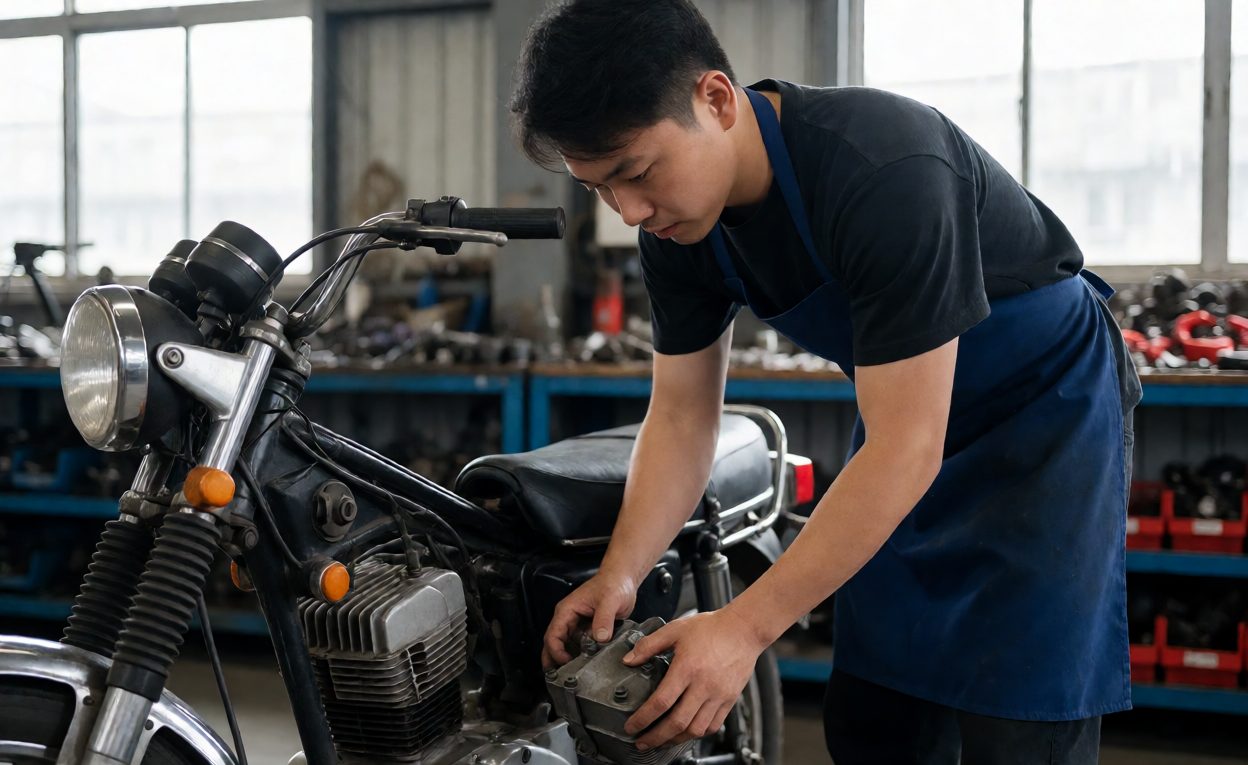
Salvage is the underrated option. Retired, crashed or unsellable units hold exactly the model-specific parts that are hardest to buy: bodywork, brackets, looms, switches, instrument clusters. One salvaged unit can cover a season of demand at the cost of labour and storage.
Local manufacture covers the awkward middle – brackets, spacers, cables and hoses a competent machine shop can reproduce from a sample. It is not worth doing for anything safety-critical unless the material and process can be verified. Reverse logistics covers this flow formally, and distributors who run it deliberately recover far more usable material than those who scrap retired units.
Holding Cost and Write-Off Discipline
Obsolescence stock is cheap to buy and expensive to hold, because it does not turn. Two rules keep it honest: review it annually against actual issues, and set the write-off date when it is bought. A part with no issue in two years across a known population will probably never be needed.
Freight planning helps too. A lifetime buy travelling with a normal vehicle shipment moves at marginal cost, which is what mixed container planning is for. Timing it against a model year changeover is better still, since that is when the support horizon gets decided.
Frequently Asked Questions
What is a lifetime buy?
A single, final order for a part that will not be produced again, sized against the fitting population and the support horizon.
Which motorcycle parts go obsolete first?
Model-specific parts – bodywork, decals, brackets, wiring looms and switches. Generic wear items usually survive.
How large should a lifetime buy be?
Fitting population times annual failure rate times service horizon, with a warranty floor and a downward adjustment for substitutes.
What should be in a substitute programme?
A documented answer per discontinued number: a direct supersession, a conditional substitute, a universal part, or no substitute.
Does the aftermarket cover discontinued parts?
Often for high-population models and generic components, rarely for model-specific trim and electronics.
Is salvaging retired units worthwhile?
Yes, especially for bodywork, brackets, looms and switches, which are the hardest parts to buy and easiest to recover.
How long should obsolescence stock be held?
Set the write-off date when buying it, and clear anything with no issue for two years.