
Export Packing List and VIN Records: The File That Clears, Registers and Warranties a Shipment

Of all the documents that travel with an export order, the packing list looks like the least important. It has no legal weight of its own, nobody signs it under penalty, and it is usually produced in an afternoon by whoever is closing the container. Then the shipment lands, and the same file is used to clear customs, to register two hundred vehicles, to process the first warranty claim and to trace a recall – and every one of those uses demands a level of accuracy the afternoon version does not have.
The reason is that the packing list is the only document in the export set that describes individual units. The invoice describes value, the bill of lading describes the container, and the certificate of origin describes the country. Only the packing list says which vehicle, with which number, sits in which carton. When that mapping is wrong, everything downstream inherits the error.
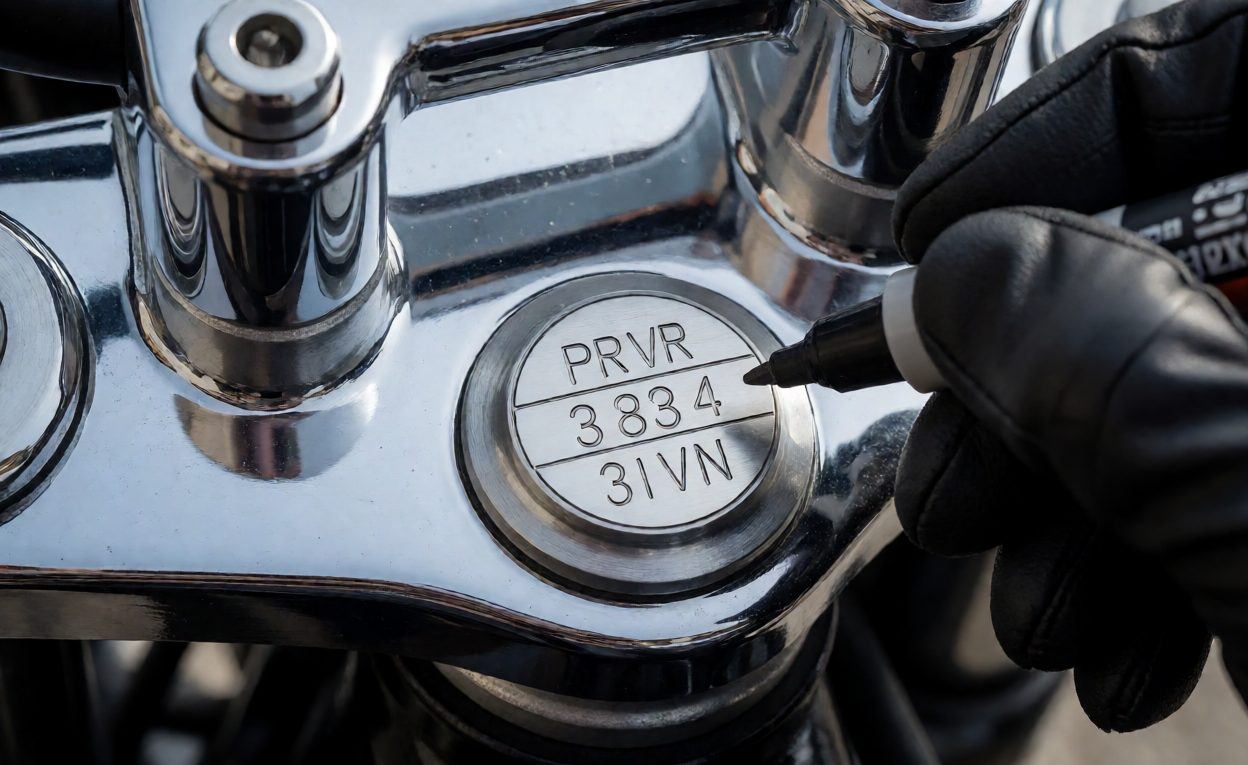
What the Packing List Has to Prove
Three audiences read the file, and each is looking for a different thing. Customs wants quantities, weights and values that reconcile with the commercial invoice. The registration authority wants a vehicle identity it can key into a national register. The importer wants a stock record that matches what is physically unloaded. A packing list built for only one of these fails the other two.
- Reconciliation: unit counts, carton counts and weights must tie to the invoice and the booking.
- Identity: every unit must carry its own frame and engine number, in a field that a clerk can copy without interpretation.
- Traceability: carton or pallet position must let a warehouse find a specific unit without opening the whole container.
- Specification: model code, displacement, color and any market-specific build, because registration offices key the specification, not the marketing name.
VIN and Engine Numbers: Fields That Cannot Be Wrong
The vehicle identification number is the piece of data that follows the motorcycle for its entire life. It appears on the frame stamping, on the compliance plate, on the certificate of origin, on the registration and on every warranty claim. The engine number is the second identifier, and in many markets both are recorded at registration.
Three failure modes account for nearly all the problems. Transposition – two characters swapped during manual entry – is the most common and the hardest to detect, because the resulting number still looks plausible. Character confusion between letters and digits, particularly I and 1, O and 0, is the second. Using a supplier’s internal serial in place of the homologated VIN format is the third, and it is fatal at registration because the format itself is checked.
- Capture the number from the unit, not from the production sheet: a photograph of the stamping, filed against the unit, settles every later argument.
- Validate the format: character count and allowed characters checked at data entry, not at destination.
- Keep frame and engine numbers as separate fields: merged fields cannot be split reliably by a clerk who has never seen the bike.
- Never reuse a number: a unit that is reworked back into stock keeps its original identity, or the register will eventually hold two vehicles with one number.
Structuring the File: One Row Per Unit

The single structural rule that makes everything downstream easier is one row per unit, in a flat table, with no merged cells and no decorative formatting. Merged cells are the enemy: they survive on screen and collapse during import into a dealer management system or a registration portal.
- Unit row fields: line number, model code, displacement, color, frame number, engine number, carton number, net weight, gross weight.
- Parts rows: separate lines with part number, description, quantity and the unit or units they belong to. Loose parts shipped for a specific bike should say so.
- Summary block: total cartons, total units, total net and gross weight, and the container number – the values that must tie to the transport document.
- Format: a plain spreadsheet plus a PDF, with the spreadsheet retained as the working file, because portals import data and humans read paper.
Matching Records to the Physical Load
A perfect file describing the wrong container is worthless, which is why the record has to be built at loading rather than reconstructed afterwards. The practical method is a scan-and-check loop: each carton label is scanned as it goes in, the scan is matched to the unit row, and the loader confirms the count at the door. The bill of lading is then issued against a quantity that has already been verified twice.
The same file does double duty at arrival. When the container is opened, the unit numbers on the file are the checklist the warehouse works from, and the difference between that list and what is found is the arrival record – the arrival inspection and claim window procedure rests entirely on it. Where the physical pack itself is in question, the crating and securing standard explains the condition the cartons should be in when they are counted.
What Happens to the File After Arrival

The packing list outlives the shipment by years. Registration authorities key the unit rows into the national vehicle register. The importer’s dealer management system imports them as the opening stock record, and each frame number becomes the key that links a sale, a service history and a warranty claim to a physical vehicle. A recall is executed by searching that file for a range of frame numbers – a search that only works if the numbers were captured correctly at origin.
Three downstream documents should therefore be generated from the same source file rather than retyped: the certificate-of-origin data set, the registration submission, and the warranty activation record. Retyping a seventeen-character identifier is where accuracy goes to die, and the cost of a mismatch is measured in weeks of correspondence with an authority that has no incentive to be flexible.
Common Failures and the Checks That Catch Them
- Numbers typed from memory or from a production list: caught by requiring a photograph of each stamping.
- Specification field left generic: caught by checking model codes against the homologation document pack for the destination market.
- Parts lines with no owner unit: caught by making the unit reference a required field on every parts row.
- Totals that do not reconcile: caught by a pre-shipment check of unit count, carton count and weight against the booking and the export documentation set.
- Load order not recorded: caught during pre-shipment inspection, where carton positions are still visible and can be photographed.
One closing point on ownership: the importer should require the file format in the order, not request it after the first shipment. A supplier asked for a one-row-per-unit spreadsheet before production will produce one; a supplier asked after the container has sailed will send a PDF.
Frequently Asked Questions
Why does the packing list matter more than it looks?
It is the only document that identifies individual units, so customs, registration, warranty and recall all read from it.
What is the most common VIN error?
Character transposition during manual entry, followed by confusion between similar letters and digits such as I, 1, O and 0.
Should frame and engine numbers share one field?
No. Keep them separate; merged fields cannot be split reliably by a clerk who has never seen the unit.
What structure should the file use?
One row per unit in a flat table with no merged cells, plus separate parts rows and a reconciling summary block.
When should the record be built?
At loading, with each carton label scanned and matched to a unit row, not reconstructed from a production sheet afterwards.
How long does the file stay relevant?
For the life of the vehicle – registration, service history, warranty claims and any recall all trace back to the frame numbers on it.
How does an importer get the right format?
By specifying the file structure in the order before production, rather than requesting it after the container has sailed.