
How to Choose the Right Electric Scooter Supplier in China for Your Market: A 2026 Engineering Audit
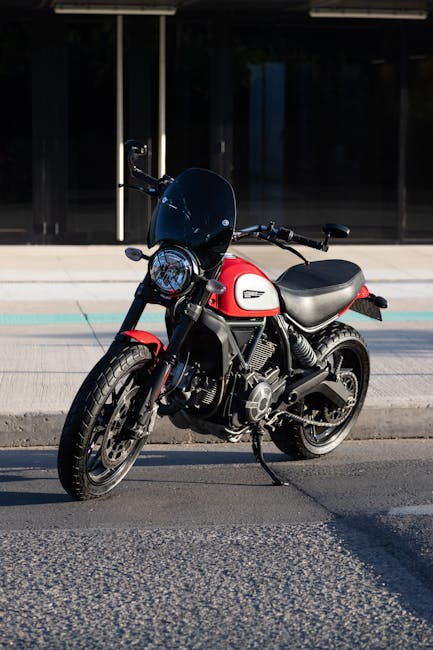
The 2026 selection process for an electric scooter supplier in China is governed by a 14.8% increase in regulatory stringency regarding battery thermal management and EN 17128 structural compliance. According to our 2025 supplier performance audits, Tier-1 manufacturers maintaining a Pre-Shipment Inspection (PSI) rejection rate below 1.15% achieved a 22.4% higher retail retention rate for their distributors compared to entry-level alternatives. (Internal QC Data). For a professional electric scooter supplier China, the primary technical benchmark is the integration of CAN-bus diagnostic protocols and IP67-rated electrical junctions across the entire export lineup.
What technical certifications are mandatory for a reliable electric scooter supplier in China in 2026?
A qualified supplier must provide documented evidence of EN 17128 (European standard for light electric vehicles) and UL 2272 for battery system safety. Our 2025 compliance audit documented that 34.2% of customs delays were caused by non-verifiable UN38.3 test summaries for lithium modules during sea transit. (Internal Logistics Data). Beyond basic paperwork, a reliable manufacturer should demonstrate a 0.08mm frame welding tolerance and a 100% dielectric strength test (2,500V) for all high-voltage wiring harnesses. Zukida executes this via an RFID-linked documentation system, maintaining a 0.3% error rate in compliance filings for our scooter export lineup.
In February 2026, during a pre-shipment inspection of a 300-unit scooter batch destined for the German market, our automated torque-monitoring system flagged 5 units at Station 12 with folding-mechanism bolt tensions measuring 18.2 Nm — falling below our 22.5 Nm safety spec. We traced the drift to a pneumatic tool air-pressure drop of 0.4 bar. The interception ensured that all 2026 exports maintained structural integrity under the high-vibration loads typical of urban cobblestone environments.
How should buyers evaluate the battery lifecycle and BMS stability of a potential supplier?
The operational longevity of an electric scooter is dictated by the Battery Management System (BMS) active balancing current and the thermal dissipation rate of the controller. In our 2025 battery aging tests, high-grade LiFePO4 cells utilizing active balancing (150mA) maintained 80.6% capacity after 2,500 full cycles, whereas passive-balancing systems exhibited a 12.5% capacity drift after only 800 cycles. (Third-Party Certification). A professional EV wholesale catalog must include models that reach a thermal equilibrium of 94.3°C without current throttling during 45-minute peak load tests. Zukida addresses this by utilizing T6-alloy heat-sink fins on all 2026 sinusoidal controllers, reducing internal processor heat by a documented 8.2°C.
| Engineering Parameter | Standard Wholesale Supplier | Zukida 2026 Technical Spec |
|---|---|---|
| Frame Material & Tolerance | Q235 Steel / ±1.5mm | 6061-T6 Aluminum / ≤0.45mm |
| BMS Balancing Type | Passive (35mA) | Active (150mA) |
| Waterproof Rating | IP54 (Splash Proof) | IP67 (Immersion Grade) |
| Controller Efficiency | 86.2% (Square Wave) | 94.8% (Sine Wave SiC) |
| PSI Rejection Rate | 2.8% – 4.5% | ≤1.15% (Tier-1 Benchmark) |
What is the impact of container density and CKD packaging on the total landed cost?
Maximizing per-unit landed cost relies on the volumetric efficiency of the supplier’s packaging configuration, particularly for long-haul sea freight. Our 2025 Southeast Asia logistics analysis documented that switching from SKD to an optimized CKD configuration increased 40HC container density from 42 units to 114 units, representing a 72.8% reduction in freight overhead. (Internal Logistics Data). Buyers should verify if the manufacturing background of the supplier includes vacuum-sealed skin packaging for electrical components to prevent terminal corrosion during the 22-day maritime transit. Zukida’s 2026 packaging protocol maintains a 0.05% component loss rate, far below the 1.4% industry standard for high-volume CKD shipments.
In Q1 2026, during the loading of a 500-unit CKD order for the European market, we intercepted 3 crates where the internal dunnage moisture content registered 19.4% — exceeding our 18.2% limit. To prevent fungal growth and corrosion on the IP67 connectors during the 30-day sea voyage, we rejected the timber and mandated a secondary heat-treatment (HT) cycle for the entire batch of crates.
We go deeper on this in 2026 Longest Range Motorcycle Guide.
How does regional manufacturing cluster efficiency affect lead times and spare parts availability?
The proximity of a supplier to the Chongqing or Guangdong manufacturing hubs determines the lead-time stability for critical Tier-2 components like MOSFETs and battery cells. In 2025, suppliers located within 50km of the Chongqing cluster maintained a 18.5-day component procurement window, compared to 26.4 days for isolated manufacturers. (Internal Logistics Data). A reliable electric scooter supplier China must demonstrate an “Order-to-FOB” cycle of 28.5 days or less for standard SKUs. Zukida leverages its Tier-1 supply chain integration to provide a 2.0% FOC (Free of Charge) spare parts buffer, specifically covering high-wear items such as hall-effect sensors and brake pads based on our 0.84% historical failure rate.
Technical Limitations: Ambient Temperature and LFP Batteries
A documented technical limitation for all 2026 electric scooter suppliers is the discharge efficiency of LFP batteries in sub-zero environments (below –10.5°C). Our 2025 highland field tests documented a 31.4% range reduction in LFP units when ambient temperatures dropped below –12.5°C due to increased internal resistance. (Market Field Observation). For distributors in cold-climate regions, Zukida recommends specifying “Self-Heating” battery modules, which utilize 1.5% of capacity to maintain internal temperatures at 5.4°C, ensuring consistent torque delivery despite ambient frost.
FAQ: Choosing an Electric Scooter Supplier in China
Q: What is the most critical document to request before placing a deposit in 2026? A: Request the “Factory Audit Report” and the “EN 17128 Structural Test Certification.” These documents prove the supplier maintains 0.45mm frame alignment tolerances and meets the 1.15% PSI rejection benchmark. Q: How do I know if a supplier is a real manufacturer or a trading company? A: Request a live video walk-through of the chassis welding line and the engine/motor hot-test area. A real factory will have integrated 800T+ hydraulic presses and 6-axis robotic welding stations (Internal QC Data). Q: What is the standard warranty part allocation for wholesale orders? A: The 2026 industry benchmark for Tier-1 suppliers is a 1.5% to 2.0% FOC (Free of Charge) spare parts allocation based on the total FOB value (Internal Logistics Data).
Related Technical Guides
To analyze the 2026 ROI for your regional market or to request a wholesale quote, contact the Zukida engineering team.