
Demo and Test Ride Fleets for Dealerships: Building the Units That Sell the Order

Demo units are the most misunderstood line in a dealership’s stock plan. They look like inventory that cannot be sold, and buyers who think that way under-invest in them – then wonder why the showroom converts slowly while a competitor with a scratched but rideable version of the same model sells it weekly. A demo fleet is inventory that sells other inventory. It depreciates with mileage and earns it back in closing rate, and like any inventory class it rewards deliberate sizing, clear rules and honest measurement.
The decisions are the same three every fleet has: which models, how many units, and what operating rules keep them earning instead of just aging.
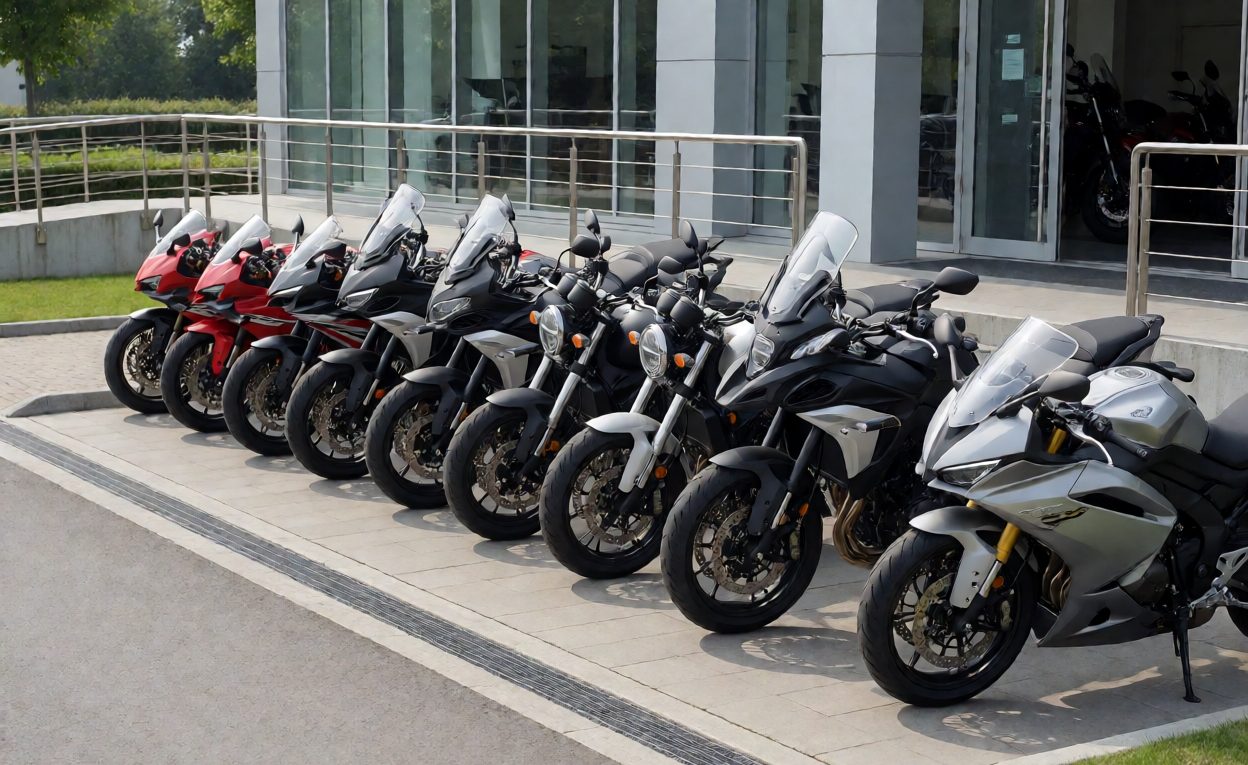
Which Models Go in the Demo Fleet
The fleet should mirror the decision points in the lineup, not the lineup itself. Customers test the bikes they are torn about, not the ones they already understand.
- The volume decision: one demo in the segment that carries most sales – typically a commuter or mid-displacement street model – because many buyers arrive undecided between displacement classes and ride their way to an answer.
- The disputed comparison: where two models in the range split customer opinion, one of them belongs in the demo fleet so the comparison happens on your forecourt instead of in the customer’s head.
- The premium ambassador: the flagship or highest-margin model, because a test ride is the only thing that justifies its price against cheaper alternatives.
- One entry point: a light, approachable model for first-time riders, who are the most test-ride-dependent customers in the market.
How the demo picks interact with the broader lineup decision follows from the model mix planning logic: the demo fleet exists to resolve hesitation between adjacent choices, so it should cover the boundaries between segments rather than duplicate every SKU.
How Many Units
Demo count scales with showroom traffic and range breadth, and the honest baseline is small.
- Single-brand dealership, narrow range: two to three demos. One volume model, one flagship, one entry bike.
- Full-range distributor or multi-line dealer: one demo per active segment, typically four to six units, rotated as the lineup changes.
- Electric lines: a dedicated demo matters more than usual, because range and ride character are the two things buyers cannot judge from a spec sheet. Where the market supports it, the battery swap versus charge operating model is also far easier to demonstrate than to explain.
A useful floor: no model family should be on sale without at least one rideable representative somewhere in the business. A customer willing to ride today is the scarcest resource in the showroom, and sending them home to think about it halves the conversion.
Acquisition and Ownership Structure
Demos can be owned, rotating, or supplied by the distributor, and the structure changes the economics.
- Dealer-owned: bought at dealer terms, run for a season, sold as near-new used units. Simple, and the depreciation is real but predictable.
- Distributor demo pool: units rotated among dealers on a schedule, which lets a small dealership offer flagship test rides it could not justify owning.
- Factory demonstration events: periodic ride days that bring the current range to a region, worth coordinating with the terms in the dealership wholesale pricing and territory agreement so the event lands when the dealer can convert the traffic.
Owned demos age out in six to twelve months of active use. Plan the exit at purchase: a demo sold as a used unit at a modest discount recovers most of its cost, and the stock turn and reorder plan should carry the demo as its own line with its own turn target, so the fleet refreshes on schedule instead of quietly becoming a museum.

The Test Ride Procedure
The procedure exists for three reasons: safety, insurance validity, and sales effectiveness. All three fail without the same document.
- Licence verification: photocopy or photograph the licence, checked against the bike’s class, every time. Insurance cover for demo rides almost always requires it.
- Documented briefing: controls, route, duration and rules, explained from a standard script and acknowledged by signature on the ride form.
- Set route: a loop of fifteen to thirty minutes covering the surfaces the bike was designed for. Longer rides tire the customer; shorter ones tell them nothing.
- Escort or shadow policy: staff-led for unfamiliar riders, solo for experienced ones with the route agreed in advance.
- Weather and condition gates: no rides on unfit surfaces or in conditions that invalidate cover.
Formal rider training beyond the briefing is a market-by-market question, and where a licence class is new or the customer is visibly inexperienced, the right answer is to refer them to a motorcycle training provider first rather than to host a first-ever ride on a brand-new machine.
Insurance, Wear and Maintenance
Demo units accumulate mileage at the rate of a working vehicle and need to be resourced accordingly.
Insurance is the first cost and the one that shapes the rules: demo ride cover is a distinct product from stock cover, priced per unit per year, and the policy conditions define who may ride, where, and with what documentation. Buy it before the first customer sits on the bike, and make the licence-check rule a condition the policy actually recognizes.
Wear management is a service schedule, not a hope. Demos need chain and brake attention at multiples of private-owner intervals, tires replaced on age as much as tread, and a weekly cosmetic pass – because a demo’s job is to look one year old after one season, and depreciation on a well-kept ex-demo is materially lower than on a thrashed one. A technician trained through the distributor technician programme should own the demo service calendar alongside the customer fleet.

Measuring Whether the Fleet Earns
Two numbers close the loop, and both are trivial to record.
- Ride-to-sale conversion: of customers who took a test ride on a model, what share bought that model within thirty days. Healthy operations see multiples of the walk-in conversion rate, which is the entire argument for the fleet.
- Sold-without-ride rate per model: a demo that never gets ridden and never assists a sale is dead weight. Move it to a segment boundary where hesitation actually lives, or exit it.
Customer experience research consistently places direct product interaction among the strongest purchase influencers in considered categories, and motorcycles are among the most considered purchases most customers make. The demo fleet is that finding turned into inventory. Managed as a measured asset with a turn target and a refresh date, it pays for itself; managed as a few orphan bikes nobody owns, it becomes the most expensive way to decorate a forecourt.
One operational footnote connects the fleet to the supply side: demo units consume spares at real-vehicle rates, so the consumables they need belong in the regular parts plan described in the spare parts kits guidance, not in ad-hoc purchases that arrive after the demo has sat idle for a fortnight.
Frequently Asked Questions
How many demo bikes should a dealership keep?
Two to three for a narrow range, four to six for a full-line business – one rideable representative per active segment or key segment boundary.
How long should a demo unit stay in service?
Six to twelve months of active use, then sold as a near-new used unit. Plan the exit and the replacement at purchase.
Is special insurance needed for test rides?
Yes. Demo ride cover is distinct from stock cover, and its conditions define the licence checks and routes the dealership must enforce.
Which models belong in the demo fleet?
The volume segment, the disputed comparison, the flagship and one entry model – the boundaries where buyers hesitate, not every SKU.
How long should a test ride be?
Fifteen to thirty minutes on a set route that includes the surfaces the bike was designed for.
Can demos be shared between dealers?
Yes. A distributor demo pool or coordinated ride events let small dealerships offer flagship rides they could not justify owning.
How do you know the demo fleet is working?
Track ride-to-sale conversion per model. A demo that never gets ridden or assists no sale should be repositioned or retired.