
Battery Swap Versus Charge for Electric Motorcycle Fleets: Choosing the Operating Model
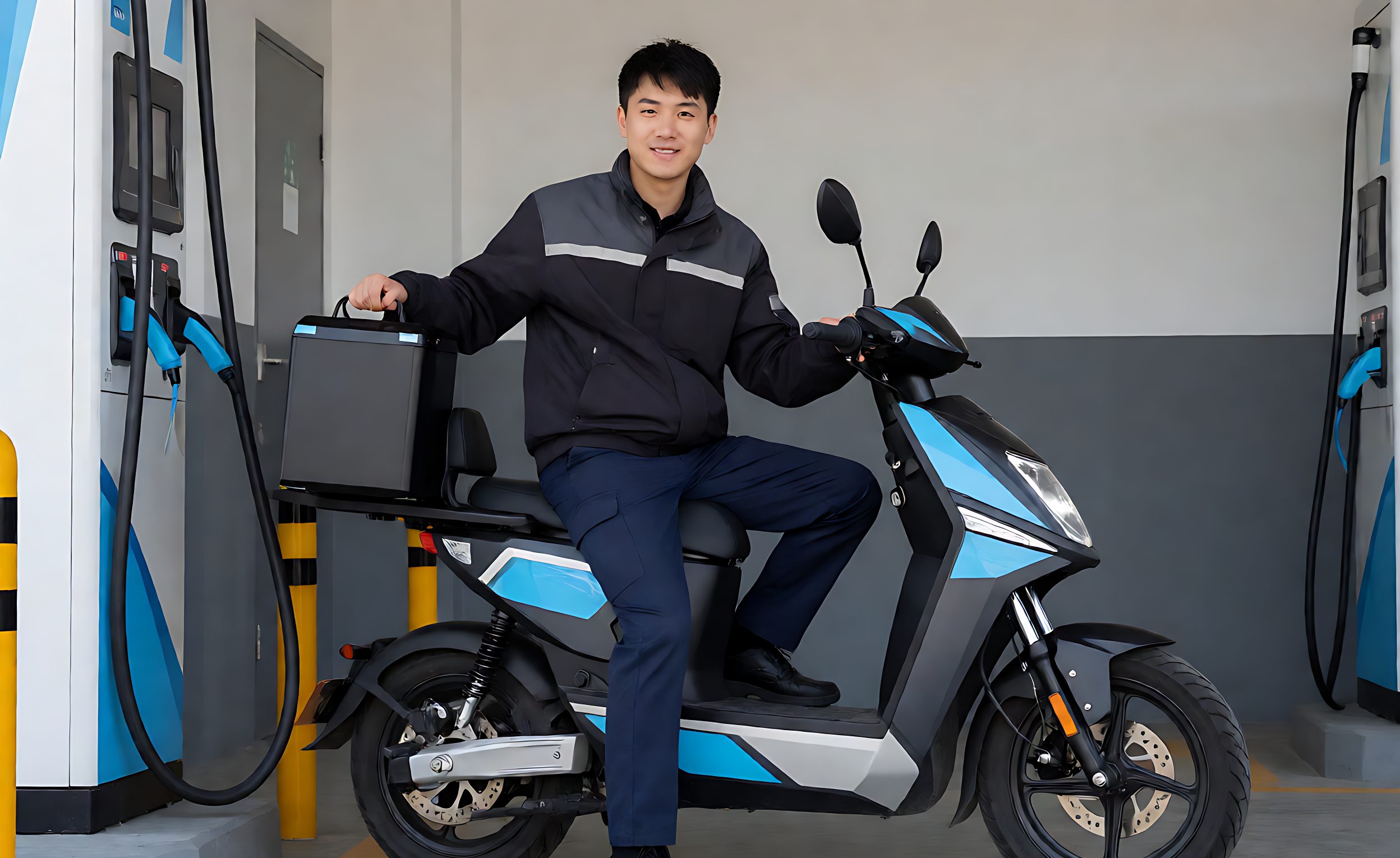
The operating-model question comes before the vehicle question for any electric motorcycle fleet. Swap or charge determines how many vehicles a depot can run, what the energy bill looks like, how long each unit earns per day, and how much of the investment sits in batteries that age. Importers and fleet buyers who decide this after choosing a model routinely end up with infrastructure that does not match the duty cycle, and the correction is expensive.
The honest starting point is that neither model is superior in the abstract. Battery swapping trades infrastructure cost for vehicle utilization; plug charging trades utilization for simplicity. Which trade is right depends on how hard the fleet works and how concentrated its operations are, and both of those are measurable before a single unit is ordered.

How the Two Models Actually Differ
The mechanical difference is obvious; the operational differences are what matter to the P&L.
- Refuel time: a swap takes two to four minutes; an AC charge takes two to six hours, and a fast charge shortens that only at the cost of hardware and battery wear.
- Battery ownership: in swap fleets, batteries can be owned by the station operator and leased per use, converting a capital cost into an operating cost.
- Grid load: charging draws power in bulk and can be scheduled into cheap off-peak hours; swapping spreads load across the day but requires charged inventory standing by.
- Standardization: swapping only works where the battery form factor is standardized across the fleet; charging tolerates mixed models.
- Failure exposure: a failed charger idles one bay; a failed swap station idles the fleet that depends on it.
That last point is underweighted in most evaluations. Swap concentrates dependency: the fleet’s uptime becomes the station’s uptime, and maintenance discipline at the station becomes a fleet-critical function rather than a support one.
When Charging Wins
Charging suits fleets whose vehicles park predictably and long. The pattern is more common than buyers expect, because most motorcycle fleets do not run twenty-four hours.
- Fixed routes with overnight home or depot parking: delivery, service and utility fleets that finish by evening and start in the morning charge for free in the hours they were idle anyway.
- Spread-out operations: where riders disperse across a city or region, central swap stations serve only the fraction of the fleet that passes them, while a plug follows every vehicle home.
- Mixed or evolving fleet: charging infrastructure is model-agnostic, so the fleet can change vehicle suppliers without scrapping the depot investment.
- Low capital, slow start: a wall socket and a few smart chargers cost a fraction of a swap station, which keeps the entry decision small and reversible.
The constraint to check first is not energy, it is parking. A charging fleet needs one charging station point per vehicle that charges at once, and urban operations where bikes park on the street cannot guarantee that. Where bikes cannot be guaranteed a socket each night, the charging case collapses regardless of how good the duty cycle looks on paper.
When Swapping Wins
Swapping suits fleets whose vehicles earn money only while moving, and where the operating area is compact enough for stations to serve real routes.

- High utilization duty cycles: two- or three-shift courier and ride-hail operations where a charging stop is a lost shift, not a lunch break.
- No guaranteed parking: riders take vehicles home or park on the street; a swap point decouples refueling from parking entirely.
- Heavy daily distance: 120 km or more per vehicle per day against real-world range means one or two mid-shift refuels, and a swap absorbs that without route redesign.
- Battery-life management: a professionally operated swap station charges batteries under controlled conditions, which manages degradation better than a thousand casual wall sockets.
The economics hinge on density. A swap station needs enough vehicle traffic to pay for itself, which means the operating area needs enough bikes, which means swap is a scale decision. A fifteen-bike pilot around one station works; a scattered fleet across three cities does not serve any station well. This is why the infrastructure question should be modeled alongside the regional TCO and infrastructure analysis before the fleet is sized, not after.
Running the Numbers
The comparison reduces to four quantities, and every one of them is estimable before purchase.
- Refuel events per vehicle per day: from real route data, not from range specifications.
- Value of an hour of downtime: the vehicle’s contribution margin per operating hour. High values push toward swap; near-zero values make charging free of penalty.
- Infrastructure cost per vehicle: charger and installation cost per unit for charging; station capex divided by the vehicles it serves for swapping.
- Battery replacement timing: cycle life under the model’s actual charging regime, because the battery chemistry and export rules decision interacts with how hard the fleet cycles its packs.
Total cost of ownership is the frame that keeps the comparison honest, and the largest single error in fleet evaluations is valuing downtime at zero. A delivery motorcycle that earns eight dollars an hour and loses ninety minutes to mid-shift charging loses twelve dollars a day – which is more than the electricity costs in a month. For a low-utilization patrol or inspection fleet, the same ninety minutes costs nothing, and the swap station buys nothing.
Battery Life Under Each Model
Batteries are the largest depreciating asset in an electric fleet, and the two models age them differently.
Charging fleets typically charge overnight at moderate rates, which is gentle on cells, but the same pack may also absorb opportunistic fast charges mid-shift, which is not. Swap fleets cycle packs more uniformly through professional charge cycles with balanced loads and thermal management, and degradation is measured and predictable rather than scattered across a thousand user behaviors. The trade-off is ownership: a swap fleet that leases batteries from the station operator shifts residual-value risk off the books entirely, at the price of a per-swap fee that must be modeled honestly.
Whichever model is chosen, the fleet specification should state the battery management requirements explicitly. The electric fleet specification guide covers the vehicle-side items, and the certification and safety compliance path for the packs themselves – relevant in any market that regulates battery transport and installation – is set out in the CE certification and R136 compliance article.

Practical Recommendations by Fleet Type
The decision repeats across markets with surprising consistency.
- Urban delivery and courier fleets: swap, where density supports a station; otherwise fast-charge at a single hub with a scheduled lunch rotation.
- Service, utility and sales fleets: charge. Vehicles park overnight at known locations and utilization is too low to monetize a swap network.
- Ride-hail and taxi operations: swap, decisively. The duty cycle is the most utilization-intensive of any motorcycle fleet.
- Manufacturing, campus and resort fleets: charge. Routes are short, parking is guaranteed, and speeds are low enough that range anxiety does not exist.
For buyers in transition, the pragmatic path is to start charging and keep the swap option open: specify vehicles with removable batteries even if the first depot plugs them in, and structure the order and price tiers so that a second phase can add swap infrastructure if utilization data justifies it. Removability is cheap at order time and expensive to retrofit.
Frequently Asked Questions
Is battery swapping cheaper than charging?
Not inherently. Swap shifts capital from vehicles and chargers into stations and battery inventory. It wins only when utilization is high enough that saved downtime pays the fees.
How long does each refuel take?
A swap takes two to four minutes. AC charging takes two to six hours; DC fast charging shortens that but adds hardware cost and battery wear.
Can a fleet mix both models?
Yes. Many fleets charge overnight and offer swap or fast-charge points at the depot for mid-shift top-ups on heavy routes.
Does swapping extend battery life?
Professionally operated swap stations charge under controlled conditions, which typically produces more predictable degradation than scattered user charging.
What is the first constraint to check?
Parking and grid access for charging; route density and station coverage for swapping. Both fail on geography before they fail on economics.
Should batteries be leased or owned?
Leasing through a swap operator converts battery capital into a per-use fee and moves residual-value risk off the fleet’s books.
What should be specified at order time?
Removable batteries with a stated form factor, battery management and safety compliance, and a depot power plan sized to the charging or swap model.