
Designing a Motorcycle Service Interval Schedule That Dealers Actually Follow
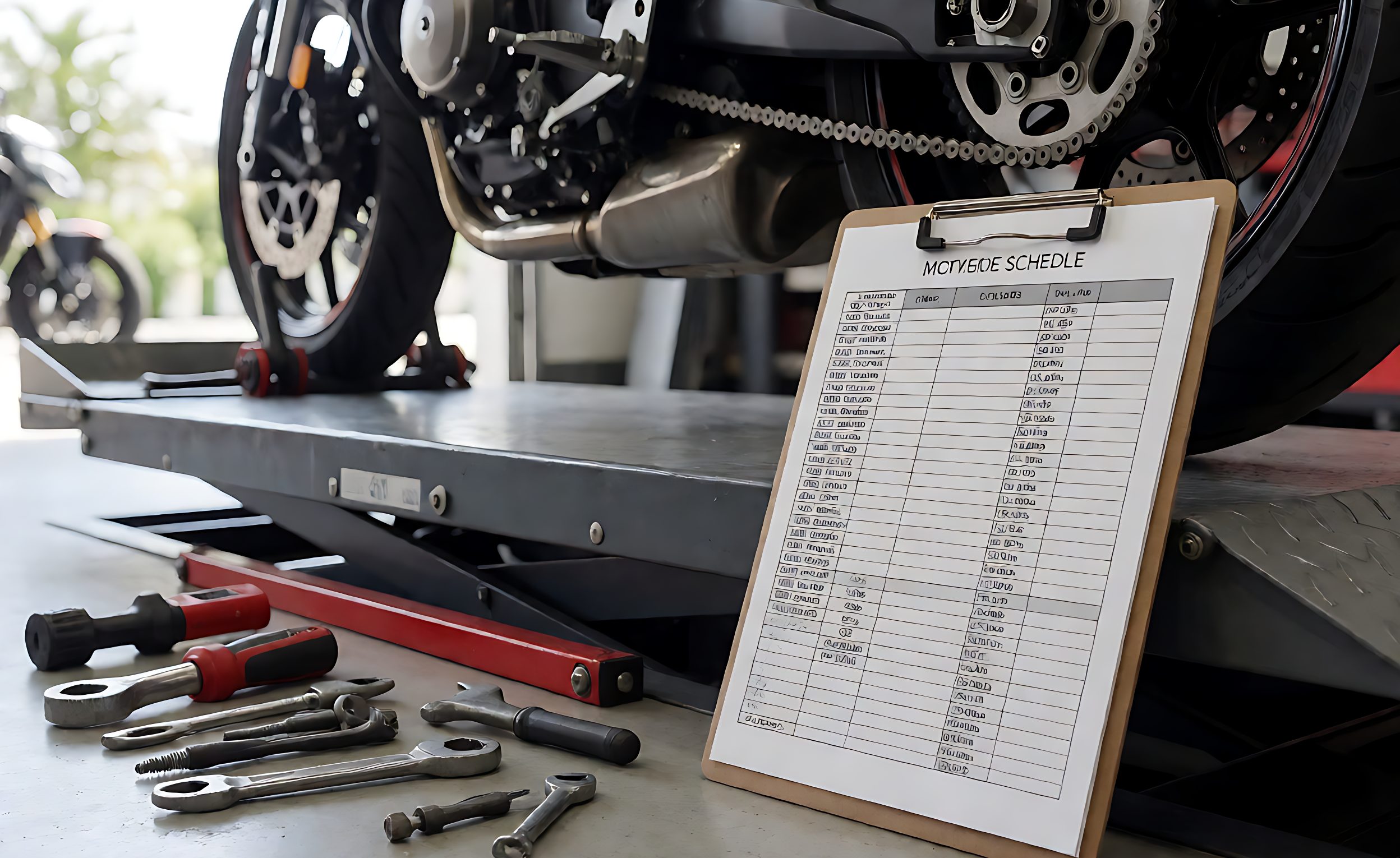
A service interval schedule is the most-read document a motorcycle network produces and one of the least-designed. It tends to be inherited: copied from a previous model, adjusted by whoever wrote the manual, and quietly ignored in markets where the conditions do not match the ones it was written for. Then a distributor wonders why engines wear early in one territory and why customers in another never come back after the first service.
Designing intervals properly means deciding what the schedule is protecting, choosing the measure that actually predicts wear, and making each visit executable by a dealer whose parts shelf and training are finite. Get all three right and the schedule quietly holds resale value and service revenue together.
Start From What the Interval Is For
Preventive maintenance works when tasks are timed ahead of the failure they prevent. Every line on the schedule should therefore answer a question: what fails if this is skipped, how soon, and how expensive is the consequence? Oil degrades and stops protecting bearings; motor oil chemistry sets a hard ceiling no amount of careful riding extends. Valve clearance drifts out of tolerance and eventually burns a valve. A chain run dry wears its sprockets with it. Lines without that logic – “check this” at 5,000 kilometers because the previous model did – are the ones technicians skip first.
Choosing the Measure: Distance, Hours or Time
Distance is the familiar basis and the weakest one. It ignores how the kilometers were earned: 3,000 kilometers of steady highway travel is mechanically gentle, while the same distance in stop-start city delivery with a pillion and a loaded rack is not.
- Distance: simplest to communicate and to see on the odometer; appropriate for private owners in mixed use.
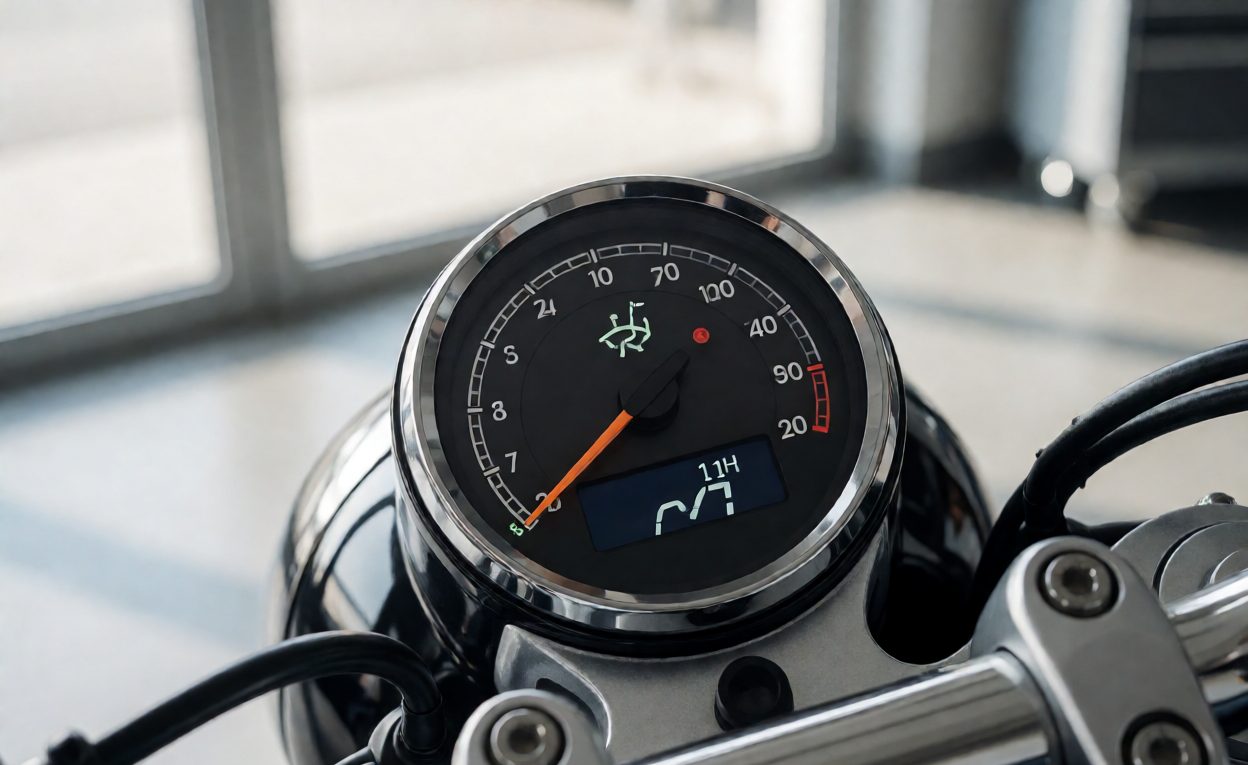
- Engine hours: the honest measure for fleets, delivery work and any duty where speed is low relative to running time – install an hour counter rather than arguing about conversions.
- Elapsed months: necessary for low-mileage owners, because oil ages, batteries sulfate and fuel goes stale whether the bike moves or not.
- Fuel consumed: used in heavy equipment and occasionally here, since it tracks engine load better than distance does.
The workable answer is almost always more than one trigger, written as whichever comes first: 3,000 kilometers, 100 hours or six months. That structure is what stops a schedule from failing at both extremes.
Building the Task Ladder
A usable schedule is a ladder rather than a list: each rung groups the tasks that belong together at one visit, so a technician does one coherent job instead of eight unrelated checks.
- Rider checks, before every ride: tires, brakes, lights, chain slack, fluid level – owner-performed, and the reason they belong in the handbook rather than the schedule.
- First service, around 500 to 1,000 kilometers: the most important visit in the machine’s life. Retorque, oil and filter, valve clearance once settled, chain adjustment, fastener check on everything that has shaken loose.
- Intermediate service, every 3,000 to 5,000 kilometers: oil and filter change, air filter cleaning or replacement, spark plug inspection, brake pad measurement, cable and control lubrication.
- Major service, every 10,000 to 12,000 kilometers: everything above plus valve clearance adjustment, coolant where fitted, fork oil, wheel bearings, fuel system cleaning and a full fastener pass.
- Annual regardless of distance: rubber and seals age, brake fluid absorbs moisture, and batteries fail by calendar.
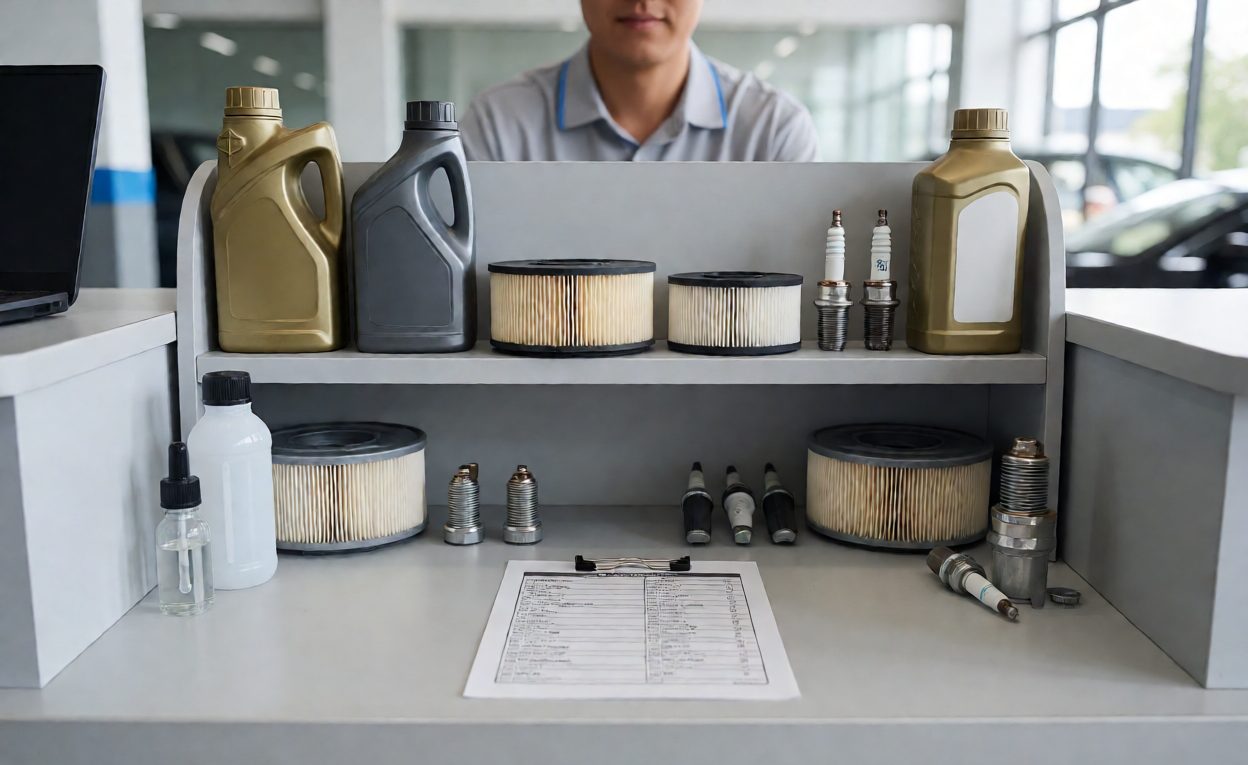
Each visit should state the parts it consumes. A schedule written without reference to what the dealer can actually stock, as described in the guidance on parts kits and consumables, produces a recommendation the workshop cannot fill and an appointment that gets rescheduled.
Adjusting for Duty Cycle, Climate and Fuel
The published interval assumes something close to average use, and much of the world is not average. Three factors dominate, and dealers should be told explicitly how to shorten from the standard.
- Dust and off-road use: air filter service can need doing every few rides rather than every few thousand kilometers, and intake dust is the fast route to bore wear.
- Heat and traffic: high ambient temperatures and stop-start running push oil temperature up; shortening oil intervals by roughly a third is cheaper than any engine repair.
- Fuel quality: inconsistent fuel accelerates deposit build-up and justifies earlier injector or carburetor cleaning and more frequent filter changes.
- Short trips and long storage: repeated cold starts dilute oil with fuel; storage demands stabilizer, battery care and the procedures in long-term storage guidance rather than a distance-based interval at all.

Cost per Kilometer Is the Real Output
The schedule is also a commercial document. Every visit has a price, and the total cost of ownership over three years is what a fleet buyer or a careful private customer actually compares. Total cost of ownership thinking keeps intervals honest at both ends: too frequent and ownership becomes expensive enough to lose the sale, too sparse and reliability collapses along with resale value. Where failure rates are known, the component reliability data behind failure diagnosis should feed the interval decision directly.
Writing It Into Daily Retail Practice
A good schedule fails commercially when it only exists in the manual. Dealers convert it into revenue by putting due date and due distance on the counter card at every visit, stocking the parts for the next two rungs rather than the last one, and using quiet seasons for the campaigns outlined in seasonal service campaign planning. Basic tasks such as the oil changes covered in professional oil change practice should be executable quickly and priced transparently, because first-service experience is what earns the second appointment.
Frequently Asked Questions
What is the most important service visit?
The first one, around 500 to 1,000 kilometers: retorque, oil change and valve clearance once everything has settled.
Are distance intervals enough?
Rarely. Use distance, engine hours or months, whichever comes first, so both high-load and low-mileage owners are covered.
How much should dusty conditions shorten intervals?
Around a third for oil in sustained heat and traffic, with air filters checked far more often than the standard interval suggests.
Why does a stored motorcycle need its own rules?
Oil ages, batteries sulfate and fuel goes stale on the calendar rather than the odometer, so distance triggers nothing.
What belongs in a major service?
Valve clearance, coolant where fitted, fork oil, bearings, fuel system cleaning and a full fastener pass beyond the routine items.
How do intervals affect selling price claims?
Cost per kilometer over three years is what fleet buyers compare, including scheduled visits, parts and downtime.
Why do dealers ignore badly designed schedules?
When tasks lack a stated purpose or the parts are not stocked, technicians skip them and customers lose confidence.