
Sourcing a High-Quality China Dirt Bike 125cc: The Importer’s Guide
Introduction: Sourcing Cheap Without Sourcing Garbage
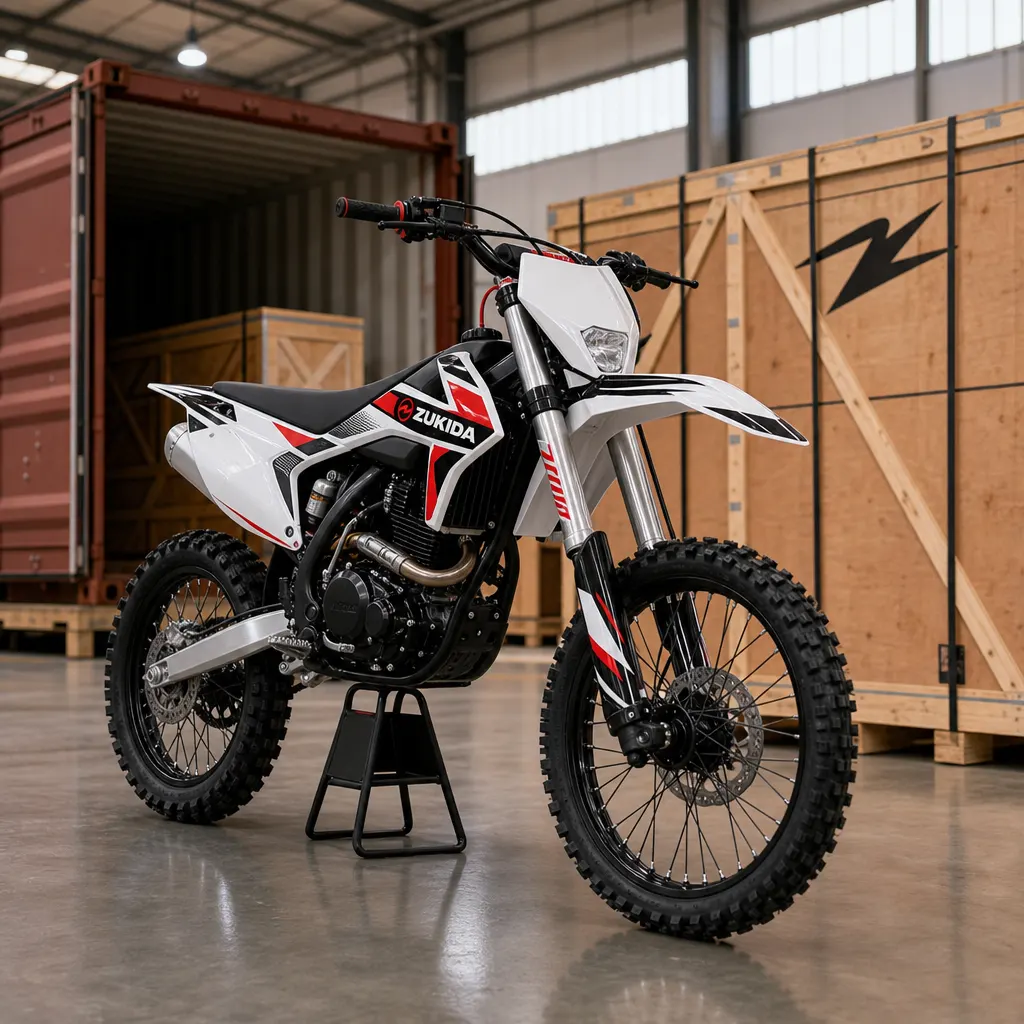
In the powersports distribution market, the china dirt bike 125cc represents one of the highest-volume retail segments in the world. As a starter bike for teenagers and a budget-friendly option for adult hobbyists, its universal appeal keeps dealer showrooms consistently busy. However, for direct importers, sourcing this category presents a double-edged sword: the market is flooded with low-priced options, but some of these cut corners on essential safety and mechanical components. To successfully run a powersports business, you must learn how to separate low-cost, high-value manufacturing from inferior products. Sourcing “cheap” does not have to mean accepting frequent warranty claims, fuel leaks, or structural failures. This tutorial guide outlines the complete step-by-step process of sourcing, customizing, and importing high-quality 125cc off-road motorcycles directly from China’s industrial clusters [1].
What You Will Learn in This Sourcing Tutorial
- The industrial landscape of the 125cc powersports manufacturing sector in China.
- How to identify critical components that must never be cheapened.
- Step-by-step purchasing, quality control, and testing protocols.
- Strategic shipping guidelines to optimize your landed cost per unit.
Sourcing Preparation Checklist
Before launching negotiations with any factory, ensure your sourcing team has finalized these parameters:
- Target Certificate Portfolio: Confirm if you require EPA emissions approval (USA), CARB compliance (California), or CE/EEC certification (Europe).
- Target Bill of Materials (BOM): Draft a strict list of component requirements (e.g., suspension travel, tire tread grade, and engine supplier brands).
- Budget Tolerances: Establish an target FOB (Free on Board) price ceiling, keeping in mind that adding essential safety and quality upgrades will raise the unit cost by 5% to 12%.
Section 1: The Commercial Anatomy of a 125cc Chinese Dirt Bike
To evaluate a manufacturer’s price quote, you must understand where their manufacturing costs are allocated. A standard 125cc off-road motorcycle consists of several primary cost centers, and understanding these allows you to negotiate effectively without compromising structural safety.
1. Tier-1 Engines vs. No-Name Alternatives
The engine represents approximately 30% to 35% of the total manufacturing cost of a 125cc dirt bike. Reliable Chinese engines are built by reputable brands such as Zongshen, Lifan, and Loncin. These companies use high-purity aluminum alloys for engine blocks and precision-engineered internal valves. Avoid manufacturers that build their own engines in-house without a proven engineering track record, as these are highly prone to head gasket leaks and gear chipping.
2. Frame Structural Quality
The frame is the structural backbone of the bike. Low-cost factories use standard carbon steel tubing with simple robotic welds that can crack under jumping stresses. High-quality manufacturers construct frames from reinforced chromoly steel (such as 4130 alloy) or high-grade aluminum, utilizing double-pass TIG welding. A premium frame guarantees that the bike can withstand aggressive riding on motocross tracks without structural failure.
Sourcing Specs: High-Value vs. Low-End Budget
Use the comparative table below during factory audits to confirm you are sourcing a durable china dirt bike 125cc rather than an unreliable entry-level build:
| Component Category | Low-End Sourcing (Avoid) | High-Value Sourcing (Demand) |
|---|---|---|
| Carburetor | Generic zinc-alloy carburetor (clogs easily) | Nibbi Performance Carburetor (stable tuning) |
| Front Suspension | Non-adjustable telescopic forks with thin seals | Heavy-duty inverted forks with double oil-seals |
| Tires & Rims | Low-grade recycled rubber; stamped steel rims | High-knobby natural rubber; anodized alloy rims |
| Exhaust System | Thin steel pipe (rusts rapidly) | Stainless steel head pipe with aluminum silencer |
| Plastics & Bodywork | Rigid PVC (brittle, cracks easily upon impact) | Flexible ABS or Polypropylene (bends without breaking) |
Section 2: Step-by-Step Tutorial for Sourcing and Importing
Step 1: Locating and Evaluating Manufacturers
To optimize your supply chain, focus your sourcing in the Chongqing and Zhejiang provinces [1]. When using online directories or attending the Canton Fair, apply these evaluation criteria:
- Request a Component Supply List: Ask which factories supply their engine, suspension, and tires. Genuine OEM partners will readily share their supplier lists.
- Demand an On-site Audit: If you cannot visit personally, hire a third-party audit firm (such as SGS or QIMA) to inspect the factory’s ISO9001 compliance, chassis stress-testing equipment, and general assembly practices.
- Confirm Exclusivity Options: Ask if the factory offers regional design exclusivity for your dealership network, helping to insulate you from local competition.
Step 2: Component Specification and Contract Drafting
Once you select a manufacturer, draft a detailed Product Specification Sheet. Attach this document to your purchase contract. This sheet should detail every component down to the exact brand name and alloy composition. Include clear penalty clauses for “Quality Fade” — the practice where a factory uses high-quality parts for the initial sample but substitutes cheaper components during mass production.
Step 3: Navigating International Emissions Compliance
Emissions compliance is the most common point of failure for new powersports importers. If you are importing into the USA, the 125cc off-road motorcycle must hold an active EPA certificate. For California, CARB approval is required. In Europe, vehicles require CE marking, while road-registerable variants must feature EEC certificates and COCs. For a complete overview of the regulatory process, consult our detailed motorcycle buying guides.
Step 4: Designing and Enforcing Pre-Shipment Inspections
Never authorize final balance payments until your production batch passes a strict Pre-Shipment Inspection (PSI). The inspector should select 10% of the completed batch at random and run the following tests:
- The Weld Integrity Test: Inspect the structural joints under high magnification to check for air bubbles, micro-cracks, or uneven penetration.
- The Engine Dyno and Heat-Cycle Test: Run the engine continuously for 30 minutes to check for oil leaks, head gaskets issues, and carburetor tuning stability.
- Fastener Torque Checks: Confirm that critical bolts (such as axle nuts, triple clamps, and engine mounts) are tightened to specific Newton-meter (Nm) values and secured with thread-locking compounds.
Step 5: Optimizing Container Packaging
To minimize shipping costs, request SKD (Semi-Knocked Down) packaging inside rigid steel crates. The bikes are shipped with the front wheel, handlebars, and rear suspension disassembled, allowing the manufacturer to maximize space inside the shipping container. A standard 40HQ container can fit up to 140 units of a 125cc bike, significantly reducing the landed cost per unit. To assist your dealers or retail buyers with reassembly, you can share our proven motorcycle maintenance tips to ensure proper setup during unboxing.
Section 3: Recommended High-Value Platforms for Importers
To help you structure your product lineup, we have highlighted three popular, high-value platforms designed for international powersports markets:
1. The Track Classic: CRF Inspired Enduro
2. The Heavy-Duty Workhorse: Defender Series
3. The Lightweight Commuter: CG Series
Section 4: Key Pitfalls to Avoid When Sourcing “Cheap”
Working with direct-import powersports suppliers requires active management. Avoid these common mistakes during the sourcing process:
- Accepting Unbranded Carburetors: Many cheap 125cc engines use generic, unbranded carburetors that fail under varying weather conditions. Insist on a recognized brand like Nibbi to avoid starting and idling issues on dealer showroom floors.
- Omitting Spare Parts Packages: Off-road bikes wear out components quickly. Always negotiate a 2% to 4% spare parts package (gaskets, levers, clutch cables, and fuel filters) included with your container order. This allows you to resolve customer warranty issues without waiting weeks for replacement shipments.
- Failing to Verify actual engine displacement: Some low-end suppliers may list an engine as 125cc when it actually uses a 110cc cylinder bore. Always verify the cylinder dimensions and displacement markings during your third-party inspections.
Frequently Asked Questions
Q: Why is there such a wide price variation for a china dirt bike 125cc across different factories? A: Sourcing quotes differ based on component selections. Cheaper quotes are achieved by using recycled frame steel, generic carburetors, lower-grade cast aluminum engine parts, and brittle PVC plastics. Upgrading to name-brand components and reinforced materials ensures the bike is durable and safe for retail consumers. Q: What is the typical MOQ for importing 125cc dirt bikes directly from China? A: Typical MOQs are defined by container size. For a 20-foot container (FCL), the MOQ is approximately 30 to 45 units. For a 40HQ container, it is 120 to 140 units. Most manufacturers will accommodate mixed containers of different bike models to help you diversify your showroom inventory. Q: Are these bikes shipped fully assembled? A: Most wholesale dirt bikes are shipped in Semi-Knocked Down (SKD) condition inside a steel-framed crate. This protects the vehicle during ocean transport and maximizes container efficiency. Complete assembly typically takes an experienced mechanic 15 to 30 minutes per unit.
Partner with LUNG KAY to Secure Your Supply Chain
Navigating the complex landscape of powersports importing requires an experienced, on-the-ground partner in China. At LUNG KAY, we specialize in bridging the gap between international buyers and China’s leading motorcycle manufacturing hubs [1]. Working in partnership with Zukida Motorcycle, we manage factory audits, specify component upgrades, enforce strict QC testing, and optimize international logistics to protect your profit margins.
Consult Our Sourcing Directors
Contact the LUNG KAY and Zukida Motorcycle export division today to request customized spec sheets, FCL pricing, and custom OEM branding quotes:
- 📧 Primary Sourcing Email: export@zukidamotorcycle.com
- 📧 Alternative Contacts: wen-xuwen@163.com | steven.wun@zukidamotorcycle.com | glory.huang@zukidamotorcycle.com
- 📞 Telephone (WeChat/WhatsApp): +86 13632216145 / +86 13660750701
- 🔗 Official Websites: LUNG KAY Homepage | Zukida Motorcycle Portal
- 👥 Professional Network: Connect with our export head Xia Huang on LinkedIn or follow our updates on Facebook.
125cc Specifications That Matter for Import
A 125cc bike sells on numbers a buyer can verify, not adjectives. These are the specifications importers actually cross-check, and the band that matters by market.
| Spec | Typical band | Why it matters |
|---|---|---|
| Engine | Air vs oil cooled | Cooling sets duty cycle |
| Top speed class | A1 / learner tier | License alignment |
| Emissions | Euro 5 / local | Homologation gate |
| Kerb weight | 90–120 kg | Handling, shipping |
Frequently Asked Questions
Does 125cc need a special license in my market?
In most of Europe it sits in the A1 / learner tier, which is exactly why it is a volume segment — and why Euro emissions compliance is non-negotiable at import.
Air-cooled or oil-cooled for hot climates?
Oil-cooled holds up better under continuous load in heat, but costs more. For stop-and-go city duty in warm regions, the upgrade pays back in reliability.
Compare fueling approaches in our carburetor vs fuel-injection guide and the brand landscape in the China motorcycle brands map.