

Across Africa, the Middle East and South America, the working two-wheeler is going electric faster than most fleet buyers planned. Fuel prices, maintenance intervals and city noise rules are pushing delivery fleets, rental operators and commuter programmes toward electric motorcycles — and Chinese factories now cover every tier from a 2,500 W commuter to an 8,000 W off-road machine. But a spec sheet that reads “2500W, 72V 30AH lithium” tells a buyer less than it appears to. What matters is how those numbers map to your routes, your riders and your charging reality.
This guide walks through the specification decisions that actually determine fleet satisfaction: motor power class, battery capacity and chemistry, the trade between the platforms in ZUKIDA’s current e-motorcycle range, and the import-side details (loading, HS codes, CBU versus SKD) that the mechanical spec sheet never mentions. The energy-market backdrop — why two- and three-wheelers are electrifying fastest in emerging markets — is tracked in the IEA’s global electric vehicle outlook.
Power class: matching the motor to the duty cycle
Electric motorcycle power ratings describe the motor’s output class, and in the current range they cluster at three levels:
| Class | Models | Motor / battery | Fits |
|---|---|---|---|
| 2,500 W commuter | E-Bike CG, E-Bike Warlord | 2,500 W / 72 V 30 AH lithium | Daily commuting, delivery duty, rental fleets |
| 3,000 W racing type | E-Bike Emperor | 3,000 W / 72 V 30 AH lithium | Style-conscious urban buyers, premium ride feel |
| 8,000 W off-road | E-Bike Supermach | 8,000 W / 74 V 50 AH lithium | Recreation, farms, unpaved routes |
The commuter tier is where fleets live. A 2,500 W machine keeps the cost per unit low, the battery standard, and the top speed appropriate to city traffic — which is also what most licensing regimes in these markets expect from this class. The racing-type 3,000 W models serve the same battery platform with a sportier package for retail buyers. The 8,000 W Supermach is a different vehicle entirely: with a 74 V 50 AH pack it targets recreation and off-pavement duty, and it should be specified as such, not as a heavy-duty delivery machine.
Battery: reading 72V 30AH as a fleet number
Battery capacity is where spec sheets are most often misread. A 72 V 30 AH pack stores roughly 2.16 kWh of energy — the figure that, divided by real-world consumption, determines route length between charges. For fleet planning, three questions matter more than the headline capacity:
- Swap or charge? A common lithium pack across the fleet (as on the CG and Warlord commuters) means one charger standard, one spare-battery pool, and riders swapping instead of waiting. Removability also lets you charge batteries in a secured room overnight while the bikes park outside.
- Chemistry and documentation. Confirm the pack is lithium (not lead-acid dressed up in the photos), ask for the cell brand and the BMS specification, and match the battery’s transport documentation to your shipping lane — battery class rules interact with the HS-code and duty questions covered in the import duty guide.
- Climate. High-ambient markets in Africa and the Middle East are exactly where these models sell, and exactly where battery thermal management and shaded charging matter. Charging guidance belongs in your operator training from day one.
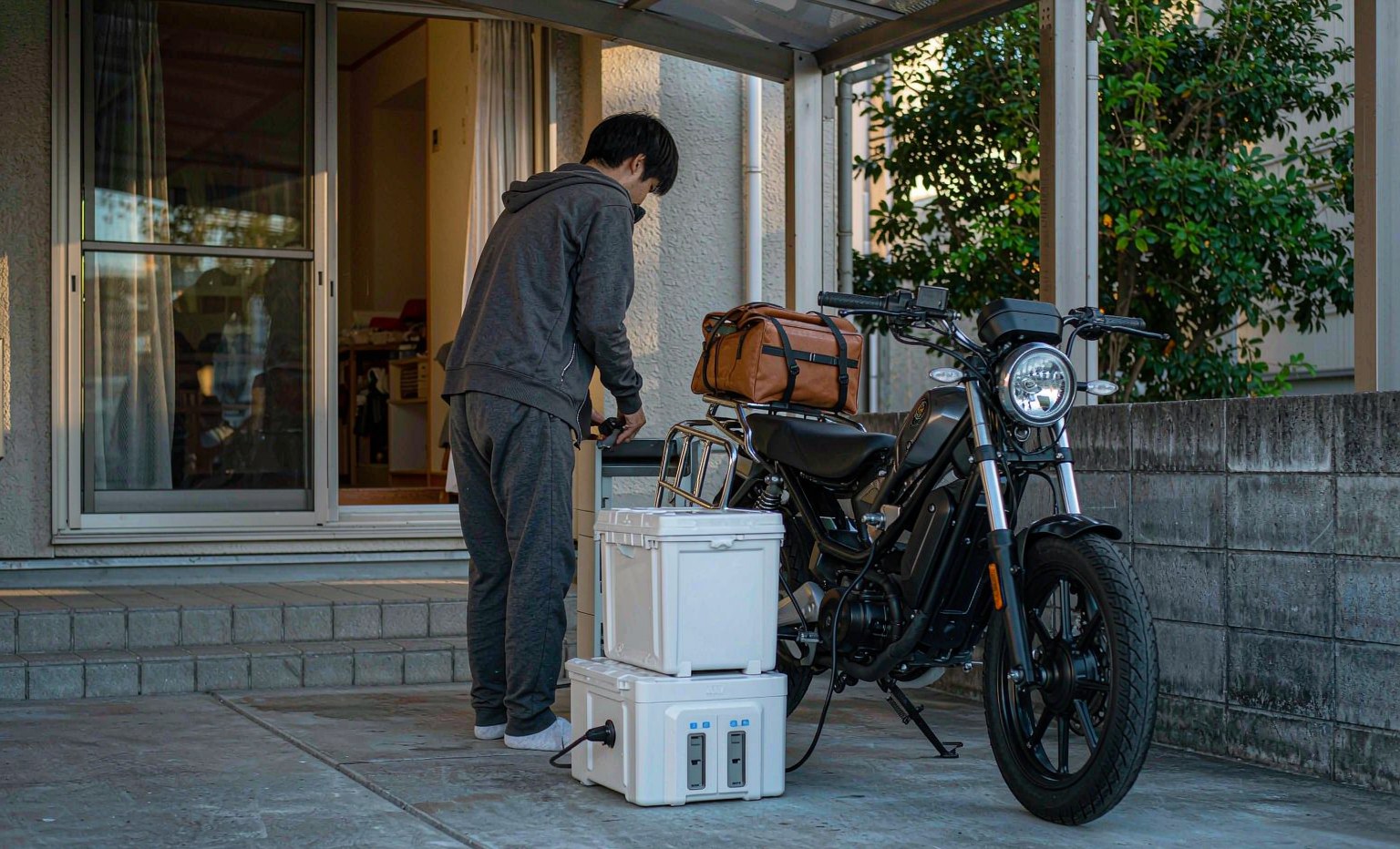
How the electric range fits a mixed fleet
Most distributors do not switch a market to electric in one order; they add a pilot batch beside the petrol line-up. ZUKIDA’s catalogue supports that sequencing: the commuter platforms (CG, Warlord) sit beside the petrol Xpower and Champ commuters as a like-for-like trial, while the racing-type Emperor tests retail appetite. The side-by-side engineering trade-offs — running cost, range, maintenance deltas — are set out numerically in our electric vs gasoline commuter comparison, and the mechanical shared-platform logic (chopper and street families) is the same one described in the CBU/CKD/SKD import guide: identical platforms, different powertrains, one parts shelf.
Once the pilot proves out, the import mechanics are the same as any motorcycle programme: container loading plans in the container loading guide, and payment structures in the export payment terms guide. Electric adds one line item — battery documentation — that petrol orders never needed, so raise it in the first quotation rather than at the port.
Frequently asked questions
Is 2,500 W enough for a delivery motorcycle?
For urban delivery duty with a typical payload, the 2,500 W commuter class is the segment standard in these markets — it keeps cost, licensing and battery draw sane. Fleets that run hillier routes or heavier payloads should trial both the 2,500 W commuter and the 3,000 W racing platform before scaling; the battery platform is shared, so the trial is cheap.
What does 72V 30AH mean in practical range terms?
The pack stores about 2.16 kWh. Real-world range depends on speed, load and terrain, so the honest specification method is a route test: run your actual delivery loop with a laden pilot unit and measure consumption per kilometre, then size the battery swap schedule from the measured number rather than a brochure figure.
Can e-motorcycles ship in the same containers as petrol models?
Mixed loading is possible, but lithium batteries change the documentation and handling requirements, and some lanes restrict battery-containing vehicles. Decide early between CBU with batteries installed and SKD-style packing with batteries shipped separately — the trade-offs are laid out in the CBU/CKD/SKD guide, and your freight forwarder should confirm the battery classification for your lane before booking.
Summary
Specify electric motorcycles by duty cycle: the 2,500 W / 72 V 30 AH commuter platforms (CG, Warlord) for fleets and daily commuting, the 3,000 W Emperor for style-led retail, and the 8,000 W / 74 V 50 AH Supermach for off-road and recreation. Treat the battery as fleet infrastructure — one pack standard, a swap pool, documented lithium logistics — and pilot beside your petrol line before scaling. For the numbers behind the petrol-versus-electric decision, continue with the spec-driven EV comparison.