

A 40ft high-cube container takes roughly 60-72 boxed 125-250cc motorcycles as CBU, and the equivalent of 90-120 units as CKD kits. That range is wide because packing method decides the answer. This guide shows the box math importers actually use, so you can check any factory’s loading plan instead of trusting it. Our export process guide covers the paperwork that follows.

First the Answer, Then the Math
Container loading is a volume problem with a shape penalty. A motorcycle carton is a long box that does not tessellate perfectly, so the theoretical count is always higher than the loaded count.
Work in three steps: usable interior volume, carton footprint and stacking, then a realistic fill rate. Skip any of the three and the quote you get will not survive the loading bay.
The Numbers You Need Before You Calculate
| Input | Typical value | Why it moves |
|---|---|---|
| 40ft high-cube interior | 12.03 x 2.35 x 2.69 m | Carrier and container age |
| 125-150cc carton (CBU) | 1.72 x 0.57 x 0.86 m | Bars/wheels off or on |
| 250cc carton (CBU) | 1.95 x 0.60 x 1.05 m | Wheelbase and wheel size |
| Realistic fill rate | 82-90% | Bracing, dunnage, door bulge |
Those carton sizes are typical export packing for the classes named; your factory’s carton spec is the number that counts. Ask for the carton drawing before you model a container. Our factory audit guide lists it among the documents to request.
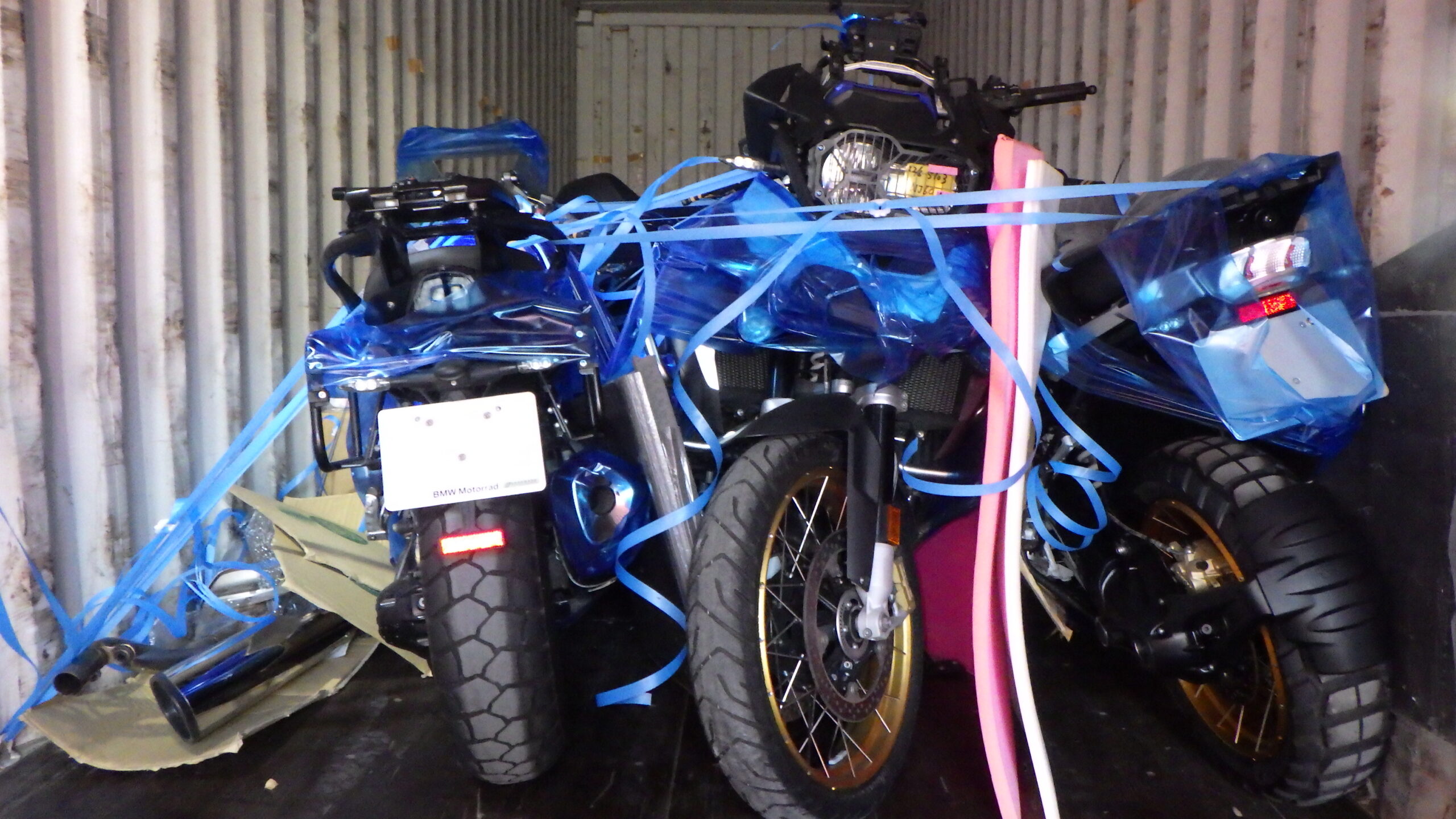
Worked Example: 40HQ With 150cc Units
Length: 12.03 / 1.72 = 6.9, so 6 cartons end to end. Width: 2.35 / 0.57 = 4.1, so 4 across. Height: 2.69 / 0.86 = 3.1, so 3 high. Theoretical 6 x 4 x 3 = 72 units.
Apply an 85% fill rate for bracing and door clearance and the working figure lands at 60-65 units. A 250cc carton is taller and longer, which typically drops a 40HQ into the 40-52 unit range.
CBU vs SKD vs CKD Changes Everything
| Shipment form | Approx. 40HQ count | Assembly at destination |
|---|---|---|
| CBU (fully built) | 40-72 units | Uncrate, fit bars, PDI |
| SKD (major assemblies) | 1.6-2.2x CBU | Line assembly, wheel/bar fit |
| CKD (component kits) | 2.5-3.5x CBU | Full line, tools and jigs |
Freight per unit falls sharply as you move toward CKD, which is why high-duty markets assemble locally. The trade-off is capital: CKD needs a line, torque tools, and trained staff.
Why Two Factories Quote Different Counts
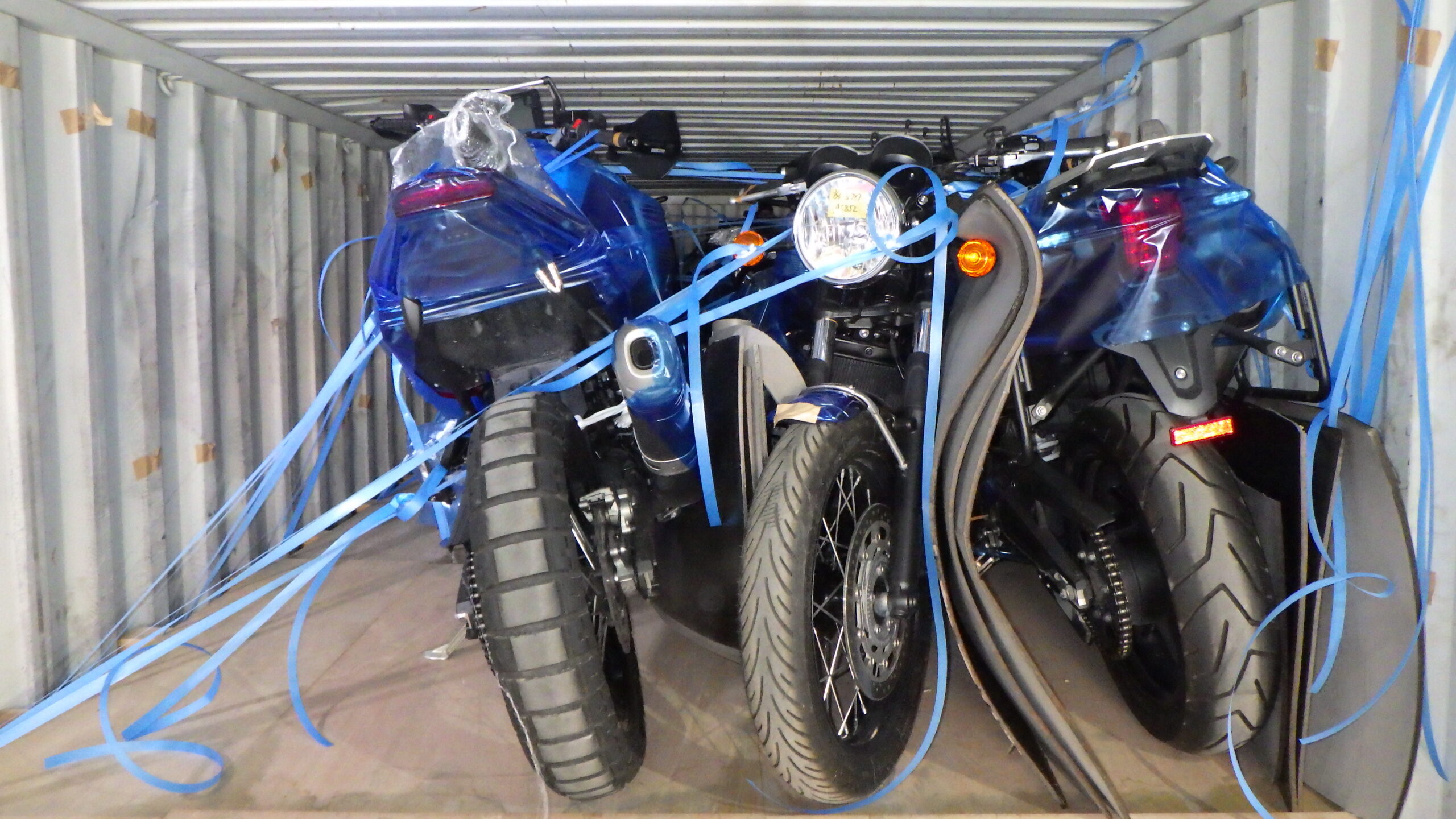
Carton design, whether the front wheel comes off, and how much dunnage a loader uses all move the number by 10-15%. A factory that ships weekly has usually tuned its cartons to the container; one shipping quarterly often has not.
Ask for a loading photo from the last shipment of the same model. It tells you more about real capacity than any spec sheet. Our supplier audit protocol explains what to check on the floor.
Turn the Count Into Landed Cost
Divide total freight by unit count, then add duty, terminal handling, and inland delivery. Ocean freight is usually the single largest swing item on a low-cost commuter.
Model it both ways before committing: a slightly more expensive bike that loads 15% better can land cheaper. Our bulk purchase guide walks the full per-unit calculation.
Frequently Asked Questions
How many motorcycles fit in a 20ft container?
Roughly half to 55% of a 40ft high-cube figure: expect about 22-32 boxed 125-150cc units as CBU, because usable length drops to about 5.9 m.
Does CKD really triple the unit count?
It can reach roughly 2.5-3.5 times a CBU load depending on how the kit is packed, but it requires a real assembly line, torque tooling, and trained staff at destination.
Why did my container arrive with fewer units than quoted?
Bracing, dunnage, door-bulge clearance, and mixed-model loading all reduce the count; a quoted number should always state the fill-rate assumption behind it.
Can I mix models in one container?
Yes, and most first orders do; mixed loading usually costs 5-10% of theoretical capacity because carton sizes no longer stack evenly.
Container loading is box math plus a fill rate, not a number a supplier recites from memory. Send us your destination port, model list, and monthly volume, and we will return a loading plan with carton drawings and a per-unit freight calculation you can check against any quote.
Further Reading
For deeper background, see manufacturing overview on Wikipedia and China Economic Net for industry data.