
Motorcycle Dealer Staff Roles and Product Training: Building a Team That Can Sell and Service
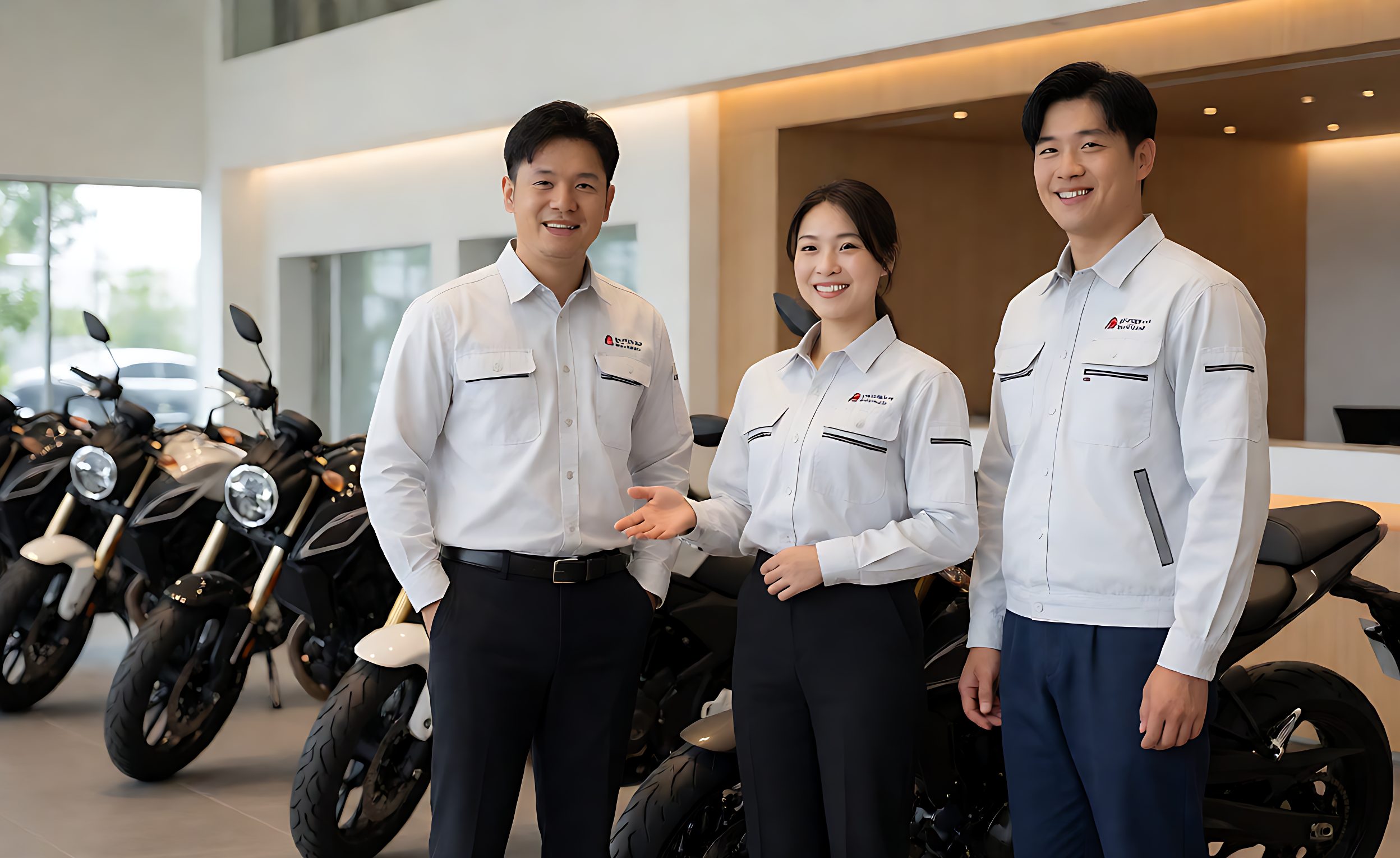
A dealership sells competence before it sells motorcycles. The customer asking about a 150 cc commuter wants to know whether it will start every morning, what the first service costs and whether a brake pad is in stock. Confident answers win the sale; improvised ones send the customer to the trained dealer down the road.
Two decisions shape that competence. The first is the org chart: which roles exist, what each one owns, and where the hand-offs are. The second is the training calendar: how knowledge gets into the team, how it is tested, and how it survives the staff turnover that every dealership experiences.
The Four Roles and What Each Owns
A full dealership needs four functions, and the failure mode in smaller operations is that one person holds three of them badly. Naming the roles explicitly is what prevents that.
- Sales consultant: owns the showroom conversation – needs assessment, model recommendation, specification explanation, test ride and closing. Does not quote trade-in values.
- Parts specialist: owns catalogue lookup, stock accuracy, replenishment and backorder communication. The person who determines whether the service promise can be kept.
- Service technician: owns preparation, scheduled maintenance, diagnosis and warranty work. Certified per model, not generally competent.
- Service advisor and administrator: owns the job card, the customer update, warranty documentation and the cash desk.
The hand-offs are where customers are lost, and each needs a written routine: sales to service for preparation, service to parts for the pick list, parts to advisor for the backorder call. Onboarding should cover those routines rather than only the job description, because new staff fail at the seams between roles.
Staffing a Small Dealership Without Blurring Roles
Most dealerships outside capital cities run six to ten people, so roles have to combine. Sales consultant and service advisor can be one person, because both are customer-facing. Technician and parts specialist should not be combined: the counter needs staffing during workshop hours, and a technician on the counter is not producing labour hours.
- Keep the parts counter covered whenever the workshop is open, even by a cross-trained administrator.
- Keep valuation separate from sales, as described in the article on used bike trade-in programmes.
- Name a second technician before the first one is overloaded, not after.
- Write the territory and volume expectations into the dealer agreement, since staffing follows the volume the dealer terms commit the business to.
Building the Product Training Curriculum
Product training fails when it is a single session at appointment. It works as a curriculum with three levels, each with a test, delivered over the first year and refreshed at every model change.
- Level one, model familiarisation: the lineup, displacement and use case per model, the differences that matter to a buyer, and the specification points covered in motorcycle specifications explained.
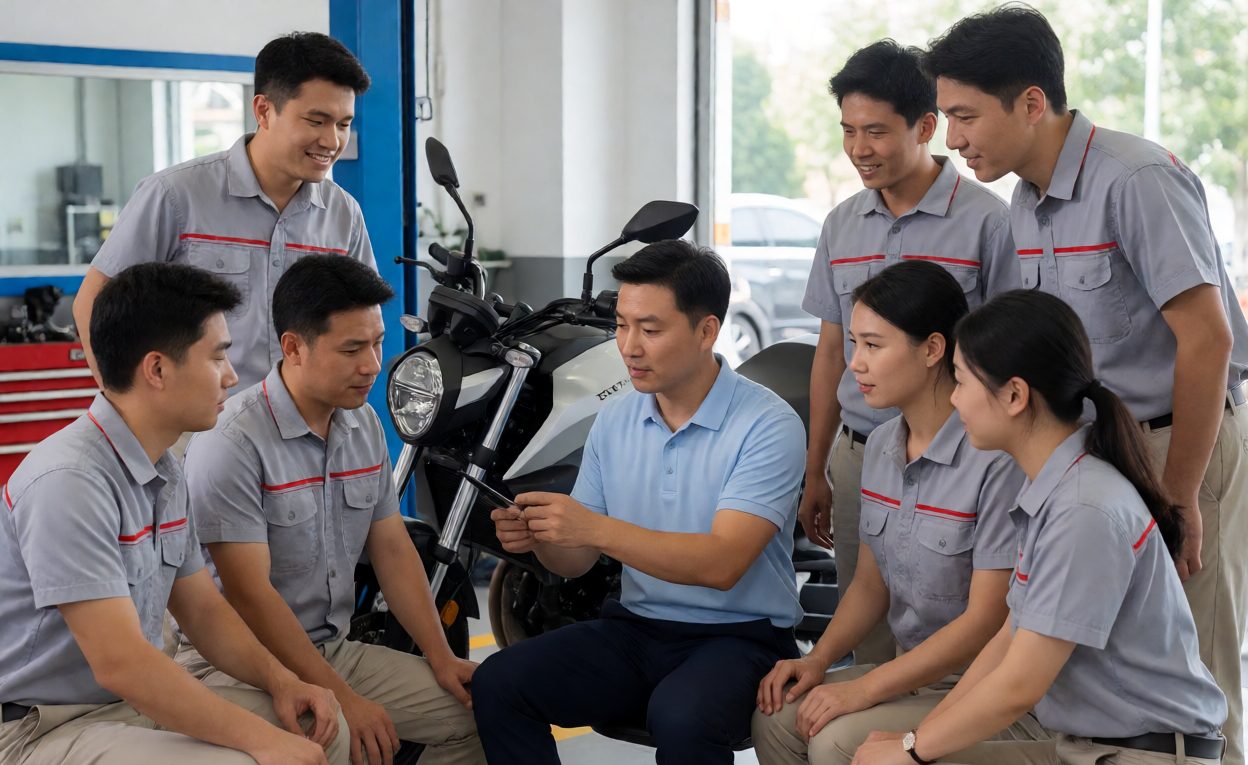
- Level two, mechanical competence: service intervals, wear items, torque and fluid points, common faults and diagnosis, delivered on a real unit in the workshop.
- Level three, commercial competence: financing, accessory bundling, warranty terms and objection handling.
The supplier side of this exists and should be used. The distributor technician programme covers the mechanical levels, and the same structure works for sales staff with commercial modules substituted. Where technical schooling is thin, an apprenticeship pattern – a new hire working beside a certified technician for a season, with a task list and sign-off – beats classroom sessions alone.

Certification, Refreshers and Model Changeover
Certification per model is the practical standard, renewed when the model changes. A training record per employee – models certified, dates, scores – is the evidence the dealership can service what it sells, and what the supplier needs before honouring a warranty claim.
Refreshers should be scheduled rather than triggered: a full model briefing whenever a new model lands, and a quarterly half-day on the highest-volume model and the most common warranty fault. The campaigns in seasonal service campaign planning are the natural moment to retrain the workshop.
Measuring Whether Training Worked
Training that is not measured is a cost, not an investment. Four indicators are cheap to collect and tell the owner whether the curriculum is doing anything:
- First-ask fill rate at the parts counter: rises when the parts specialist knows the catalogue and the fast-moving numbers.
- Preparation time per new unit: falls as technicians become certified on the model.
- Warranty claim accuracy: correctly diagnosed claims rise, and rejected claims fall.
- Conversion and accessory attachment: rises when sales staff can explain the specification and the bundle confidently.
One indicator is the most honest: repeat service visits. A workshop that fixes the fault the first time keeps the customer; one that guesses loses them.

Keeping Knowledge When Staff Leave
Turnover is normal, and a dealership whose competence leaves with a technician is one resignation from failure. Document the recurring work – job cards, torque and fluid references, fault trees, substitute parts – in a shared file, and cross-train every critical task to a second person.
The customer-facing side is the same. Demo and test ride routines depend on documented procedure rather than individual style, and the demo fleet routine is worth copying. Because accessories carry much of the showroom margin, accessory kit bundling should be scripted, not improvised.
Frequently Asked Questions
What roles does a motorcycle dealership need?
Sales consultant, parts specialist, service technician, and service advisor or administrator, each with defined hand-off routines.
Can one person cover two roles?
Sales and service advisor combine safely. Technician and parts specialist should not, because both need the same hours.
What should product training cover?
Three levels: model familiarisation, mechanical competence on a real unit, and commercial competence including warranty and finance.
How often should training be refreshed?
On every new model landing, plus a quarterly refresher on the highest-volume model and top warranty fault.
Should technicians be certified per model?
Yes. Model-level certification supports warranty claims and shortens preparation time on new units.
How is training effectiveness measured?
Parts fill rate, preparation time per unit, warranty claim accuracy and accessory attachment rate.
How should a dealership handle staff turnover?
Document recurring work in shared files and cross-train every critical task to a second person.