
How to Choose a Suitable Motorcycle Wholesaler: An Insider’s Guide
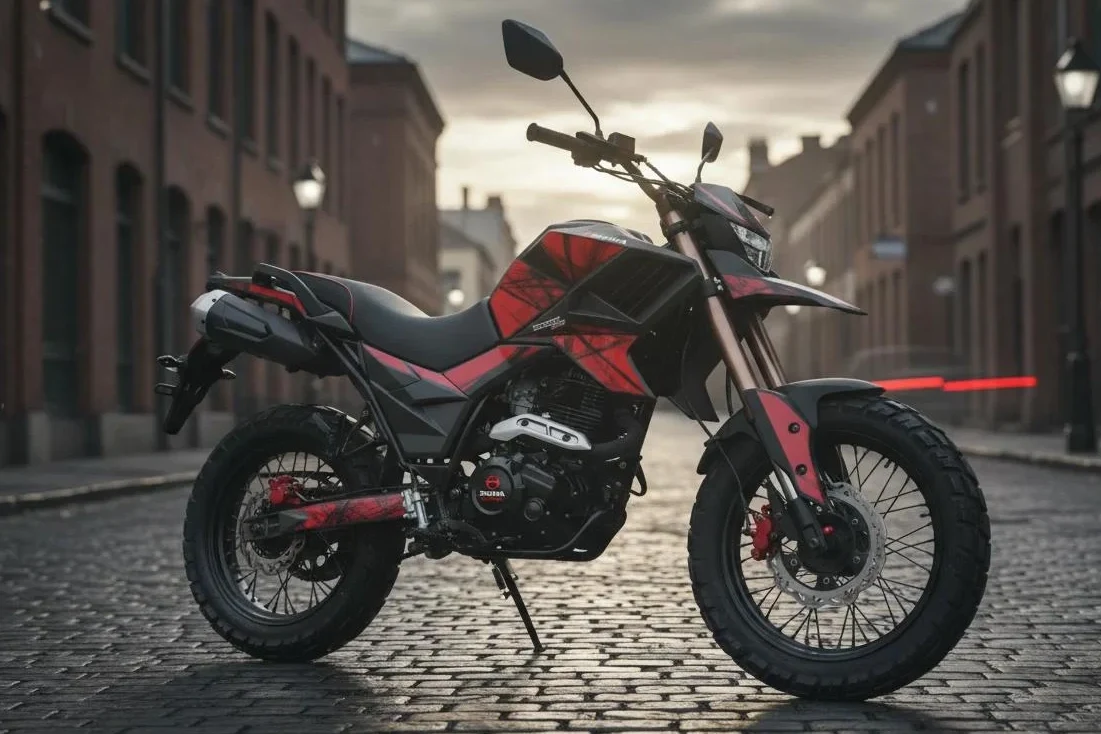
Finding the right supplier is the most critical decision a dealership or distributor makes. The global market is flooded with traders, but finding a true manufacturing partner is difficult. As a professional motorcycle manufacturer established in 1997, Zukida Motorcycle Co., Ltd. understands the challenges you face. We have grown from a local factory to a global supplier for over 40 countries. Based on our decades of experience, here is how to choose a suitable motorcycle wholesaler that ensures your long-term success.
1. Verify Manufacturing Capabilities and R&D
Many companies claim to be manufacturers but are actually trading companies. A trading company acts as a middleman, which increases costs and complicates communication. A suitable wholesaler should own its production lines. At Zukida, we operate state-of-the-art facilities. Our gasoline vehicles and electric lines are managed by over 500 skilled technicians. When evaluating a partner, ask about their Research and Development (R&D) team. Innovation is key. For example, our team constantly updates designs, from classic commuters to modern sports bikes like the Tekken 250.
2. Evaluate Product Diversity and Market Fit
Your market has specific needs. A wholesaler with a limited catalog will restrict your growth. You need a partner with a diverse portfolio that covers various demographics.
Commuter Solutions
In many developing regions, durability is paramount. You need models known for low maintenance.
- The CG125 Series is the global standard for reliability.
- The GN125 Series offers a classic aesthetic that remains popular.
Performance and Niche Models
Does the supplier offer high-margin products? Off-road riding is a growing sector. A supplier offering robust machines like the Defender Dirt Bike or the Mont Blanc 300 allows you to target enthusiasts, not just commuters.
3. Scrutinize Quality Control (QC) Systems
Cheap products ruin your brand reputation. When learning how to choose a suitable motorcycle wholesaler, prioritize their Quality Assurance (QA) systems. Ask the supplier about their testing protocols. A reliable factory performs rigorous checks at every stage:
- Component Testing: Checking engines and frames before assembly.
- Assembly Line Inspection: Automated checks during the build.
- Road Testing: Real-world validation of braking and handling.
We apply these strict standards to everything we build, from heavy-duty tricycles to our newest electric vehicles.
4. Check for OEM and ODM Flexibility
To build your own brand, you need more than just stock products. You need customization.
- OEM (Original Equipment Manufacturer): The factory produces their existing models with your brand logo and color scheme.
- ODM (Original Design Manufacturer): The factory helps you design a unique product from scratch.
Zukida specializes in both. Whether you need a customized Cub Wave 110 for a delivery fleet or a specific configuration for the Windy Scooter, flexibility is a sign of a superior wholesaler.
5. Assess Spare Parts and After-Sales Support
The relationship should not end when the container leaves the port. Motorcycles require maintenance. A wholesaler that cannot supply parts effectively is a liability. Ensure your supplier guarantees the availability of spare parts for engine components, body kits, and electronics. This is particularly important for newer technologies, such as our Flamingo E-Bike. Reliable after-sales support ensures your customers stay on the road and keep coming back to your dealership.
6. Logistics and Global Experience
Shipping motorcycles involves complex regulations. From packaging (SKD vs. CKD) to customs documentation, experience matters. We have successfully exported to over 40 countries. We know how to pack a Power 150 to maximize container space and minimize shipping damage.
The Pre-Order Due-Diligence Checklist
The six criteria above are the framework. The table below turns them into what a buyer should physically request before transferring a deposit. Everything on this list is normal for a manufacturer to provide; hesitation or paperwork “coming next week” is itself a data point.
| Item to Request | What It Proves | Red Flag Equivalent |
|---|---|---|
| Business licence and factory address | A real, registered manufacturing entity | Trading office only, factory “under construction” |
| Video or live walk-through of the production line | Actual assembly capability, not a warehouse | Stock footage, refusal to show welding or engine assembly |
| Sample unit, inspected before bulk shipment | Mass-production quality matches the sample | “Samples are not representative” |
| Spare-parts price list and availability commitment | After-sales support exists beyond delivery | Parts priced only “after you become a dealer” |
| Homologation / certificate relevant to your market | The bikes can be legally registered where you sell | Generic certificates that do not name your market |
| Two reference customers at your volume level | Others have done what you are about to do | References only “in a different product line” |
Red Flags That Predict a Failed Order
After enough disputed shipments, the patterns that precede them become familiar. None of these alone proves a bad supplier; two or more together should end the conversation.
- Price far below every other quotation. Something is missing – usually the parts that fail first, or the third-party certification, or simply the goods.
- Pressure to skip the sample stage. Any reason given for shipping bulk without an inspected sample should be treated as the reason not to proceed.
- Vagueness about who manufactures the engine. Engine sourcing is a legitimate question with a clear answer at any real factory.
- Terms that concentrate all risk on the buyer. Full payment before production, no inspection rights, no defined remedy for defects.
- Communication quality collapses after the deposit. Responsiveness before the order is the ceiling, not the floor, of what follows.
Frequently Asked Questions
Is a factory-direct supplier always better than a trading company?
Not automatically. A good trading company adds value in aggregation, communication and export administration, and some are better at it than the factories they represent. What matters is transparency: the problem is a trading company presenting itself as a factory, because then the buyer’s quality assumptions are built on a fiction. Ask directly, and verify the answer against the factory address and the production video.
What order size makes a manufacturer take a new dealer seriously?
Less than most buyers fear, if the relationship looks like it will repeat. Manufacturers prioritize accounts that order predictably and stock parts, because those accounts generate spares revenue and referrals. A modest first order with a clear second-order plan is often received better than a large one-off order with no follow-on logic.
How should quality disputes be handled contractually?
Before the order, not after. The agreement should define what counts as a defect, the inspection window after arrival, and the remedy – parts, credit or replacement – with photographs and the inspection report as the evidence standard. Disputes settled in advance are negotiations; disputes settled after the fact are arguments about money between parties who no longer trust each other.
Conclusion
Knowing how to choose a suitable motorcycle wholesaler is about finding a long-term partner. You need a manufacturer with history, quality control, and the flexibility to help you grow. At Zukida, we combine traditional craftsmanship with modern innovation to support our partners worldwide. Ready to upgrade your supply chain? Contact Zukida Motorcycle today.
Choosing a Motorcycle Wholesaler
A wholesaler is a long-term partner, not a one-off seller. The table is the selection scorecard.
| Criterion | Weight |
|---|---|
| Range & MOQ fit | High |
| Certifications | High |
| Lead time reliability | High |
| After-sales | Medium |
| Communication | Medium |
Frequently Asked Questions
How many quotes to get?
Three to five serious ones. More dilutes leverage; fewer leaves you benchmark-blind.
What is the red flag?
Great price, vague on certifications and lead time. The cheap unit is expensive once it cannot clear customs.
Audit: manufacturer audit and warranty guide. Reference: OEM/ODM.